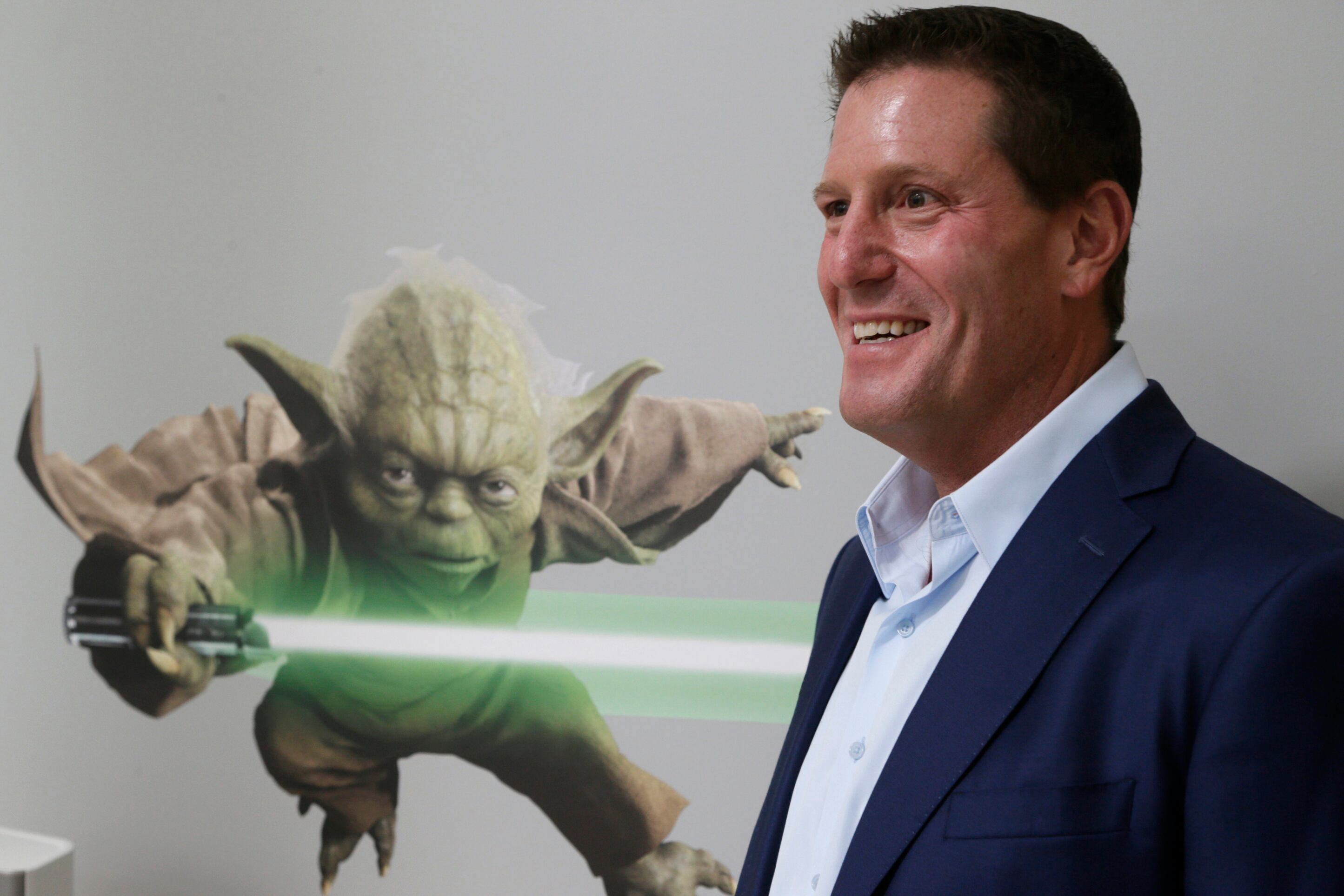
In this July 13, 2015, file photo, then Disney chief strategy officer Kevin Mayer visits the company's "accelerator" space in Glendale, Calif. TikTok CEO Mayer resigned Thursday, Aug. 27, 2020 amid U.S. pressure for its Chinese owner to sell the popular video app, which the White House says is a security risk. His resignation comes after U.S. President Donald Trump ordered a ban on TikTok, unless parent company Bytedance sells its U.S. operations to an American company within 90 days. (AP Photo/Damian Dovarganes, File)
By Zen Soo
TikTok CEO Kevin Mayer resigned Thursday amid U.S. pressure for its Chinese owner to sell the popular video app, which the White House says is a security risk.
In a letter to employees, Mayer said that his decision to leave comes after the "political environment has sharply changed."
His resignation follows President Donald Trump's order to ban TikTok unless its parent company, ByteDance, sells its U.S. operations to an American company within 90 days.
"I have done significant reflection on what the corporate structural changes will require, and what it means for the global role I signed up for," he said in the letter. "Against this backdrop, and as we expect to reach a resolution very soon, it is with a heavy heart that I wanted to let you all know that I have decided to leave the company."
Bytedance is currently in talks with Microsoft for the U.S. firm to buy TikTok's U.S. operations.
Mayer, a former Disney executive, joined TikTok as CEO in May.
TikTok thanked Mayer.
"We appreciate that the political dynamics of the last few months have significantly changed what the scope of Kevin's role would be going forward, and fully respect his decision," the company said in a statement.
ByteDance launched TikTok in 2017, then bought Musical.ly, a video service popular with teens in the U.S. and Europe, and combined the two. A twin service, Douyin, is available for Chinese users.
TikTok gained immense popularity via its fun, goofy videos and ease of use, and has hundreds of millions of users globally.
But its Chinese ownership has raised concerns about potential censorship of videos, including those critical of the Chinese government, and the risk Beijing may access user data.
Earlier this month, Trump ordered a sweeping but unspecified ban on dealings with the Chinese owners of consumer apps TikTok and WeChat as the U.S. heightens scrutiny of Chinese technology companies, citing concerns that they may pose a threat to national security.
Stephen Kates, Financial Analyst at Bankrate, joins to discuss the Fed’s 25-basis-point rate cut, inflation risks, and what it all means for consumers and marke
Big tech earnings take center stage as investors digest results from Alphabet, Meta, Microsoft, Amazon, and Apple, with insights from Gil Luria of D.A. Davidson
Disney content has gone dark on YouTube TV, leaving subscribers of the Google-owned live streaming platform without access to major networks like ESPN and ABC. That’s because the companies have failed to reach a new licensing deal to keep Disney channels on YouTube TV. Depending on how long it lasts, the dispute could particularly impact coverage of U.S. college football matchups over the weekend — on top of other news and entertainment disruptions that have already arrived. In the meantime, YouTube TV subscribers who want to watch Disney channels could have little choice other than turning to the company’s own platforms, which come with their own price tags.
President Donald Trump said he has decided to lower his combined tariff rates on imports of Chinese goods to 47% after talks with Chinese leader Xi Jinping on curbing fentanyl trafficking.
Universal Music Group and AI platform Udio have settled a copyright lawsuit and will collaborate on a new music creation and streaming platform. The companies announced on Wednesday that they reached a compensatory legal settlement and new licensing agreements. These agreements aim to provide more revenue opportunities for Universal's artists and songwriters. The rise of AI song generation tools like Udio has disrupted the music streaming industry, leading to accusations from record labels. This deal marks the first since Universal and others sued Udio and Suno last year. Financial terms of the settlement weren't disclosed.