By Joe McDonald
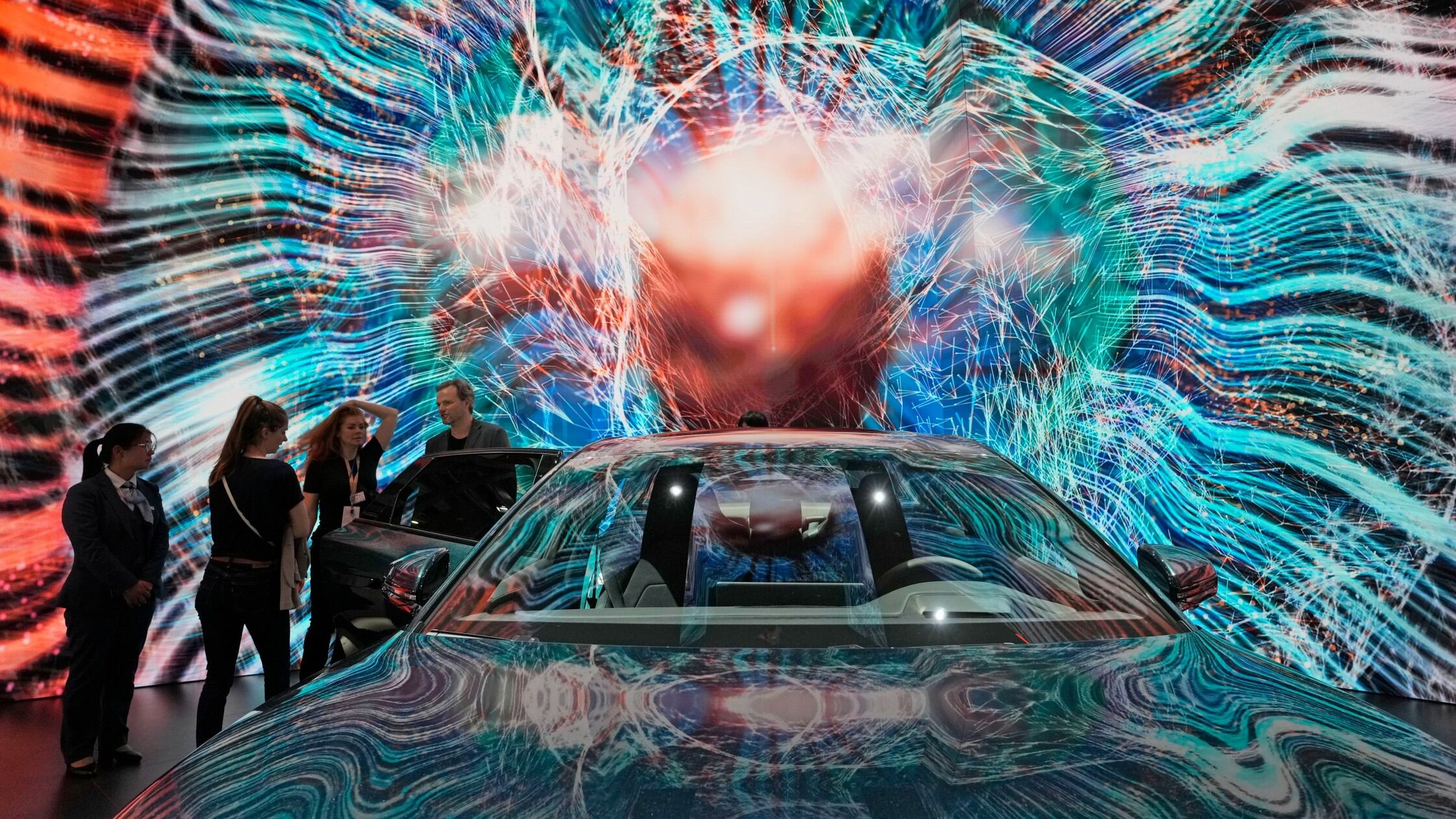
Threatened by possible shortages of lithium for electric car batteries, automakers are racing to lock in supplies of the once-obscure “white gold” in a politically and environmentally fraught competition from China to Nevada to Chile.
General Motors Co. and the parent company of China’s BYD Auto Ltd. went straight to the source and bought stakes in lithium miners, a rare step in an industry that relies on outside vendors for copper and other raw materials. Others are investing in lithium refining or ventures to recycle the silvery-white metal from used batteries.
A shortfall in lithium supplies would be an obstacle for government and industry plans to ramp up sales to tens of millions of electric vehicles a year. It is fueling political conflict over resources and complaints about the environmental cost of extracting them.
"We already have that risk” of not being able to get enough, said GM's chief financial officer, Paul A. Jacobson, at a Deutsche Bank conference in mid-June.
“We’ve got to have partnerships with people that can get us the lithium in the form that we need," Jacobson said.
Ford Motor Co. has signed contracts stretching up to 11 years into the future with lithium suppliers on two continents. Volkswagen AG and Honda Motor Co. are trying to reduce their need for freshly mined ore by forming recycling ventures.
Global lithium output is on track to triple this decade, but sales of electric SUVs, sports cars and sedans that rose 55% last year threaten to outrun that. Each battery requires about eight kilograms (17 pounds) of lithium, plus cobalt, nickel and other metals.
“There will be a shortage of EV battery supplies,” said Joshua Cobb, senior auto analyst for BMI.
Adding to uncertainty, lithium has emerged as another conflict in strained U.S.-Chinese relations.
Beijing, Washington and other governments see metal supplies for electric vehicles as a strategic issue and are tightening controls on access. Canada ordered three Chinese companies last year to sell lithium mining assets on security grounds.
Other governments including Indonesia, Chile and Zimbabwe are trying to maximize their return on deposits of lithium, cobalt and nickel by requiring miners to invest in refining and processing before they can export.
GM is buying direct access to lithium by investing $650 million in the Canadian developer of a Nevada mine that is the biggest U.S. source. In return, GM says it will get enough for 1 million vehicles a year.
Conservationists and American Indians are asking a federal court to block development of the Nevada mine, which the Biden administration has embraced as part of its clean energy agenda. Opponents say it might poison water supplies and soil and pollute nesting grounds for birds.
“Securing metals must not come at a sacrifice to the environment,” said a U.S. group, the Natural Resources Defense Council, in a report last year.
BYD Auto’s parent company, battery maker BYD Co., has announced more than $5 billion in investments in lithium mining and refining over the past 18 months.
Most are in China, but BYD also is promising to spend $290 million on a processing facility in Chile, one of the biggest lithium producers. In exchange, BYD is allowed to buy lithium from Chilean miners at a discount.
At home, BYD announced last year it would invest 28.5 billion yuan ($4.2 billion) in a venture to produce 100,000 tons of lithium carbonate a year in the eastern city of Yichun.
Another Chinese automaker, NIO Inc., bought 12% of Australian lithium miner Greenwing Resources Ltd. last year for 12 million Australian dollars ($8.1 million).
Despite rising output, the industry may face shortages of lithium and cobalt as early as 2025 if enough isn’t invested in production, according to Leonardo Paoli and Timur Gul of the International Energy Agency.
“Supply side bottlenecks are becoming a real challenge," said Paoli and Gul in a report last year.
Automakers might be putting in their own money to reassure “notoriously risk-averse” miners, according to Alastair Bedwell of GlobalData. He said miners are reluctant to “go all out” on lithium until they are sure the industry won't switch to batteries made with other metals.
Even if they do, developing lithium sources is a years-long process.
Mines that came online in 2010-19 took on average more than 16 years from discovery to the start of production, according to Paoli and Gul of the IEA.
“These long lead times raise questions about the ability of supply to ramp up,” they wrote.
Investment by automakers might “help to remove some of their partners’ risk and ultimately create more production,” Bedwell said in an email.
Worldwide lithium resources are estimated at 80 million tons by the U.S. Geological Survey.
Bolivia’s are the biggest at 21 millions tons, followed by Australia with 17 million and Chile with 9 million. China has 4.5 million tons of known reserves and the United States has 1 million.
Forecasts of annual global production range as high as 1.5 million tons by 2030. But demand, if EV sales keep rising at double-digit annual rates, is forecast to increase to up to 3 million tons.
Sales of battery-powered and gasoline-electric hybrid vehicles took off in 2021, more than doubling over the previous year to 6.8 million, according to EV Volumes, a research firm. Last year's sales rose to 10.5 million.
China accounted for 60% of last year's sales, two-thirds of production and three-quarters of battery manufacturing.
Ford plans to sell 2 million EVs a year by 2026. GM, with 2022 sales of 3.6 million cars, has plans for 30 electric models and North American production capacity of 1 million two years from now in 2025.
Toyota Motor Co.’s annual target is 3.5 million by 2030. VW, which sold 4.6 million cars worldwide last year, is aiming for 70% of sales in Europe and 50% in China and the United States to be electric by 2030.
President Joe Biden last year announced an official goal for half of all new cars sold in the United States to be electric or other zero-emissions technology by 2030.
As sales rise, so does government unease, especially in Washington and Beijing, about access to lithium and other minerals and the potential for strategic competition.
Volkswagen’s battery unit, PowerCo, signed an agreement with Canada last August to develop suppliers of “critical raw materials” including lithium, cobalt and nickel.
The German chancellor, Olaf Scholz, in a statement welcomed cooperation with “close friends” on “raw material security.”
Last year, Canada imposed limits on foreign involvement in production of lithium and other “critical minerals” for batteries and other high-tech products.
China’s government has accused the United States, Canada, Japan and other governments of misusing phony security concerns to hurt Chinese competitors in electric cars, smartphones, clean energy and other emerging technologies.
Other governments welcome Chinese investment.
China’s biggest lithium producer, Ganfeng Lithium Co., bought Argentina’s Lithea Inc. last year for $962 million. In 2021, Ganfeng bought Mexico’s Bacanora Lithium for $391 million. It is developing a project in the northern region of Sonora with planned annual output of 35,000 tons.
China's Tianqi Lithium Inc. owns 23.8% of Chile's dominant producer, Sociedad Quimicay Minera, or SQM.
About two-thirds of the world’s lithium comes from mines. That involves crushing rock and using acids to extract metals. It leaves toxic heaps of chemical-laced tailings.
The rest is extracted from salt lakes or from salt flats called salars in Chile and Bolivia. That can require vast evaporation ponds.
The industry is working on technology to extract lithium from hot springs, lakes and clay deposits with less environmental impact.
VW has a five-year supply contract with Vulcan Energy Resources Ltd., which plans to produce lithium hydroxide from geothermal brine in Germany’s Rhine Valley.
Vulcan says its process uses no fossil fuels. That is a response to complaints EVs do little to reduce overall carbon emissions because energy for their manufacturing and charging usually comes from coal, gas and oil.
As they ramp up supplies, automakers face another bottleneck: Lack of refining capacity to purify raw lithium into battery material.
Tesla Inc. broke ground in Texas last month for a lithium refinery that CEO Elon Musk should produce enough for 1 million vehicles per year by 2025.
“The choke point is much more on refining capacity than it is on mining,” said Musk in an April conference call with reporters.
Other manufacturers including BMW AG, which aims to make at least half its sales fully electric by 2030, are buying stakes in lithium refiners.
As for GM, “I don’t know” whether it will build its own refinery, Jacobson said.
“Where I can help fund some expansion in exchange for guaranteed supply, that’s a good thing,” he said. “We should be open to doing that.”
Smaller brands without their own lithium supply might be squeezed, according to Bedwell. He said they might be forced to pay more, which might threaten the existence of some.
“Certainly, mass-market players who don’t get their lithium strategy right will be at a disadvantage,” said Bedwell.