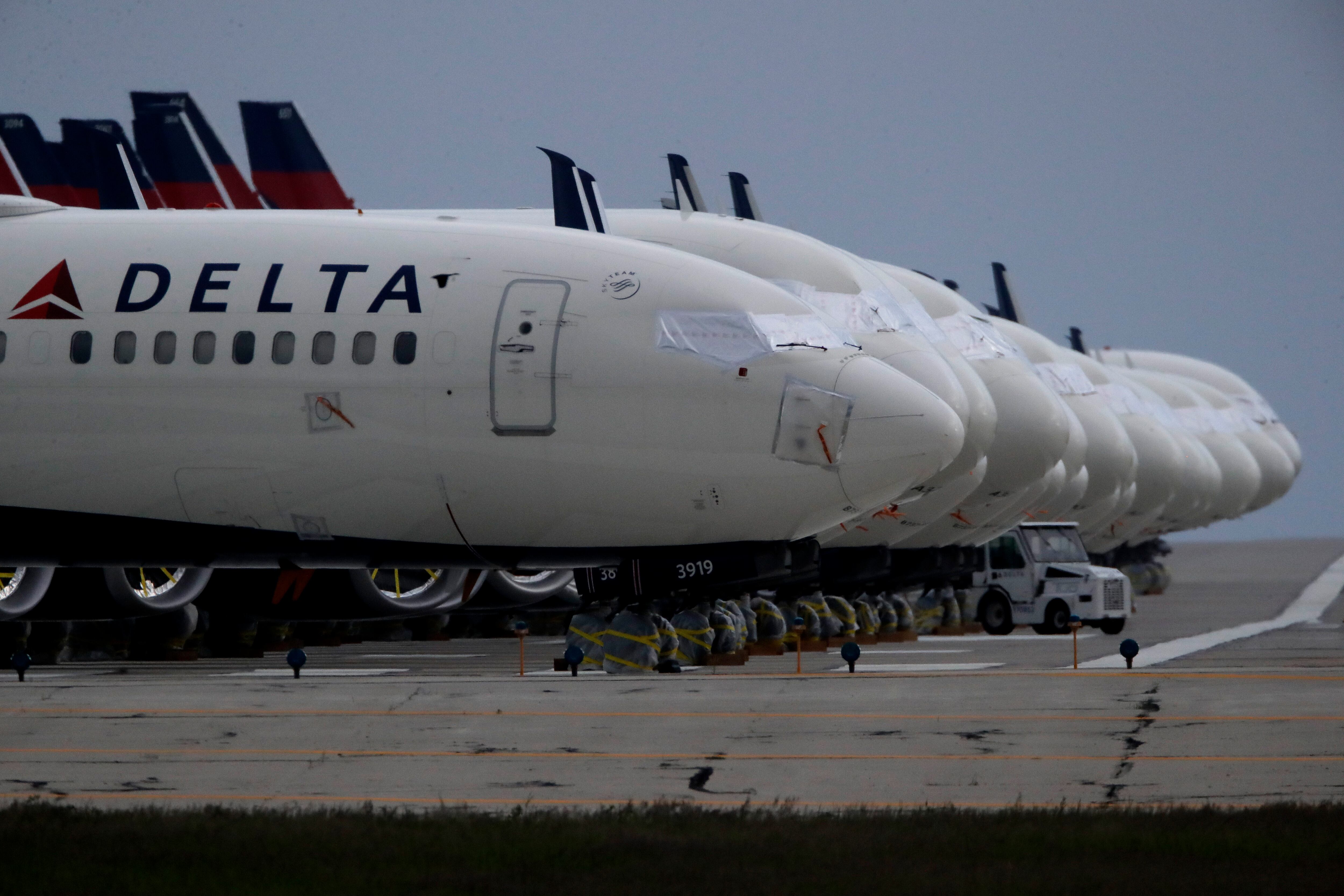
Several dozen mothballed Delta Air Lines jets are parked on a closed runway at Kansas City International Airport on Thursday, May 14, 2020 in Kansas City, Mo. The planes, some of the approximately 90 Delta jets parked at the airport, are among the thousands of passenger planes taken out of service worldwide as travel restrictions and stay-at-home orders due to the new coronavirus has drastically reduced air travel. (AP Photo/Charlie Riedel)
From Wall Street to Silicon Valley, these are the top stories that moved markets and had investors, business leaders, and entrepreneurs talking this week on Cheddar.
MARKETS KEEP GAINS: The markets closed out an uneven week of trading with mixed results Friday but still managed to make up for last week's losses. Now that all 50 states have begun reopening to some degree, investors see signs of hope for an economic recovery in the U.S. during the second half of the year. Plus promising reports on COVID-19 vaccine trials pushed stocks up much of the week. However, fears that reopening businesses too quickly could lead to a resurgence of coronavirus cases, rising unemployment, U.S. friction with China, and moves made by Beijing to limit political opposition in Hong Kong tempered some of that enthusiasm.
UNEMPLOYMENT CRISIS: Jobless claims continue to climb. The Labor Department reported on Thursday that another 2.4 million people filed for unemployment benefits the previous week. Almost 39 million people have applied for benefits since the pandemic began closing businesses in March, with the unemployment rate now at 14.7 percent. Painful cuts continued this week with rideshare service Uber announcing it will lay off 3,000 employees on top of the 3,700 roles it had already cut. On Sunday, Federal Reserve Chair Jerome Powell warned in an interview that the unemployment rate could hit a peak of 20 to 25 percent in May or June.
AIRLINES CHART PATH FORWARD: U.S. airlines are reporting small but notable upticks in passengers ahead of Memorial Day Weekend. Delta says demand for beach destinations and activity “out west” grew and it's adding more flights to allow for social distancing on planes. Meanwhile, United unveiled new cleaning and safety protocols it hopes will put passengers’ minds at ease, including sneeze guards at check-in and touchless kiosks
FACEBOOK ALL-TIME HIGH: Shares of Facebook hit an all-time high, a day after the social media giant announced Facebook Shops, a new e-commerce platform meant to make it easier for users to sell on both Instagram and Facebook proper. Facebook’s stock has been on fire lately, helped by a strong balance sheet and access to a third of the world’s eyeballs.
WFH FOREVER?: More technology firms are telling their employees they can work from home indefinitely. Shopify, the Canadian e-commerce giant, and Facebook are the latest to jump on the bandwagon, following Twitter and Square. Facebook CEO Mark Zuckerberg predicted as much as half of his workforce may eventually work remotely, away from crowded, expensive metropolises — but noted that salaries won't look the same for employees working in high-cost areas versus those in areas with lower costs of living.
A rare magnum of Dom Pérignon Vintage 1961 champagne that was specially produced for the 1981 wedding of Prince Charles and Lady Diana has failed to sell during an auction. Danish auction house Bruun Rasmussen handled the bidding Thursday. The auction's house website lists the bottle as not sold. It was expected to fetch up to around $93,000. It is one of 12 bottles made to celebrate the royal wedding. Little was revealed about the seller. The auction house says the bids did not receive the desired minimum price.
The New York Times and President Donald Trump are fighting again. The news outlet said Wednesday it won't be deterred by Trump's “false and inflammatory language” from writing about the 79-year-old president's health. The Times has done a handful of stories on that topic recently, including an opinion column that said Trump is “starting to give President Joe Biden vibes.” In a Truth Social post, Trump said it might be treasonous for outlets like the Times to do “FAKE” reports about his health and "we should do something about it.” The Republican president already has a pending lawsuit against the newspaper for its past reports on his finances.
OpenAI has appointed Slack CEO Denise Dresser as its first chief of revenue. Dresser will oversee global revenue strategy and help businesses integrate AI into daily operations. OpenAI CEO Sam Altman recently emphasized improving ChatGPT, which now has over 800 million weekly users. Despite its success, OpenAI faces competition from companies like Google and concerns about profitability. The company earns money from premium ChatGPT subscriptions but hasn't ventured into advertising. Altman had recently announced delays in developing new products like AI agents and a personal assistant.
President Donald Trump says he will allow Nvidia to sell its H200 computer chip used in the development of artificial intelligence to “approved customers” in China. Trump said Monday on his social media site that he had informed China’s leader Xi Jinping and “President Xi responded positively!” There had been concerns about allowing advanced computer chips into China as it could help them to compete against the U.S. in building out AI capabilities. But there has also been a desire to develop the AI ecosystem with American companies such as chipmaker Nvidia.
U.S. sports betting is booming as NFL and college football fuel massive activity. BetMGM CEO Adam Greenblatt breaks down trends, growth, and what’s next.
President Donald Trump says a deal struck by Netflix last week to buy Warner Bros. Discovery “could be a problem” because of the size of the combined market share. The Republican president says he will be involved in the decision about whether federal regulators should approve the deal. Trump commented Sunday when he was asked about the deal as he walked the red carpet at the Kennedy Center Honors. The $72 billion deal would bring together two of the biggest players in television and film and potentially reshape the entertainment industry.
Disney's changes to a program for disabled visitors are facing challenges in federal court and through a shareholder proposal. The Disability Access Service program, which allows disabled visitors to skip long lines, was overhauled last year. Disney now mostly limits the program to those with developmental disabilities like autism who have difficulty waiting in lines. The changes have sparked criticism from some disability advocates. A shareholder proposal submitted by disability advocates calls for an independent review of Disney's disability policies. Disney plans to block this proposal, claiming it's misleading. It's the latest struggle by Disney to accommodate disabled visitors while stopping past abuses by some theme park guests.