The 'Tragedy' of Venezuela: Film Shows How Oil-Rich Nation Was Destroyed From the Inside
*By Bridgette Webb*
Venezuela, once among the wealthiest economies in Latin America, is now in a state of crisis.
According to Brian Price, executive producer of a new documentary "Venezuela: State of Disaster'" decades of greed and corruption have created an impenetrable barrier.
"They had tremendous oil resources and still do," Price said in an interview on Cheddar Wednesday.
"Right now they are sitting on 300 million barrels of oil ー in a conservative market call it $1 trillion dollars worth ー and they have no way of extracting that wealth because the entire system of extraction has been completely decimated."
Venezuela’s drop in oil production volumes was the largest global unplanned fall in crude oil in 2017. That trend has continued. Oil production in the nation now stands at its lowest level in more than 50 years.
Of the oil that is produced, much of it is being used to pay off interest on Venezuela's massive debt load to countries like China and Russia. Venezuela has borrowed billions of dollars from the two over the years, mostly through oil-for-loan deals.
The economic crisis is also hitting Venezuela's public health system.
In addition to a shortage of doctors, nurses, and supplies, Price said even the most basic needs of patients can't be met.
"They have to ask patients to bring their own light bulb when they check in the hospital because there is no light in the room. It's a good and it has value and people will steal that from the hospital," he said.
Meanwhile, the President of Venezuela, Nicolás Maduro, has been steadily shifting the country from a democratic nation into a dictatorship.
Since he was elected back in 2013 Maduro has consolidated power by jailing would-be competition and neutralizing any opposition.
Although his presidency is slated to end on Jan. 10 2019, Maduro is expected to be "re-inaugurated" that day on the basis of elections held last May, which are widely viewed as fraudulent.
There have already been rumblings that the International community is ready to act against Maduro, though Price believes it will be very challenging to remove him from power.
"He will do whatever he has to do to stay in power ー \[including\] moving up an election, that was supposed to occur in December because it fit his needs. He is a corrupt leader, like any dictator you have to be skeptical of any tactics he uses, specifically because he wants to stay in power."
Markets were pointing to a higher open to kick off the third trading week in November. It comes as stocks come off a losing week in reaction to October's consumer price index--which showed inflation at its highest point in over 30 years.
Ryan Detrick, Chief Market Strategist for LPL Financial joined Wake Up with Cheddar to discuss.
Harvard Business School Professor Ranjay Gulati joined Wake Up With Cheddar to break down the massive challenge the Biden Administration faces in ensuring projects in the $1.2 trillion infrastructure bill are completed on time and on budget.
Jill is joined by Baker Machado to talk all things infrastructure: where will the money go and who’s in charge? Plus, Sesame Street has its first Asian-American muppet. And a trailer for the trailer for Spiderman. Huh?
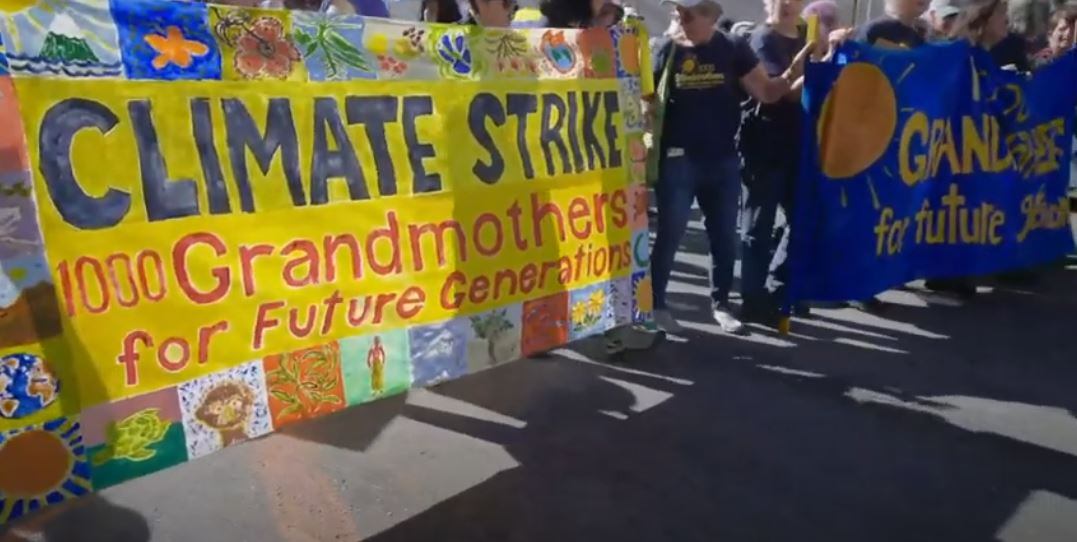
In this week's Cheddar Changemakers, Megan Pratz spoke with a 16-year-old climate activist Sarah Goody. She is the founder of a youth-led climate action group 'Climate NOW.'
We toss around the term "democracy is under attack" quite often without thinking too much, but one organization is actually stepping up to do something about it. The Fairness Project is a group that funds and organizes state ballot measures across the country. It has used ballot initiatives on campaigns aimed at expanding Medicaid, adding more paid time off, and raising minimum wage. It recently launched a new direct democracy campaign to fight back against attempts to make ballot measures inaccessible.
Kelly Hall, executive director of The Fairness Project, joined Cheddar Politics to discuss more about the group's efforts to push for economic and social justice, avoiding partisan gridlock.
Doug Flynn, Certified Financial Planner and Co-Founder of Flynn Zito Capital Management, joins Cheddar News' Closing Bell, where he says he believes the news of the infrastructure bill was already priced into the market and that inflation continues to loom large on Wall Street.
President Joe Biden signed into law today his landmark $1.2 trillion infrastructure bill, and it includes approximately $550 billion in new funding for increased broadband access, improving the power grid, and more. But what does this mean for the American economy, and American workers? Eliza Collins, Politics Reporter at The Wall Street Journal joins Cheddar News' Closing Bell to discuss what's included in the bill, which former mayor has been tapped to oversee how the bill is implemented, and how these new infrastructure investments will impact the economy.
The two-week COP26 climate conference has now ended with leaders reaching a deal, but so far the deal is getting mixed reviews from climate experts across the globe. Chloe Demrovsky, president and CEO of Disaster Recovery Institute International, explains that while the agreement is a step forward in some ways, the world still has much more to work on in order to keep warming to below 2 degrees Celsius.
Jill and Carlo cover the latest with the infrastructure bill, the growing state rebellion over boosters, Trump's dereliction of duty on the pandemic, Taylor Swift's reign of cultural domination and more.