The Company Using Social Media to Prevent School Shootings
*By Amanda Weston*
Risk management firm Firestorm wants to spot warning signs of tragedies before it's too late, and it's looking to social media for clues.
"Typically, people who perpetrate bad acts broadcast their intent ahead of time," Suzanne Loughlin, a co-founder of Firestorm, said Friday in an interview on Cheddar. "If we're looking and listening, we can pick up clues that might help us intervene long before the individual causes harm."
As part of its [formula](https://www.firestorm.com/home/firestorm-verticals/security-solutions/formula/) to prevent school violence, Firestorm helps institutions and businesses identify threats and vulnerabilities and then designs a strategy.
One way is through algorithms and tools that scan public social media posts for warning signs and keywords like the word "gun" or "glock."
The firm gave some example tweets that would have triggered an alarm, including, "This school is worthless. I wish it didn't exist."
In an actual Facebook post Firestorm shared with Cheddar, a user wrote, "All life I've been bullied by these same kids..well towmarow \[sic\] that all ends. Maryvale is gonna look ugly towmarow \[sic\]." The post concluded with a gun emoji.
While it's unclear what happened in that instance, in other cases Firestorm has detected a more pressing threat.
[Wired reported](https://www.wired.com/story/algorithms-monitor-student-social-media-posts) this week that the company's system flagged a student's post earlier this year that featured a picture of a gun in a backpack. When the principal approached the author of the post, he found that the student was carrying the weapon.
Even if flagged posts don't always identify a person who is planning immediate violence, Loughlin said the system is still valuable.
"Those people still need help," she said.
"Most school shooters, statistically, have been bullied. Bullying is a big problem. So wouldn't that be wonderful, that we solve that issue for a student, whether or not that kid ever is going to be the one who's on the path to ultimately bringing the gun to school?"
Loughlin pointed out that the social media watch is just one of Firestorm's nine strategy components. But, she added, the human element still plays a major role.
"You can't forgo the human interaction and the value that a teacher has, or a staff member, in recognizing what's going on in that kid's life," Loughlin said.
For full interview [click here] (https://cheddar.com/videos/firestorm-scans-for-warning-signs-of-violence).
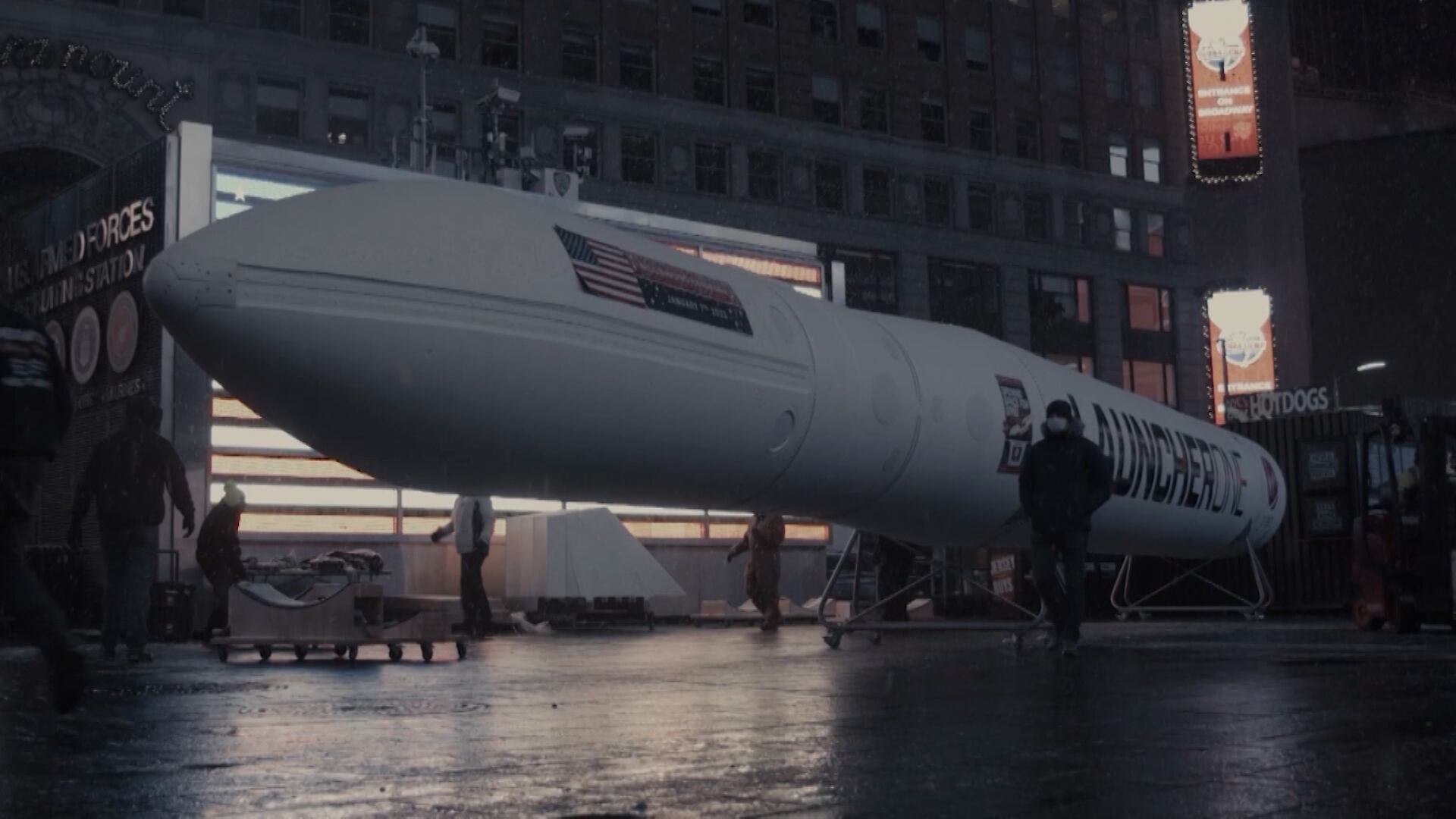
Satellite launch service Virgin Orbit has gone public on the Nasdaq via a SPAC merger with NextGen Acquisitions with a valuation of about $3.2 billion. CEO Dan Hart joined Cheddar's "Between Bells" from in front of his LauncherOne rocket in New York City's Times Square to talk about what's next after the IPO, an upcoming "Above the Clouds" mission to deliver commercial and national security payloads, and the benefits of their rockets being launched from commercial 747 aircraft. "We can launch anywhere in the world," he said. "There are almost 80 space agencies across the world, for instance, and about 10 of them have space launch. We can give them a space flight capability overnight by taking a runway and turning it into a spaceport."
Tech and entertainment giant Sony appears to be getting serious about automaking. An electric concept SUV — the Vision S-02 — was unveiled at CES 2022 and is slated to be produced by a new subdivision, Sony Mobility. This comes after the company revealed the Vision S concept Sedan at CES 2020.
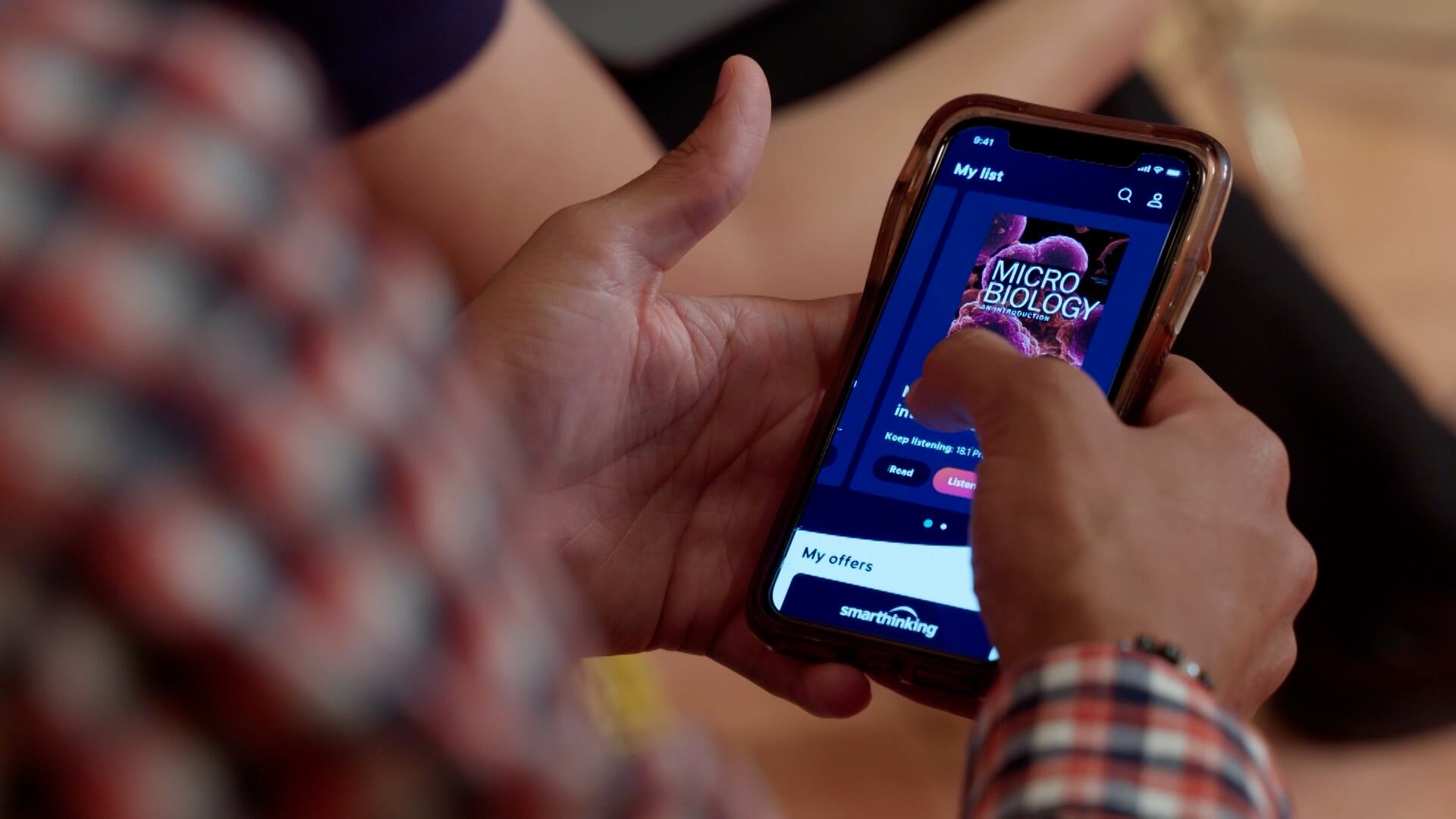
The highly transmissible omicron variant of COVID-19 has forced school districts nationwide to return to virtual instruction, but there remain concerns about the quality of education students are receiving online. Andy Bird, CEO of Pearson, an education publisher and assessment service provider, joined Cheddar's "Opening Bell" to talk about steps educators and parents can take to make the remote learning experience an easier one, noting that one of the biggest advantages teachers can have is flexibility. "You cannot take a rigid timetable that works in the analog world and replicate that in the digital world. You need to have flexibility. Asynchronous learning, I think, is a very important part," he told Cheddar.
Rob Dongoski, EY Food and Agriculture Leader, joins Cheddar News to discuss what advancements in tech will shape the future of food, and how we are going to see more and more personalization in the food system.
The year 2021 saw numerous natural disasters around the world, including extreme heat and wildfires, rare deep freezes, and historic flooding. This year's United Nations COP26 conference was key for getting world leaders on board with emissions reductions and other climate-focused policies as the UN Secretary-General said the agency's report on global warming is a 'code red for humanity.' In the U.S., President Joe Biden has focused most of his domestic agenda on slashing emissions and building climate-focused infrastructure. Guests from The Economist, UNC-Chapel Hill, Global Rescue, and more join Cheddar Climate's year-end special to discuss how the climate changed in 2021, and what to expect in 2022.