The Commerce Department on Tuesday updated and broadened its export controls to stop China from acquiring advanced computer chips and the equipment to manufacture them.
The revisions come roughly a year after the export controls were first launched to counter the use of the chips for military applications that include the development of hypersonic missiles and artificial intelligence.
“These export controls are intended to protect technologies that have clear national security or human rights implications,” Commerce Secretary Gina Raimondo said on a call with reporters. “The vast majority of semiconductors will remain unrestricted. But when we identify national security or human rights threats, we will act decisively and in concert with our allies.”
The updates stemmed from consulting with industry and conducting technological analyses. There will now be a gray zone that will be monitored for chips that could still be used for military aims even if they might not meet the thresholds for trade limitations.
Chip exports can also be restricted to companies headquartered in Macao or anywhere under a U.S. arms embargo, preventing countries of concern from circumventing the controls and providing chips to China.
The updates also introduce new requirements that make it more difficult for China to manufacture advanced chips abroad. The list of manufacturing equipment that falls under the export controls has also been expanded, among other changes to the policy.
The export controls announced last year were a source of frustration for the Chinese government, which viewed the design and manufacturing of high-level semiconductors as essential for its economic and geopolitical goals. Raimondo has said the limits on these chips are not designed to impair China's economic growth.
In an August meeting, Raimondo and her Chinese counterparts agreed to exchange information about the export controls. But a senior administration official, insisting on anonymity to discuss the policy, said the U.S. government did not discuss with China the parameters of the revised export controls. China’s No. 2 leader, Premier Li Qiang, appealed for “concrete actions” by Washington to improve relations, a reference to Chinese pressure for changes in U.S. policy on technology, Taiwan and other issues.
Chinese government officials are scheduled to go to San Francisco in November for the Asia-Pacific Economic Cooperation summit.
President Joe Biden has suggested he could meet on the sidelines of the summit with Chinese President Xi Jinping, though a meeting has yet to be confirmed. The two leaders met last year following the Group of 20 summit in Bali, Indonesia, shortly after the export controls were announced.
An economic development agency, the Northwest Arkansas Council, is looking to draw technology professionals to their region of the Southern state with incentives like $10,000 worth of Bitcoin and a new bicycle. Nelson Peacock, president and CEO of the private nonprofit made up of companies like Walmart and Tyson Foods, joined Cheddar to talk about the program to further power his local economy. "By offering the payment in Bitcoin, we're looking to identify those people with interest and expertise in the underlying technologies, the blockchain technologies," he said.
After months of investors turning to crypto as a hedge against inflation, instead of the traditional hedge of gold, one crypto exchange is working with a token creator to launch a digital coin backed by a physical asset. GCOIN gives customers a digital title of ownership to 99.99% pure physical gold which is stored in a secured vault. Brent de Jong, GCoin's founder and Kristin Boggiano, Co-Founder and President of CrossTower, a cryptocurrency exchange, join Cheddar News' Closing Bell to discuss the GCOIN rollout, customer interest, why crypto is used as an inflation hedge, and more.
Retail platform operator and delivery company, Foxtrot,
raised $100 million in a Series C round led by D1 Capital Partners. Foxtrot bills itself as the modern convenience store that combines what it calls in-store curated discovery with 30-minute delivery and 5-minute pickup. Since launching first as a digital-only delivery service, the company has since grown into a popular local retailer, opening 16 brick and mortar locations across Chicago, Dallas, and Washington, DC. Foxtrot co-founder and CEO Michael LaVitola joined Cheddar News' Closing Bell to discuss.
The January 6 committee has subpoenaed four tech giants for more information on what they did and didn't do leading up to last year's deadly Capitol insurrection. Google, Facebook, Twitter, and Reddit were asked to assist the investigation in August, but the committee says their responses have been 'inadequate.' Craig Timberg, a national technology reporter at the Washington Post, joins Cheddar News' Closing Bell for more details about the subpoenas, why this is happening now, and how it might impact social media companies moving forward.
As Meta and Microsoft ramp up their AR and VR tech futures, analysts have been waiting on word from Apple, but the consumer tech giant is reportedly delaying such an announcement. Doug Astrop, a managing partner at Exponential Investment Partners, joined Cheddar to dive into the rumors about the possibilities of a foray into the metaverse by Tim Cook's megacorp sometime in 2022 or 2023. "We can't really predict with a great deal of certainty how it's going to play out, but I'm confident Apple's going to be a big player and do very well in any scenario that unfolds," said Astrop.
Makena Kelly, politics reporter at The Verge, joins Cheddar News to discuss what's next for net neutrality as Biden's other nominee for the FCC, Gigi Sohn, awaits votes from the committee and Senate.
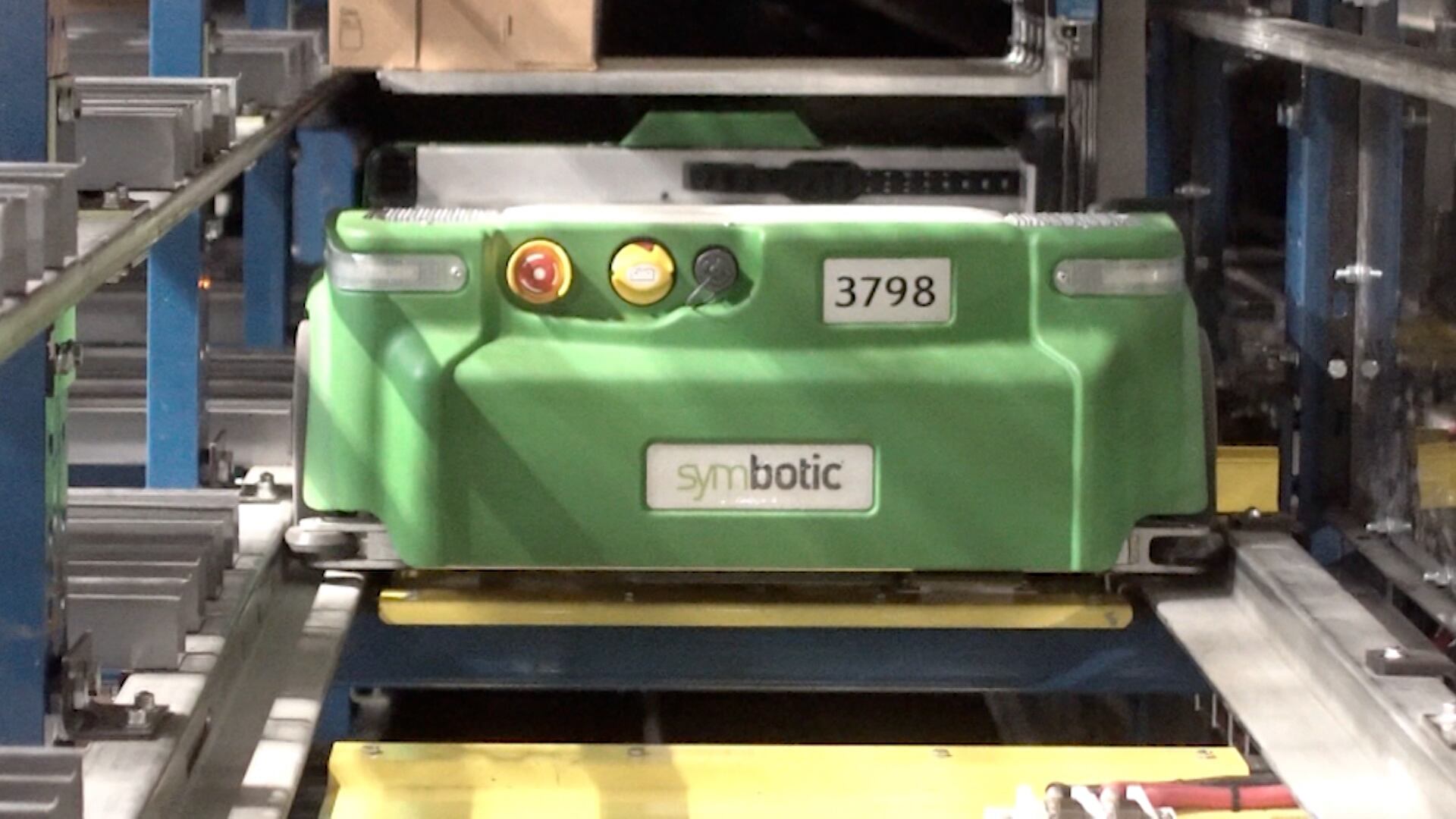
Specializing in AI, robotics, and automation for the global supply chain, Symbotic announced last month it will be tapping the public markets in a SPAC deal with investment giant SoftBank. Symbotic CFO Tom Ernst and Vikas Parekh, a managing partner at SoftBank Investment Advisers spoke with Cheddar about going public and the future of modernizing logistics amid the constrained supply networks. "The supply chain is fundamentally broken," said Ernst. "By employing the best in modern technology for autonomous vehicles and artificial intelligence, we're able to fundamentally rethink the way in which you receive and store and sort goods, making for a dramatically more efficient supply chain."
Michael Hershfield, Founder & CEO of Accrue Savings, joined Wake Up With Cheddar to discuss the company's new round of funding, and its core mission of rewarding consumers for saving rather than taking on more debt with buy now, pay later options.