The Commerce Department on Tuesday updated and broadened its export controls to stop China from acquiring advanced computer chips and the equipment to manufacture them.
The revisions come roughly a year after the export controls were first launched to counter the use of the chips for military applications that include the development of hypersonic missiles and artificial intelligence.
“These export controls are intended to protect technologies that have clear national security or human rights implications,” Commerce Secretary Gina Raimondo said on a call with reporters. “The vast majority of semiconductors will remain unrestricted. But when we identify national security or human rights threats, we will act decisively and in concert with our allies.”
The updates stemmed from consulting with industry and conducting technological analyses. There will now be a gray zone that will be monitored for chips that could still be used for military aims even if they might not meet the thresholds for trade limitations.
Chip exports can also be restricted to companies headquartered in Macao or anywhere under a U.S. arms embargo, preventing countries of concern from circumventing the controls and providing chips to China.
The updates also introduce new requirements that make it more difficult for China to manufacture advanced chips abroad. The list of manufacturing equipment that falls under the export controls has also been expanded, among other changes to the policy.
The export controls announced last year were a source of frustration for the Chinese government, which viewed the design and manufacturing of high-level semiconductors as essential for its economic and geopolitical goals. Raimondo has said the limits on these chips are not designed to impair China's economic growth.
In an August meeting, Raimondo and her Chinese counterparts agreed to exchange information about the export controls. But a senior administration official, insisting on anonymity to discuss the policy, said the U.S. government did not discuss with China the parameters of the revised export controls. China’s No. 2 leader, Premier Li Qiang, appealed for “concrete actions” by Washington to improve relations, a reference to Chinese pressure for changes in U.S. policy on technology, Taiwan and other issues.
Chinese government officials are scheduled to go to San Francisco in November for the Asia-Pacific Economic Cooperation summit.
President Joe Biden has suggested he could meet on the sidelines of the summit with Chinese President Xi Jinping, though a meeting has yet to be confirmed. The two leaders met last year following the Group of 20 summit in Bali, Indonesia, shortly after the export controls were announced.
Soildus Labs, a market compliance and surveillance technology provider for crypto firms, has spearheaded the launch of the Crypto Market Integrity Coalition, a pledge committing to a safe and sensibly-regulated crypto industry. Kathy Kraninger, VP of Regulatory Affairs at Solidus Labs, discusses on Cheddar News' Closing Bell the biggest problems in the digital asset space that this new initiative plans to solve.
The global chip shortage continues to weigh on the automotive industry. For example, Ford says it is suspending or cutting production at eight of its factories in North America through next week due to the shortage. Balu Balakrishnan, President and CEO of Power Integrations, joins Cheddar News' Closing Bell, where he elaborates on why the chip shortage has dragged into 2022.
Peloton has weathered a seemingly never-ending storm the past few months: PR blunders, sinking customer demand, and in recent weeks, reported cost-cutting and potential layoffs. Now, several companies are said to be in the mix as potential buyers: Amazon, Netflix, Disney, and Apple. How likely is it that one of these companies pursues a deal — and how likely is it that it will be Apple who buys Peloton? Dan Ives, Managing Director of Equity Research at Wedbush Securities, joins Closing Bell to discuss his thoughts about Apple pursuing a Peloton takeover,
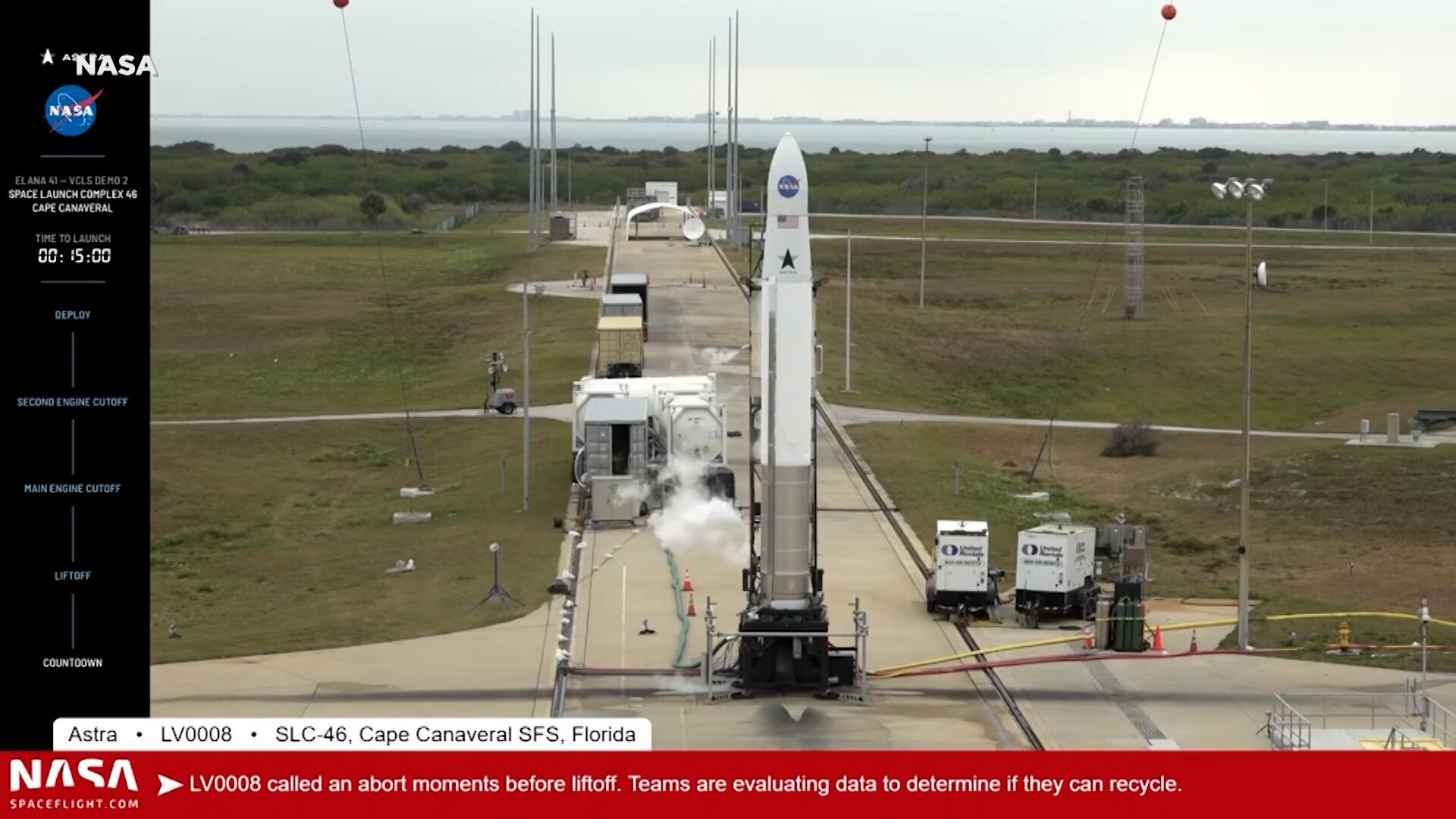
Astra aborted the launch for NASA ELaNa 41 Mission out of Cape Canaveral on Monday due to what was described as a minor issue, but the company's stock fell nearly 14 percent following the news. Jim Cantrell, CEO and co-founder of Phantom Space, which builds and launches spacecraft of its own, joined Cheddar to discuss the scrubbed mission. “The last thing you want is for this to go wrong, you're better to err on the side of safety expectations,” Cantrell explained, noting that the mission delay was a normal event.
The Biden Administration is set to revise federal rules to address potential security risks from foreign-owned apps, mainly Tiktok. This comes after the White House opted not to pursue a forced shutdown of the Chinese-owned video sharing platform. Under these new rules, federal oversight would be expanded to explicitly include apps that could be used by foreign adversaries to steal or otherwise obtain data. Senior Fellow at the Foundation for Defense of Democracies, Craig Singleton, joined Cheddar to discuss more.
The metaverse platform Decentraland hosted its first wedding over the weekend. The union was overseen by Rose Law Group, at the firm's virtual property, hosting witnesses including 2,000 guests. The ceremony endured some technical glitches before being completed.
The gaming industry has been under the spotlight so far this year following some big mergers and acquisitions. This week featured earnings of three major gaming companies, but also Meta and for the latter, things are not doing too hot. Joining Cheddar News to break it all down was Kenny Rosenblatt, President and Co-Founder of Arkadium.