Senators will get four hours of debate Friday before voting on whether to call witnesses and introduce documents — a vote that is expected to fail after Senator Lamar Alexander (R-Tenn.), announced late last night.
Alexander said that though the House Managers indeed proved the president used Ukraine aid to force an investigation into former Vice President Joe Biden and his son, he does not believe the conduct rises to the level of an impeachable offense.
Without Alexander's vote, the push for witnesses all but assuredly ended as Senator Lisa Murkowski (R-Alaska) joined him Friday in rejecting the call. Even if Senators Susan Collins (R-Maine) and Mitt Romney (R-Utah) were to vote yes, the motion will fail unless Chief Justice John Roberts makes a ruling that would set the vote aside, a ruling he is not expected to make.
Once the Senate votes on the witness issue, it's not clear what happens next. Senator Mike Braun (R-Ind.) told Cheddar that after the initial vote "it's not necessarily quick. There's a lot of parliamentary wrestling that goes on to bring it to the ultimate vote, which is the verdict.
"Even in Senator Alexander's statement, though he came to the wrong conclusion, he's said it was proven the president did what he was accused of," Senator Minority Leader Chuck Schumer (D-N.Y.) told reporters before the start of what may be the last day of the president's impeachment trial.
Republicans have made a few key arguments against witnesses, primarily that the House should have pushed harder to call witnesses, a court fight over testimony could prolong the trial for months, and that if the House says its case is clear it shouldn't need more evidence.
Democrats have argued Senate Republicans could keep the trial short by having Chief Justice John Roberts sign off on subpoenas because that would likely limit court reviews from lower courts. If Republicans do not vote for witnesses, Schumer says they are aiding the president in "the greatest cover-up since Watergate."
"The truth will eventually come out," Schumer said.
"Despite all the arguments back and forth, the bottom, bottom thing, is: I don't know how you can not want to hear from Bolton … One of the senators called it circumstantial evidence, so why wouldn't you want to hear from the man who was in the room where it happens," Senator Amy Klobuchar (D-Minn.) told reporters after the conclusion of yesterday's question and answer session at almost 11 pm ET.
She said she has always seen this as "an economic check, but also a decency check, a patriotism check on this president" and called today "game day."
Today's vote on allowing witnesses will ultimately set a precedent for impeachment trials moving forward, but also for questions about executive privilege and congressional oversight, as both House Managers and defense lawyers have repeatedly warned senators.
"You cannot have a true acquittal if you've not had a fair trial," Senator Kamala Harris (D-Calif.) said at a press conference on Friday morning.
"Let fairness ring … Americans know Democrats are for a fair trial and witnesses and documents are needed," Minority Leader Schumer said.
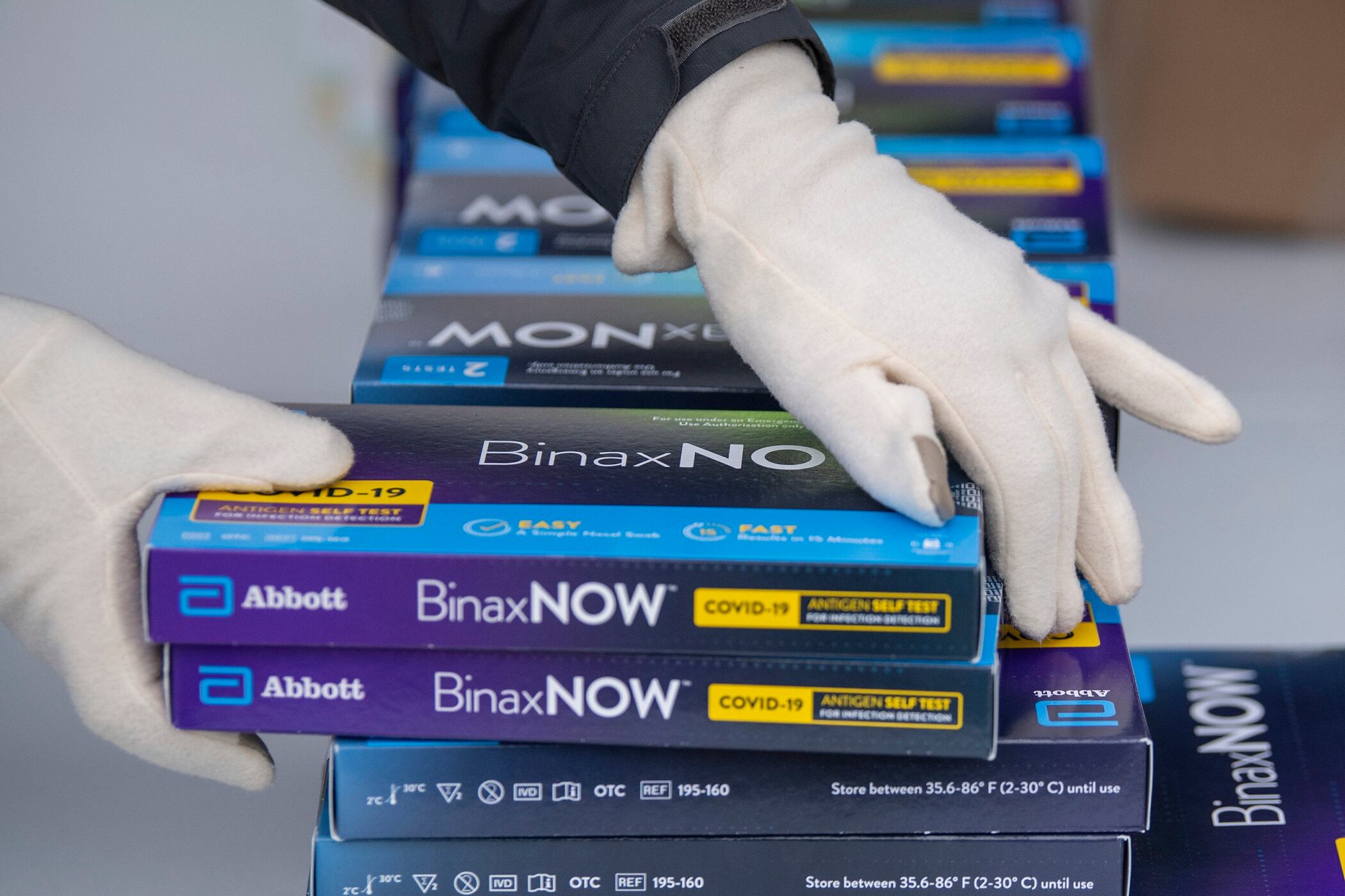
The Biden administration on Tuesday quietly launched its website for Americans to request free at-home COVID-19 tests, a day before the site was scheduled to officially launch.
Just 27% of voters aged 18-29 approve of the job Biden is doing as president, according to a survey from The Economist and YouGov late last year. Santiago Mayer, executive director of Voters of Tomorrow, joins Cheddar Politics to discuss why President Biden is losing support among young voters.
Jesse Lehrich, co-founder of Accountable Tech, joins Cheddar News to discuss it being one year since Trump was exiled from social media and the former President's new platform 'Truth Social.'
Cliff Albright, co-founder of the group Black Voters Matter, joins Cheddar Politics to discuss why he boycotted President Biden's voting rights speech this week, and the push from Senate Democrats to debate and vote on the Freedom to Vote Act and the John Lewis Voting Rights Advancement Act.
Senator Jon Ossoff (D-Ga.) has teamed up with fellow Democratic senator and former astronaut Mark Kelly to introduce the Ban Congressional Stock Trading Act, a bill to essentially end stock trading by sitting lawmakers. From the other side of the aisle, Senator Josh Hawley (R-Mo.) introduced his own legislation to enact something similar. The dueling bills come at a time when it's popular to constrain members of Congress from owning and trading stocks. Karl Evers-Hillstrom, a business and lobbying reporter at The Hill, spoke to Cheddar about the significance of the bills, and what they could mean for lawmakers, their families, and staffers moving forward.
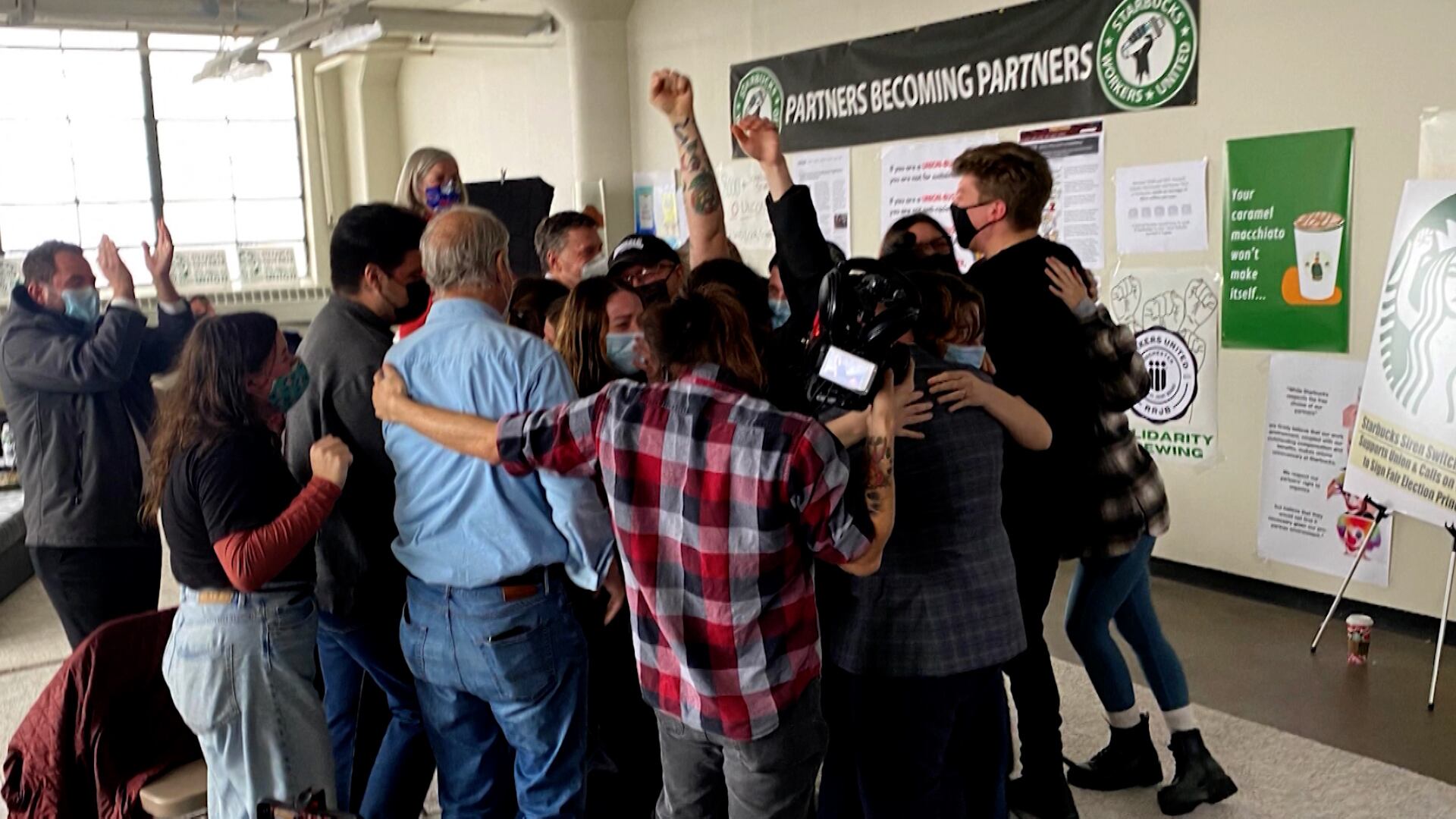
A second Starbucks location in the U.S. has officially voted to unionize. On Monday, the National Labor Relations Board announced workers at the Starbucks store located in the Buffalo, NY suburb of Cheektowaga voted 15-9 in favor of being represented by Workers United, an affiliate of the Service Employees International Union. The New York Times reports votes were tallied in December but remained inconclusive as the union challenged the ballots of several employees it said did not work at the store. A Starbucks spokesperson has said that it may appeal the labor board's decision, which comes as several other Starbucks stores across the country are also pushing to form a union. Danka Dragic, shift supervisor for the second Starbucks store in the country to unionize, joined Cheddar News' Closing Bell to discuss.
Earlier today, Minnesota Republican Representative, Tom Emmer, introduced a bill that would prevent the Federal Reserve from issuing a central bank digital currency directly to American consumers. According to the Congressman from Minnesota, requiring Americans to open a fed account to access a digital currency, would "put the Fed on insidious path akin to China's digital authoritarianism." Rep. Tom Emmer joined Cheddar's None of The Above to discuss more.
Sixteen of the country's most prestigious universities have been hit with a lawsuit claiming those schools illegally conspired to eliminate competitive financial aid offers for students. Just some of the schools mentioned include Yale, Brown, Columbia, UPenn, and Cornell. Author of "Who Gets In and Why" and Professor of practice at Arizona State University, Jeff Selingo, joined Cheddar to discuss more.