Senators will get four hours of debate Friday before voting on whether to call witnesses and introduce documents — a vote that is expected to fail after Senator Lamar Alexander (R-Tenn.), announced late last night.
Alexander said that though the House Managers indeed proved the president used Ukraine aid to force an investigation into former Vice President Joe Biden and his son, he does not believe the conduct rises to the level of an impeachable offense.
Without Alexander's vote, the push for witnesses all but assuredly ended as Senator Lisa Murkowski (R-Alaska) joined him Friday in rejecting the call. Even if Senators Susan Collins (R-Maine) and Mitt Romney (R-Utah) were to vote yes, the motion will fail unless Chief Justice John Roberts makes a ruling that would set the vote aside, a ruling he is not expected to make.
Once the Senate votes on the witness issue, it's not clear what happens next. Senator Mike Braun (R-Ind.) told Cheddar that after the initial vote "it's not necessarily quick. There's a lot of parliamentary wrestling that goes on to bring it to the ultimate vote, which is the verdict.
"Even in Senator Alexander's statement, though he came to the wrong conclusion, he's said it was proven the president did what he was accused of," Senator Minority Leader Chuck Schumer (D-N.Y.) told reporters before the start of what may be the last day of the president's impeachment trial.
Republicans have made a few key arguments against witnesses, primarily that the House should have pushed harder to call witnesses, a court fight over testimony could prolong the trial for months, and that if the House says its case is clear it shouldn't need more evidence.
Democrats have argued Senate Republicans could keep the trial short by having Chief Justice John Roberts sign off on subpoenas because that would likely limit court reviews from lower courts. If Republicans do not vote for witnesses, Schumer says they are aiding the president in "the greatest cover-up since Watergate."
"The truth will eventually come out," Schumer said.
"Despite all the arguments back and forth, the bottom, bottom thing, is: I don't know how you can not want to hear from Bolton … One of the senators called it circumstantial evidence, so why wouldn't you want to hear from the man who was in the room where it happens," Senator Amy Klobuchar (D-Minn.) told reporters after the conclusion of yesterday's question and answer session at almost 11 pm ET.
She said she has always seen this as "an economic check, but also a decency check, a patriotism check on this president" and called today "game day."
Today's vote on allowing witnesses will ultimately set a precedent for impeachment trials moving forward, but also for questions about executive privilege and congressional oversight, as both House Managers and defense lawyers have repeatedly warned senators.
"You cannot have a true acquittal if you've not had a fair trial," Senator Kamala Harris (D-Calif.) said at a press conference on Friday morning.
"Let fairness ring … Americans know Democrats are for a fair trial and witnesses and documents are needed," Minority Leader Schumer said.
During the pandemic, student loan debt repayment was put on pause amid an unprecedented crisis. However, on February 1, 2022, the schedule is set to resume, and currently it looks as though the Biden administration has no plans to extend it. Cody Hounanian, the executive director of the Student Debt Crisis Center, spoke to Cheddar about why he believes the loan collection pause needs to at least be extended as borrowers are still struggling with the resurgent pandemic and inflation. "There's really no good economic or policy or political reason as far as why they're focused on getting payments started now," Hounanian said. "We surveyed 33,000 people with student loans last month. Nine out of 10 told us that they are not ready to resume payments."
As the 2022 midterm elections fast approach, here are some politicians Americans should be on the lookout for. Democratic Massachusetts state senator Sonia Chang-Diaz, who was the first Latina and Asian American woman to be elected to the state's senate, now has her eye on the governorship with Republican Charlie Baker leaving. New Jersey GOP candidate for Congress, Billy Prempeh also bears watching, and while Boston's newest mayor, Democrat Michelle Wu, was already sworn in last month, all eyes will be on Beantown as the first woman and first person of color to hold the office tries to usher in a new era for the city.
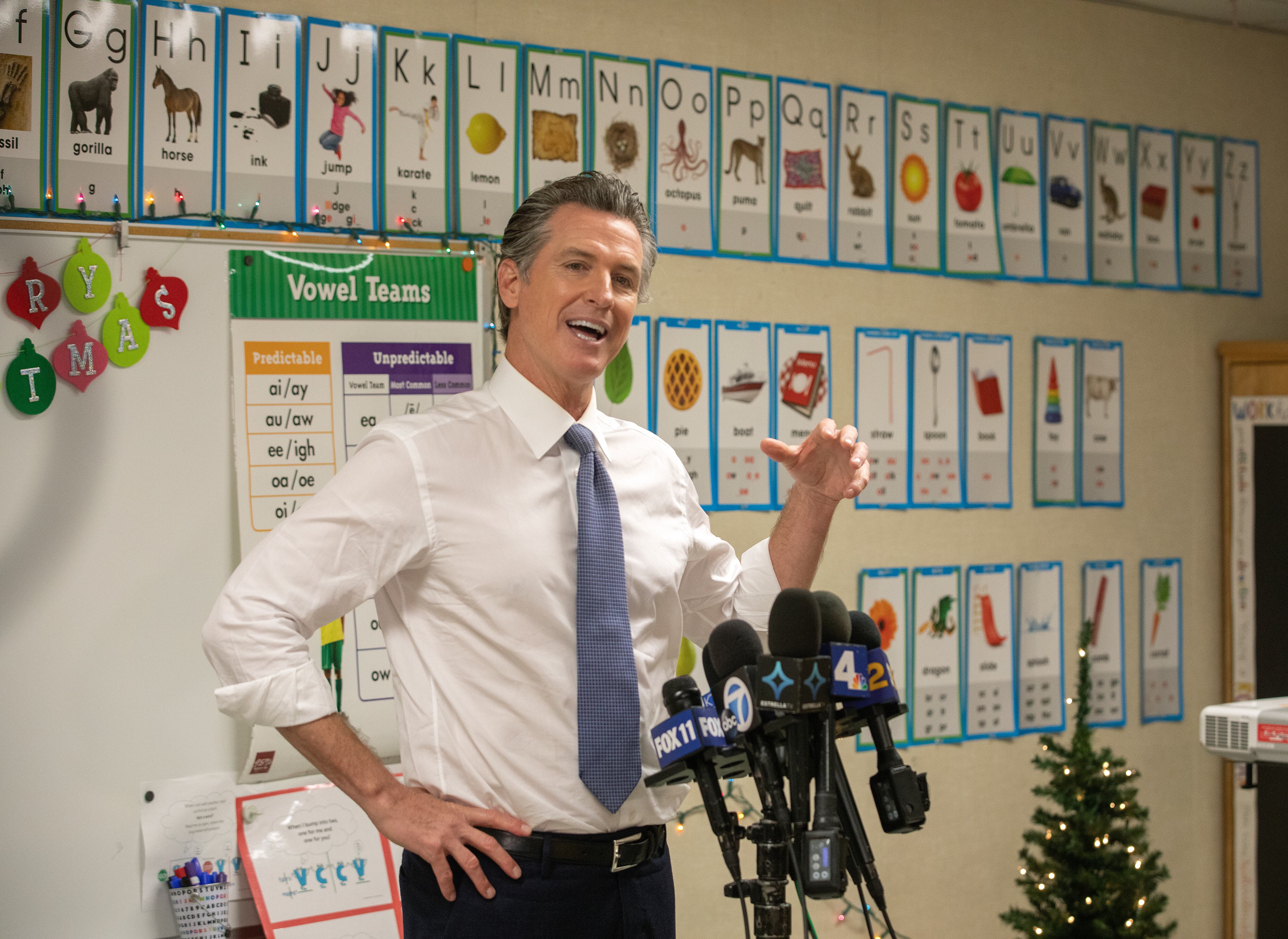
Emily Hoeven, newsletter editor at CalMatters, joins Cheddar News to discuss California Governor Gavin Newsom's gun law modeled after Texas's abortion law.
Chuck Rocha, host of 'Nuestro' podcast and opinion contributor at The New York Times, joins Cheddar News to discuss why Democrats are losing Hispanic voters.
More businesses are requiring workers to return to the office, but there is concern that many employees in the middle class, especially women and people of color, need remote work options for reasons including childcare and financial security. Joan Williams, director of the Center for WorkLife Law at the University of California, joined Cheddar to discuss why office mandates could be detrimental to the middle class. She noted that while companies claim a return to offices would help foster more collaboration and efficiency, reports show that they are successfully able to do their jobs from home.
The U.S. postal service has confirmed that it secretly developed and tested a blockchain-based mobile voting system ahead of the 2020 election. Susan Greenhalgh, senior advisor on election security, Free Speech for People, joins Cheddar News to discuss the cybersecurity complications of a mobile voting system.
The U.S. Supreme Court ruled to allow the controversial Texas abortion law to remain in effect, banning abortion at six weeks and allowing any private citizen to sue a person or doctor aiding or abetting someone seeking an abortion. Outraged at this decision, California Governor Gavin Newsom is working to draft a proposal in line with the law as it relates to guns. Shawn Hubler, California correspondent at the New York Times, joins Cheddar News to discuss.