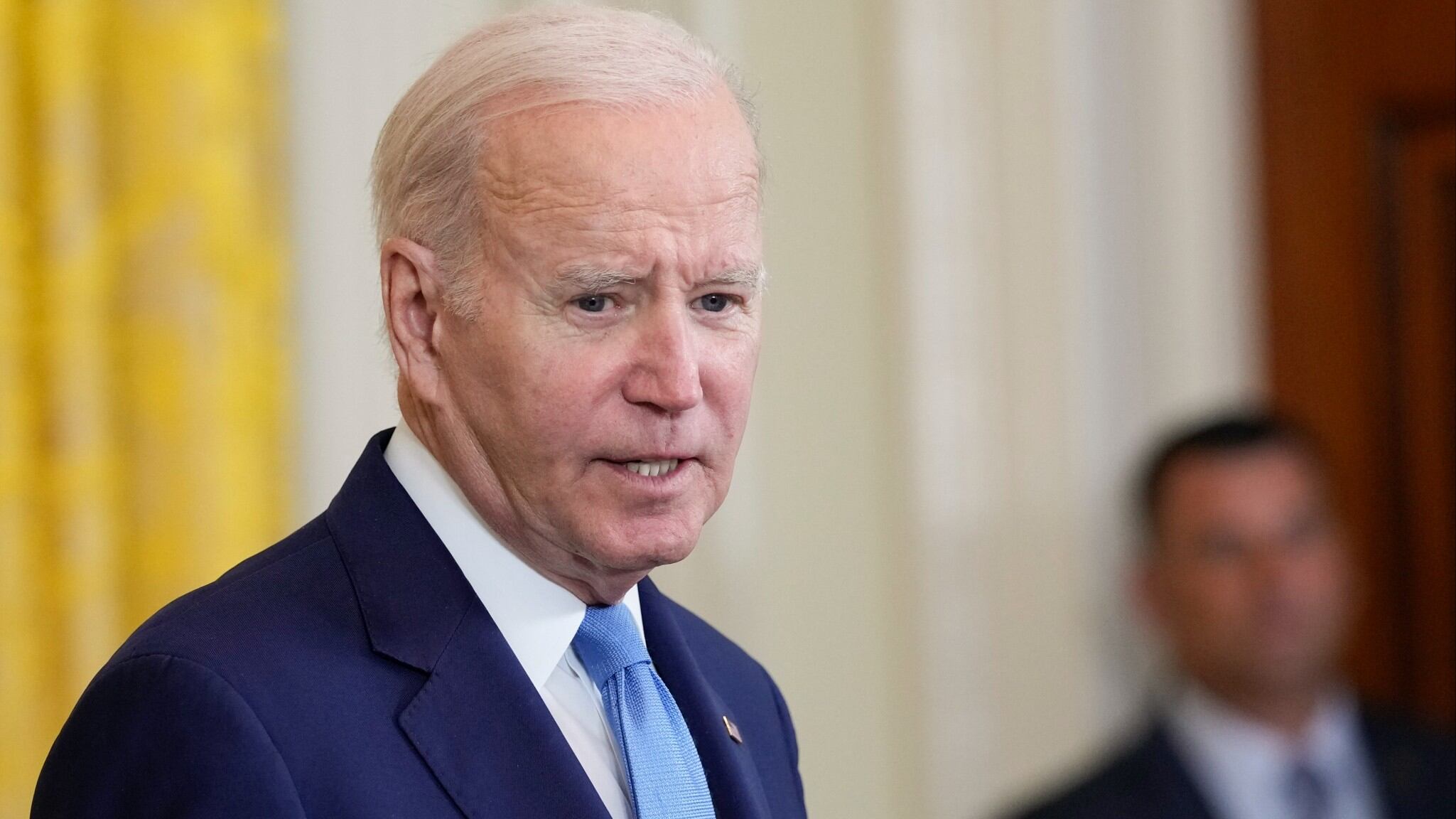
President Joe Biden speaks at the White House in Washington, Thursday, June 8, 2023. (AP Photo/Susan Walsh)
WASHINGTON (AP) — President Joe Biden's administration on Tuesday announced new rules meant to push insurance companies to increase their coverage of mental health treatments.
The new regulations, which still need to go through a public comment period, would require insurers to study whether their customers have equal access to medical and mental health benefits and to take remedial action, if necessary. The Mental Health Parity and Addiction Equity Act requires that insurers provide the same level of coverage for both mental and physical health care — though the administration and advocates argue insurers' policies restrict patient access.
The rules, if finalized, would force insurers to study patient outcomes to ensure the benefits are administered equally, taking into account their provider network and reimbursement rates and whether prior authorization is required for care.
“Too many Americans still struggle to find and afford the care they need,” the White House said in an emailed statement.
The Democratic president's administration said it's aiming to address issues such as insurers enabling nutritional counseling for diabetes patients but making it more difficult for those with eating disorders.
By measuring outcomes, the White House said, it will force insurers to make modifications to come into compliance with the law.
President Biden says he’s “convinced” that Russian President Vladimir Putin has decided to launch a further invasion of Ukraine, saying Friday he has “reason to believe” it will occur in the "coming days."
The crypto lobbying boom kicked off last year, sparked by a broadly-worded provision in the bipartisan infrastructure bill. Cheddar's Alex Vuocolo takes a deeper look.
U.S. stocks ended Wednesday's session mixed following the release of the minutes from the Federal Reserve’s most recent meeting, and amid ongoing tensions between Russia and Ukraine. Dan Eye, Chief Investment Officer at Fort Pitt Capital Group joined Cheddar News' Closing Bell to discuss.
Applications for U.S. unemployment benefits rose last week, but remain near historically low levels, reflecting relatively few layoffs across the economy
As we celebrate Black History Month, Cheddar is highlighting prominent Black Americans who are carving their own historic paths and trailblazing in their fields. Today we feature activist Tamika Mallory.
As more and more states end mask mandates and ease other COVID restrictions, discussions about the endemic phase of the pandemic have been growing. For weeks, scientists have warned about how contagious the omicron variant is, but now it seems the tone has shifted and governors are rolling back policies they've had in place for months. Dr. Eric Feigl-Ding, epidemiologist and senior fellow at the Federation of American Scientists, joined Cheddar's Opening Bell to discuss what the next phase of the pandemic might look like, how to act now that mask mandates are ending, and if we should be worried about another variant emerging.