That Time Indiana Almost Changed the Value of Pi...
If one amateur mathematician had his way, we might not be celebrating Pi Day on March 14th.
Way back in 1897, Edward Goodwin almost convinced the Indiana state legislature to pass the [Indiana Pi Bill](https://www.agecon.purdue.edu/crd/localgov/second%20level%20pages/indiana_pi_bill.htm), which would have legally defined the value of π as 3.2.
As Curiosity.com editor and podcast host Ashley Hamer tells it, Goodwin thought that he had solved a long standing mathematical problem.
“[Mathematicians] were trying to come up with a square that had the same area as a circle, but because you have Pi in the formula for the area of a circle, you can’t actually do that,” she said. “It would mean that one of the sides would have an irrational number.”
Convinced he had the answer, Goodwin helped introduce legislation that eventually passed the Indiana House with a 67-0 vote. But the bill was stopped when it got to the State Senate.
“The Senate realized that you can’t actually make laws defining mathematical truths,” Hamer told Cheddar. “It’d be sort of like making a law saying the Earth is flat. There’s no real reason to even make that law, because that’s not really their responsibility.”
For the full interview, [click here](https://cheddar.com/videos/everything-youll-ever-need-to-know-about-pi-2).
Federal authorities say the last of the escaped monkeys from a Pennsylvania highway crash of a truck towing a trailer load of the animals has been accounted for.
They say life is about the journey, not the destination — and how you get there makes all the difference. Americans shunned train stations, roadways, and airports amid the coronavirus pandemic, never realizing things could be fundamentally different when they return. In this episode, we're exploring the evolving world of transportation, from how we get around to how goods get to us.
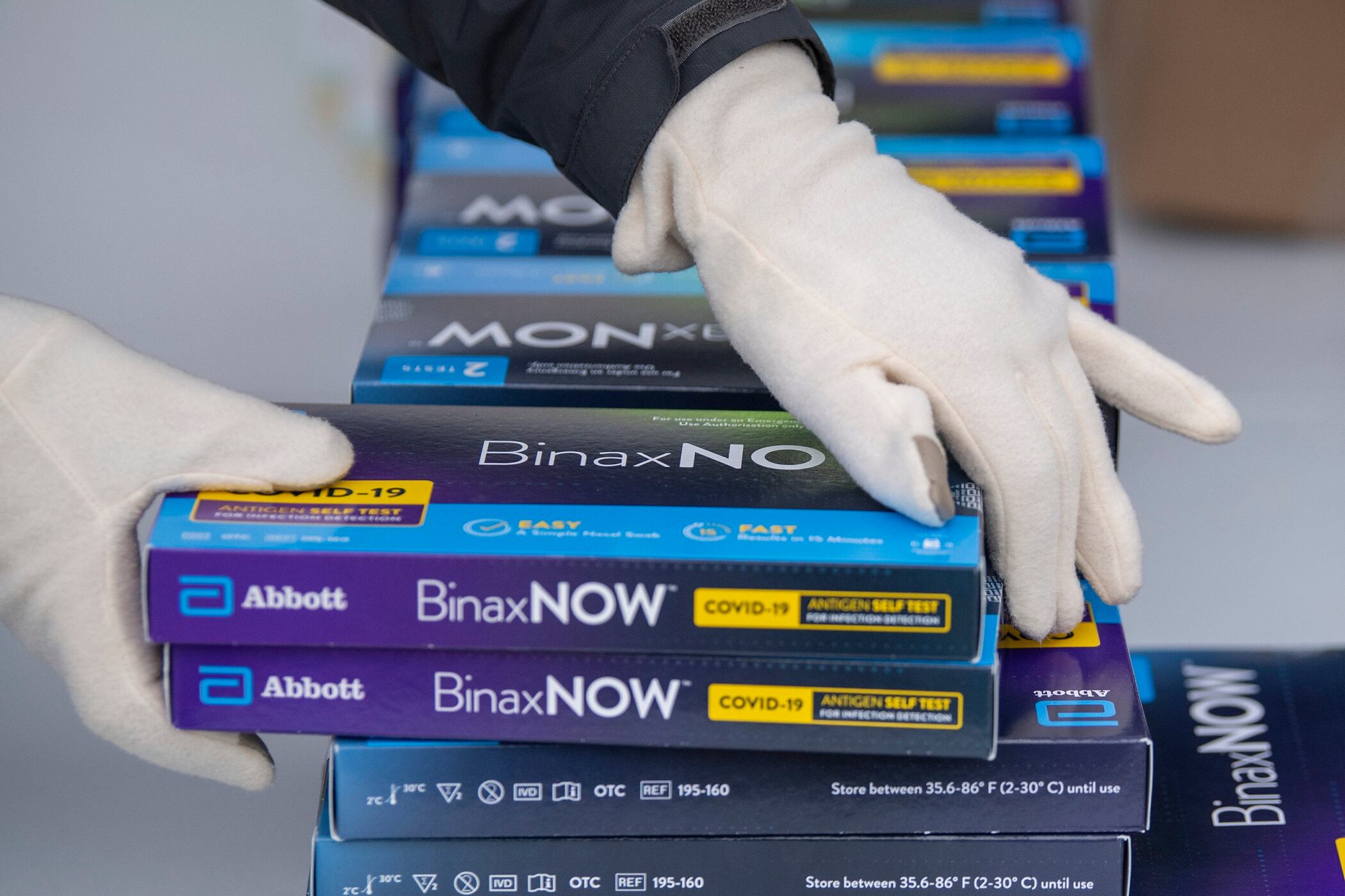
The Biden administration on Tuesday quietly launched its website for Americans to request free at-home COVID-19 tests, a day before the site was scheduled to officially launch.
Hong Kong authorities say they will kill about 2,000 small animals, including hamsters, after several tested positive for the coronavirus at a pet store where an employee was also infected.
Technology-driven sustainable waste management platform, RoadRunner Recycling, recently raised a $70 million Series D round from BeyondNetZero, the climate investing venture of General Atlantic. RoadRunner says it creates and manages end-to-end waste and recycling solutions for businesses of all sizes and that its proprietary technology can boost cost savings and improve recycling rates for companies, which in turn drives sustainability for the waste industry and our world. RoadRunner Recycling founder and CEO Graham Rihn joined Cheddar News' Closing Bell to discuss.