That Time Indiana Almost Changed the Value of Pi...
If one amateur mathematician had his way, we might not be celebrating Pi Day on March 14th.
Way back in 1897, Edward Goodwin almost convinced the Indiana state legislature to pass the [Indiana Pi Bill](https://www.agecon.purdue.edu/crd/localgov/second%20level%20pages/indiana_pi_bill.htm), which would have legally defined the value of π as 3.2.
As Curiosity.com editor and podcast host Ashley Hamer tells it, Goodwin thought that he had solved a long standing mathematical problem.
“[Mathematicians] were trying to come up with a square that had the same area as a circle, but because you have Pi in the formula for the area of a circle, you can’t actually do that,” she said. “It would mean that one of the sides would have an irrational number.”
Convinced he had the answer, Goodwin helped introduce legislation that eventually passed the Indiana House with a 67-0 vote. But the bill was stopped when it got to the State Senate.
“The Senate realized that you can’t actually make laws defining mathematical truths,” Hamer told Cheddar. “It’d be sort of like making a law saying the Earth is flat. There’s no real reason to even make that law, because that’s not really their responsibility.”
For the full interview, [click here](https://cheddar.com/videos/everything-youll-ever-need-to-know-about-pi-2).
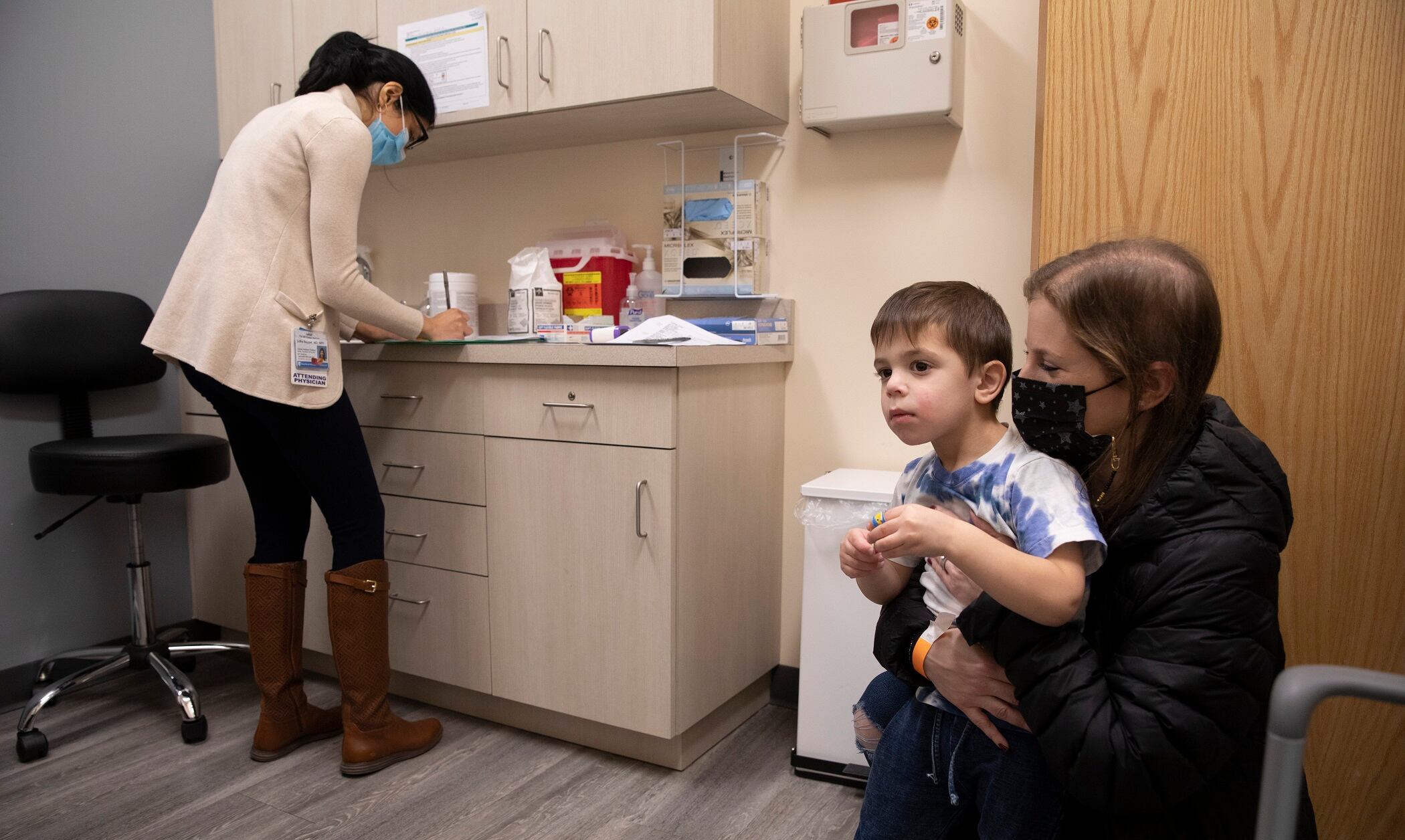
Moderna says its COVID-19 vaccine works in babies, toddlers and preschoolers. The company announced early findings Wednesday from a study of children younger than 6.
Catching you up on what you Need to Know on Mar 23, 2022, as NATO meets in Brussels to discuss Ukraine, mortgage rates rise, Justin Trudeau is set to lead Canada until 2025, tornadoes sweep through Louisiana, California may do away with SATs, and a Starbucks in Seattle unionizes.
The U.S. Securities and Exchange Commission Monday laid out a proposal that would require businesses to disclose the emissions they produce. Kathleen Rogers, CEO & President at EARTHDAY.ORG, joined Cheddar News to break down the implications of this historic step.
Deepwell Digital Therapeutics is a game development company looking to transform the way we look at video games — this time to improve health outcomes. Its goal is to create software to aid those who deal with conditions such as depression and ADHD. Company co-founder and co-CEO Ryan Douglas and co-founder Kate Edwards joined Cheddar News to talk about the technology is being used to help patients. "From a research perspective, the game industry itself has been well aware for many, many years of the kind of inherent, kind of anecdotal therapeutic value of playing games," said Edwards.
Catching you up on what you Need to Know on Mar 21, 2022, with updates on the Russian invasion in Ukraine, a Boeing 737-800 plane carrying 132 people crashed in China, Canadian Pacific rail workers on strike, another possible COVID surge, and the SEC's new climate rules for businesses.
The Bill Gates-founded Breakthrough Energy company invested $80 million in Verdox Inc. to facilitate efficient, lower-cost technolog to remove carbon from the air and emission sources. CEO of Verdox, Brian Baynes, joined Cheddar News to discuss the investment, how the company's tech works, and where he sees it going. "We anticipate that with technologies like ours, we potentially can get to the scale of about a million tons per year within 5-10 years," he said. "And then ultimately we need to be doing this at the scales of billions of tons per year and ultimately about 10 billion tons per year in the year 2050."