In this June 27, 2017, file photo, a semi-automatic rifle is displayed with a 25 shot magazine, left, and a 10 shot magazine, right, at a gun store in Elk Grove, Calif. A three-judge panel of the 9th U.S. Circuit Court of Appeals has thrown out California's ban on high-capacity ammunition magazines. The panel's majority ruled Friday, Aug. 14, 2020, that the law banning magazines holding more than 10 bullets violates the constitutional right to bear firearms. (AP Photo/Rich Pedroncelli, File)
By Don Thompson
A three-judge panel of the 9th U.S. Circuit Court of Appeals on Friday threw out California's ban on high-capacity ammunition magazines, saying the law violates the U.S. Constitution's protection of the right to bear firearms.
"Even well-intentioned laws must pass constitutional muster," appellate Judge Kenneth Lee wrote for the panel's majority. California's ban on magazines holding more than 10 bullets "strikes at the core of the Second Amendment — the right to armed self-defense."
He noted that California passed the law "in the wake of heart-wrenching and highly publicized mass shootings," but said that isn't enough to justify a ban whose scope "is so sweeping that half of all magazines in America are now unlawful to own in California."
California Attorney General Xavier Becerra did not immediately say if he would ask the full appellate court to reconsider the ruling by the three judges, or if he would appeal to the U.S. Supreme Court.
He also did not immediately say if the state would seek a delay of the ruling to prevent an immediate buying spree. Sales are currently on hold based on a stay by the lower court and cannot immediately resume.
California Rifle & Pistol Association attorney Chuck Michel called it "a huge victory" for gun owners "and the right to choose to own a firearm to defend your family," while a group that favors firearms restrictions called it "dangerous" and expects it will be overturned.
The ruling has national implications because other states have similar restrictions, though it immediately applies only to Western states under the appeals court's jurisdiction.
Gun rights groups have been trying to get such cases before the nation's high court now that it has a more conservative majority.
Aside from the magazine ban itself, Michel and the unaffiliated Second Amendment Foundation said the case has legal implications for other gun restrictions should it reach the justices because it could allow the court to clarify an obscure legal debate over what standard of review should be used.
"The Supreme Court seems inclined to do away with the complicated subjective tests that many courts have wrongly applied in Second Amendment cases, in favor of a clearer more objective 'originalist' approach that considers the text, history and tradition of a law to determine what infringements might be tolerated," Michel said in an email.
Friday's ruling was a fractured decision partly because of that issue: Two of the three judges voted to toss out the state's ban, while the third judge dissented.
U.S. District Court Judge Barbara Lynn of Texas, who had been named the third judge on the appellate panel, said the majority's ruling conflicts with decisions in six other federal appellate courts across the nation, and with a 2015 ruling by a different panel of the 9th Circuit itself. She said she would have upheld California's law based on that precedent.
"This ruling is an extreme outlier" given those earlier decisions, said Eric Tirschwell, managing director for Everytown Law, the litigation team affiliated with Everytown for Gun Safety that favors firearms restrictions. "We expect the full court will rehear the case and correct this erroneous, dangerous, and out-of-step decision."
Friday's decision upholds a 2017 ruling by San Diego-based U.S. District Judge Roger Benitez, who blocked a new law that would have barred gun owners from possessing magazines holding more than 10 bullets.
But he and the appeals court went further by declaring unconstitutional a state law that had prohibited buying or selling such magazines since 2000. That law had let those who had the magazines before then keep them, but barred new sales or imports.
The video game industry has come a long way from the first commercialized 3D video game in 1980, but it still has a long way to go. Video game creators have recently been called out for not having realistic Black hairstyles in their games and graphic artists are now taking matters into their own hands by creating The Open Source Afro Hair Library. Jovan Wilson, 3D artist and resident for The Open Source Afro Hair Library, joined All Hands to discuss.
Neil Young has come up with an ultimatum for Spotify: his music or Joe Rogan’s podcast. This comes over concerns that the podcast is spreading COVID-19 vaccine misinformation to its listeners. "The Joe Rogan Experience," which is exclusive to Spotify, is currently the number one streamed podcast on the platform.
The American Federation Teachers Union has announced its latest partnership with NewsGuard in efforts to help educators play a greater role in deciphering facts from fiction that students see online. They say the goal is to help students build critical-thinking skills while also teaching them the importance of media literacy. Executive Vice President of Partnerships at NewsGuard, Sarah Bandt, joined Cheddar to talk more.
Doctor Caroline Leaf has created a 21-day program, consisting of five simple, but mindful, steps designed to rid our minds of toxic thoughts, anxiety, and depression. This brain detox is scientifically proven to impact one's happiness and success. Doctor Caroling Leaf, neuroscientist, author, and speaker at Switch Your Brain, joins Cheddar News to discuss.
The memoir, "COMPROMISED: Counterintelligence and the Threat of Donald J. Trump", tells a familiar story from a bit of a different source: Peter Strzok himself, former FBI Counterintelligence Agents and Agency Veteran who spent most of his very long career investigating some of the most controversial inquiries, most notably in recent American history. Those inquiries were Hillary Clinton's email to even Trump Russia investigations. Former FBI Agent and Author of "Compromised" Peter Strzok, joined Cheddar to discuss more.
Foodable Labs data shows restaurants that started offering vegan options saw a 13% increase in traffic. According to this 2018 study, 51% of U.S. restaurants now offer vegan options, and we can expect that number to keep rising. This week, one plant-based, fast-casual restaurant celebrates the grand opening of their first brick-and-mortar store in New York City: PLNT Burger. Ben Kaplan, CEO of PLNT Burger, joins Cheddar News to discuss.
Commercial and residential buildings account for 13% of carbon emissions in the U.S., according to the EPA, and one company says it has a solution. Runwise says it has updated the boiler and heating systems of thousands of buildings, and that its technology not only lowers carbon output but also saves landlords money. Lee Hoffman, Co-Founder and COO of Runwise, joined Cheddar Climate to discuss.
Kirsten Jordan, real estate broker and star of 'Million Dollar Listing New York,' joins Cheddar News to talk about the state of New York City real estate, tips for homebuyers, and season 9 of the Bravo show.
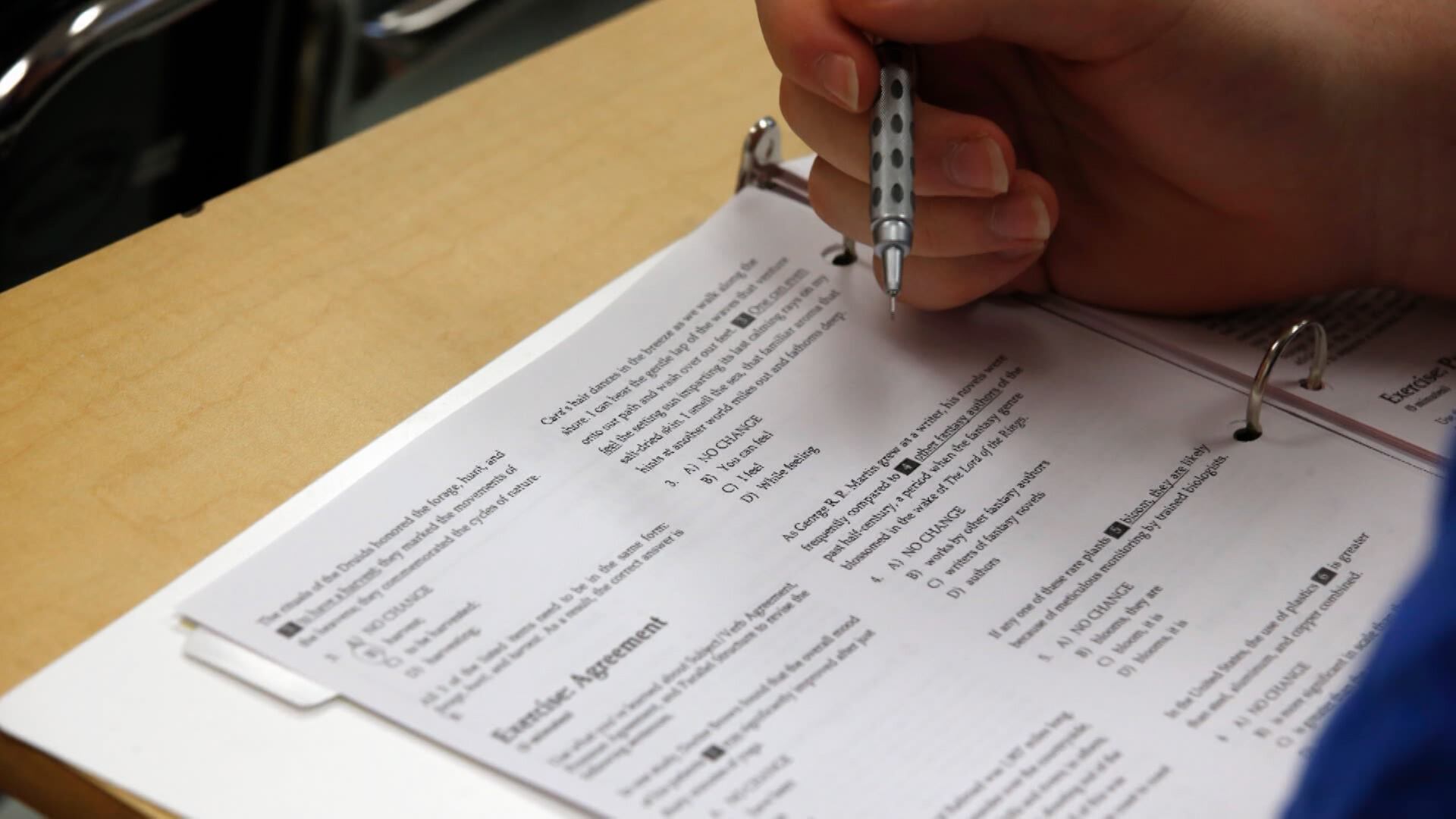
No. 2 pencils or Scantron bubble sheets are a thing of the past for the SATs. Priscilla Rodriguez, head of college readiness assessment for the College Board, joined Cheddar News Wrap to talk about the modern overhaul of the college entrance exam. On top of the change to an all-digital format and shorter time limit, the latest iteration will feature updates to help with flexibility and security. "As we've built our own digital testing platform, the app the students will do this on, we built this with security at the core," Rodriguez said. "And, in going digital we can do something we can't do today, which is, give every student who's taking the SAT, let's say in a given day, even in a given room in a school, a different version of the SAT."