Texas abortion providers on Friday conceded a final blow to their best hope of stopping the nation's most restrictive abortion law after a new ruling ended what little path forward the U.S. Supreme Court had left for clinics.
The decision by the Texas Supreme Court, which is entirely controlled by Republicans, spelled the coming end to a federal lawsuit that abortion clinics filed even before the restrictions took effect in September, but were then rejected at nearly every turn afterward.
“There is nothing left, this case is effectively over with respect to our challenge to the abortion ban,” said Marc Hearron, attorney for the Center for Reproductive Rights, which led the challenge against the Texas law known as Senate Bill 8.
Although Texas abortion clinics are not dropping the lawsuit, they now expect it will be dismissed in the coming weeks or months.
The Texas law bans abortion after roughly six weeks of pregnancy and makes no exceptions in cases of rape or incest. Abortions in Texas have plummeted by more than 50% since the law took effect.
It is likely to further embolden other Republican-controlled states that are now pressing forward with similar laws, including neighboring Oklahoma, where many Texas women have crossed state lines to get an abortion for the past six months. The Republican-controlled Oklahoma Senate on Thursday approved a half-dozen anti-abortion measures, including a Texas-style ban.
The decision by the Texas Supreme Court turned on whether medical licensing officials had an enforcement role under the law known as Senate Bill 8, and therefore, could be sued by clinics that are reaching for any possible way to halt the restrictions.
But writing for the court, Justice Jeffrey Boyd said those state officials have no enforcement authority, “either directly or indirectly."
The U.S. Supreme Court has signaled in a separate case out of Mississippi that it would roll back abortion rights, and possibly overturn its landmark Roe v. Wade decision, in a ruling that is expected later this year.
The number of monthly abortions in Texas fell by more than 50% in the two months after the law took effect, according to state health figures. But that data only tells part of the story, and researchers say the number of Texas women who are going online to get abortion pills by mail has risen sharply.
Jay-Z's Roc Nation is teaming up with The Reform Alliance to host a job fair at Madison Square Garden later this week. The event is aimed at helping disadvantaged people in NYC, including single parents and the formerly incarcerated, get jobs in the city. Participating companies include Zara, Amazon, Live Nation, VICE, and a slew of others. Dania Diaz, Managing Director, Roc Nation, joined Cheddar's Opening Bell to discuss what attendees can expect.
Cases of covid-19 are climbing in the Upper Midwest, Southwest, and parts of the Northeast. The seven-day national average is sitting at roughly 82,000 new cases which is an 11 percent jump from the week before. Dr. Amesh Adalja, Infectious Disease, Specialist, Sr. Scholar at Johns Hopkins Center for Health Security joined Cheddar's Opening Bell to discuss this recent uptick ahead of the holiday season.
Jill is joined by Baker Machado to talk all things infrastructure: where will the money go and who’s in charge? Plus, Sesame Street has its first Asian-American muppet. And a trailer for the trailer for Spiderman. Huh?
New York has always been home to some of the world’s tallest towers, but in the last 10 years the city has seen an influx of super skinny buildings towering over Central Park, built exclusively for the ultra-rich. With demand for luxury high-rise vistas being higher than ever, building developers are using every zoning opportunity they can to push height limits – and there’s one loophole that’s helping make that happen.
Ignacio Meyer, Executive Vice President of Music and Non-Scripted Entertainment at Univision, joins Cheddar News to preview the 22nd Annual Latin Grammy Awards.
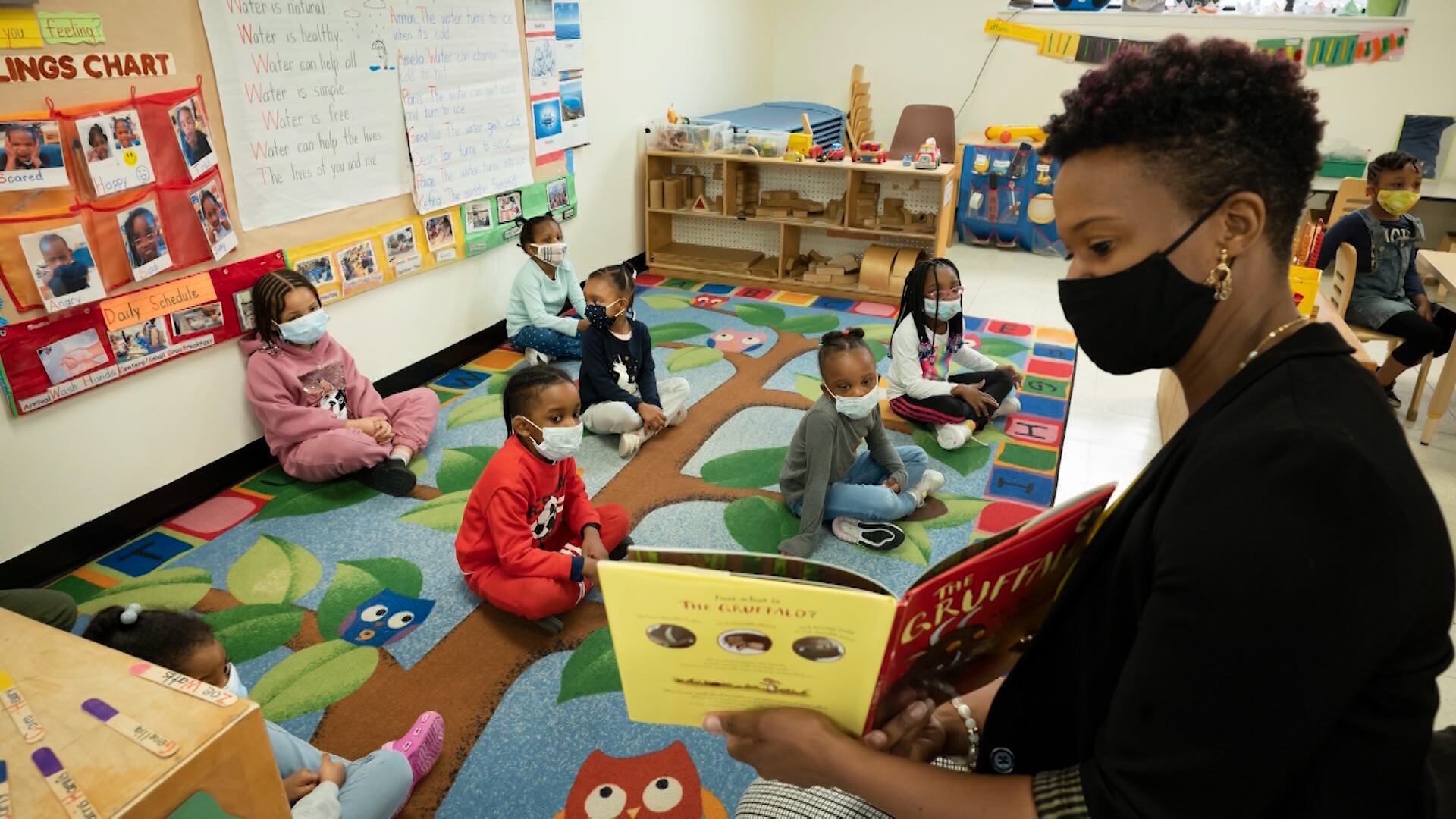
Even prior to the pandemic, the United States had already been seeing a shortage of qualified teachers staffing its schools, but COVID-19 stress added to the burdens educators faced leading to burnout and early retirements. Steve M. Matthews, superintendent of the Novi Community School District in Michigan, joined Cheddar to discuss the lack of available teachers to keep kids educated. "I think the pandemic just exacerbated some of the issues and kind of pushed the momentum forward for a teacher shortage," he said.
According to ValuePenguin survey, 45% of insured Americans are considering health insurance changes during open enrollment. Derrick Kinney, Host of the 'Good Money' podcast, joins Cheddar to break down everything you need to know about open enrollment, and how inflation is having an impact on health insurance.
Ahsaki LaFrance-Chachere, Founder of Ah-Shí Beauty, joins Cheddar to discuss what inspired her to launch this beauty brand, how the brand is staying true to her tribe's culture and traditions, and what makes it stand out in the crowded beauty space.