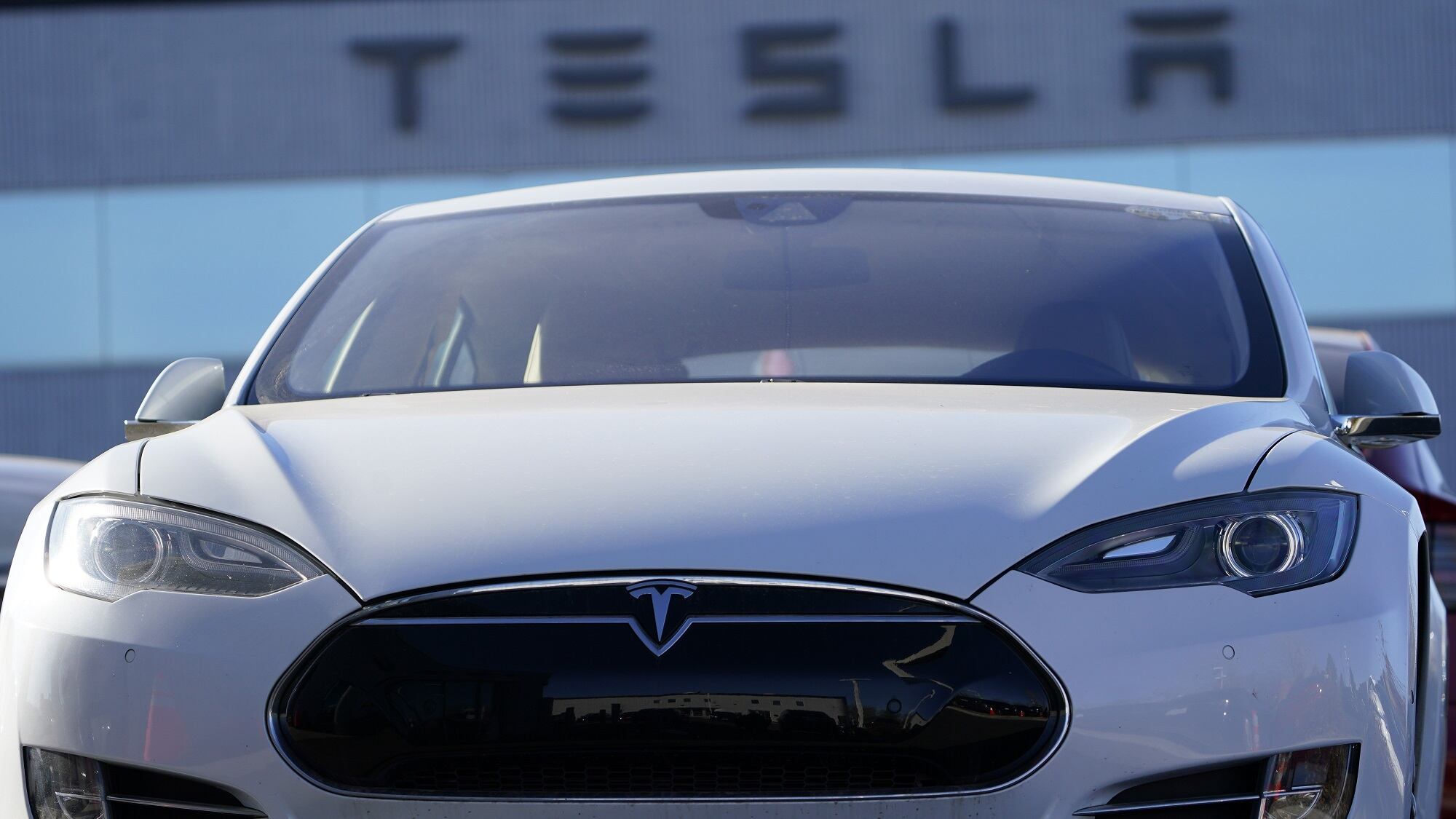
An unsold 2021 S70 sedan sits at a Tesla dealership Sunday, Nov. 8, 2020, in Littleton, Colo. Tesla will be added to the S&P 500 index on Dec. 21. Based on its market value Monday, Nov. 16, 2020, the electric car maker would be one of the top 10 companies in the benchmark index upon entry. (AP Photo/David Zalubowski)
Tesla will be added to the S&P 500 index on Dec. 21. Based on its market value Monday, the electric car maker would be one of the top 10 companies in the benchmark index upon entry.
S&P Dow Jones Indices made the announcement after the closing bell. Tesla shares jumped nearly 14% in after-hours trading.
Tesla became eligible to join the S&P 500 after posting its fourth consecutive profit in the second quarter of this year. However, it was not selected for inclusion in the index in September by the index committee at S&P Dow Jones Indices.
Tesla shares have soared 387.8% this year as the company is finally making money on a consistent basis after years of losses and continues to hit milestones for deliveries of its vehicles. Tesla earned $331 million in the third quarter on revenue of $8.77 billion.
The company, led by Elon Musk, has a market value of $386.83 billion as of Monday's close. That would make it the tenth most valueable company in the S&P 500.
S&P Dow Jones Indices said Tesla will be one of the largest companies added to the S&P 500 in the past decade. The company said it is considering adding Tesla in two stages on Dec. 14 and 21.
The company Tesla is replacing in the S&P 500 will be announced at a later date, S&P Dow Jones Indices said.
Wealthfront’s CFO Alan Iberman talks the $2.05B IPO and the major moment for robo banking as the company bets on AI, automation, and “self-driving money."
U.S. sports betting is booming as NFL and college football fuel massive activity. BetMGM CEO Adam Greenblatt breaks down trends, growth, and what’s next.
With a merger this big, creators, studios, and theaters all face uncertain futures. Here’s what experts are worried about and what good could come from it.
With disengagement rising and hybrid work shifting, 'Everybody Matters' author Bob Chapman explains why treating people well could define the future of work.
We sat down with Ali Furman, U.S. Consumer Markets Industry Leader at consulting firm PwC to ask what trends she garnered from the initial data this year.