Elon Musk's Life-or-Death Decision for Tesla's Future
*By Madison Alworth*
Elon Musk's decision to push a high-end Model 3 vehicle instead of the more affordable base model of Tesla's electric car is one of life or death for the electric car company.
The mercurial chief executive said over the weekend that the new "Performance" Model 3 is available for pre-order, and by proceeding with the souped-up version, the company can better figure out how to deliver on the promise of the mass-market Model 3.
In a [tweet](https://twitter.com/elonmusk/status/998400110156550144) late Sunday, Musk put the choice in stark terms: If he were to press ahead with the $35,000 base version, Tesla would "lose money and die." Coming forward with the $78,000 dual-engine Model 3 allows the company scale for production without hemorrhaging more cash.
"What we don't know yet, even though these specs are out there, is when those cars will actually be arriving," said Marty Padgett, editorial director at Motor Authority. "If you went on the website today, if you order your Performance model today, it says six to nine months for delivery. What's still missing is that mythical $35,000 Tesla Model 3."
On Twitter, Musk touted the souped-up Model 3's specs: all-wheel drive, top speed of 155 miles per hour, and the ability to go from 0 to 60 mph in less than 4 seconds.
It will cost more than double the base-level Model 3. And Musk didn't indicate how much longer consumers ー or investors ー would have to wait for the much-anticipated cheaper version.
One the one hand, the decision to come ahead with the "Performance" model may show that Tesla's production technology is far enough along that it can offer more options. However, the price point may also indicate that Tesla can't deliver the industry-changing mass market vehicle Musk promised.
It seems the company is further away than ever on sustainably producing a mass-market model.
Tesla would "lose money and die" if it were to ship the low-cost Model 3, Musk said in a [tweet](https://twitter.com/elonmusk/status/998400110156550144) over the weekend. He made the decision to go ahead with the high-end Model 3 over the cheaper version to work out what it would take to deliver any car at a sustainable rate.
Selling the high-end version enables the company to "achieve target rate and then smooth out flow to achieve target cost," Musk said. That could take three to six months.
It remains to be seen how many customers would want the more expensive Model 3 over the affordable car they expected, or if the new Model 3 may cannibalize sales of the top of the line Model S.
"They're selling new, they're selling innovation," said Padgett. "Tesla buyers want the latest thing."
For the full interview, [click here](https://cheddar.com/videos/teslas-model-3-is-getting-an-upgrade).
Markets closed the day mixed, and well off their lows of the day following a market meltdown earlier in the session. The Nasdaq staged a comeback late in the day, even amid ongoing worries about the Federal Reserve raising interest rates. Doug Flynn, certified financial planner and co-founder of Flynn Zito Capito, joined Cheddar News' Closing Bell to discuss the markets' close and what's driving the major indexes.
Two companies recently announced a new partnership aimed at addressing the growing demand to borrow against crypto - digital assets capital markets firm CrossTower is partnering with commercial bank, BankProv. The companies are launching a crypto lending platform that will allow Bitcoin miners to receive loans to invest in crypto mining equipment. The companies say the program also addresses the difficulty of breaking into crypto mining due to the high cost. CrossTower research analyst Martin Gaspar joins Cheddar News' Closing Bell to discuss.
Next-gen social sports platform Break the Love recently raised $2.5 million in seed funding. Break the Love's platform and iOS app allows users to discover and book group-based tennis activities, to either learn, train, or compete. The new company has already gotten support from a few big names in the world of tennis, including the coach of Naomi Osaka, as well as the United States Tennis Association and the brand Wilson. Break the Love founder and CEO Trisha Goyal joins Cheddar News' Closing Bell to discuss.
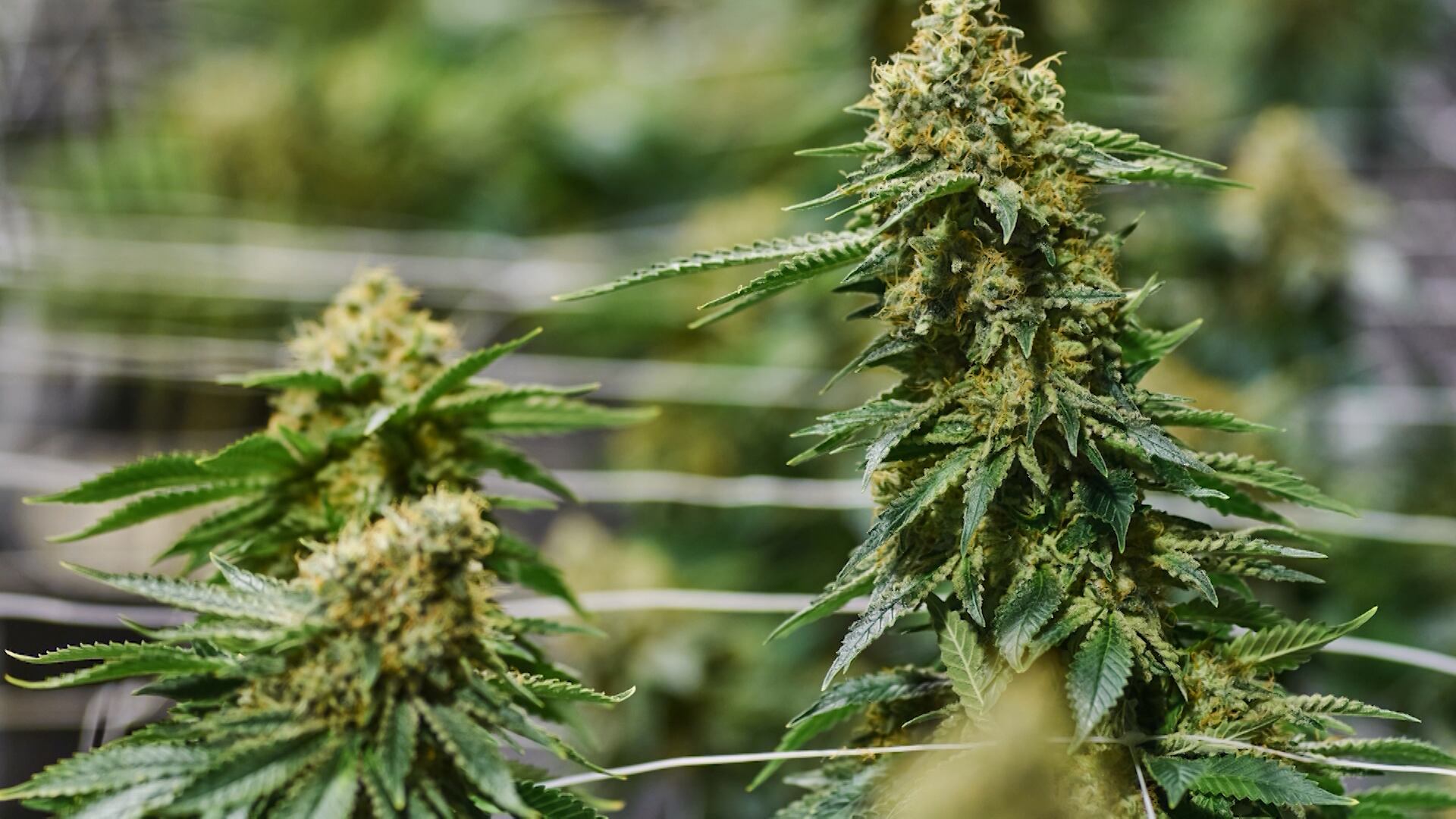
The world of NFTs and cannabis are colliding as luxury cannabis company Peakz gears up to launch a digital dispensary in the metaverse. CEO Jessie Grundy and Tiffany McBride, managing director of social equity ventures at The Parent Company, an investor in Peakz, joined Cheddar to break down exactly how a digital dispensary would work. Grundy also talked about offering low-cost NFT courses in an effort to help Oakland, California, residents not miss out on new investing opportunities, and McBride discussed why the tech-forward vision of Grundy was worth investing in for The Parent Company. "He comes with really fresh ideas that he's vetted, that he's experienced in, and I really believe the thinking along Jessie's lines is the future of cannabis," she said. "He's more than just flower and a story. He comes with concepts that are new that are innovative, and that is easy for us to get behind."
Daniel O'Brien, president and global head of enterprise at HTC America, joined Cheddar's "Closing Bell" to discuss new products and services the virtual reality brand showed off at CES 2022, including a wrist tracker — in lieu of controllers — for more accurate interactions connected to its all-in-one headset, the VIVE Focus 3. O'Brien also described a cloud-based, 5G content delivery system. "We partnered up with Lumen Technologies and from six miles away we delivered high bandwidth VR to a headset directly in the Wynn Hotel during CES," he said. "And people were able to walk around in their virtual experience through a wireless signal."