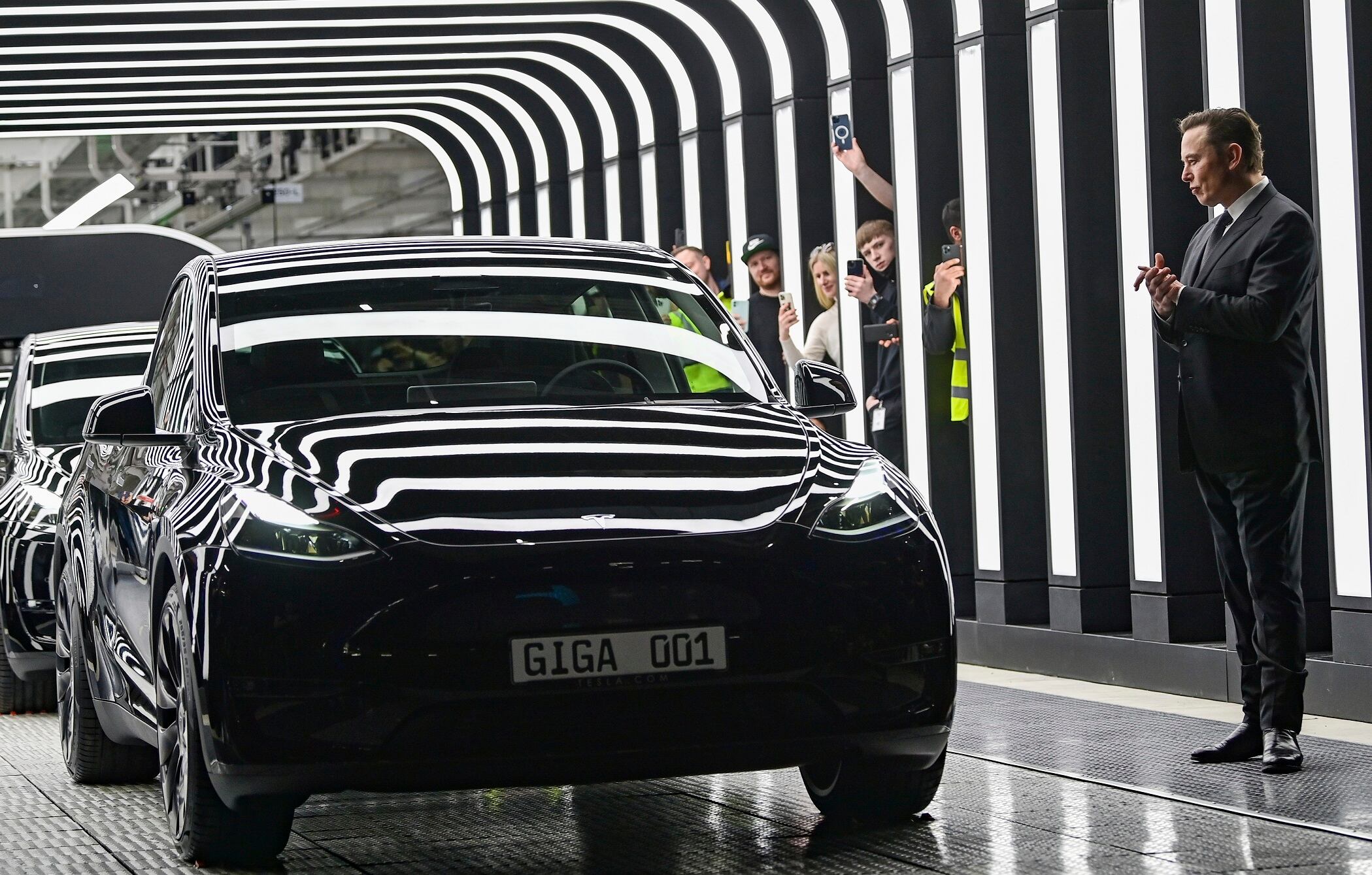
Electric car manufacturer Tesla opened its first European factory Tuesday on the outskirts of Berlin in an effort to challenge German automakers on their home turf.
The company says its new “Gigafactory" will employ 12,000 people and produce 500,000 vehicles a year once it's fully up and running. Initial production will focus on Tesla's Model Y compact sport utility vehicle.
German Chancellor Olaf Scholz attended the opening ceremony in Gruenheide, southeast of the German capital, with Tesla boss Elon Musk, who performed an impromptu dance for fans as the first cars rolled out of the factory for delivery.
He later posted a comment on Twitter thanking Germany with the words “Danke Deutschland!” surrounded by German flags.
German Economy Minister Robert Habeck said the opening of the factory was “a nice symbol” that gasoline-powered cars can be replaced with electric vehicles at a time when Germany and other European nations are trying to reduce their greenhouse gas emissions and wean themselves off Russian oil.
Tesla began building the vast facility less than three years ago, before it received official permits to do so. Had those permits not been issued, the company would have had to level the site.
“That's a different company risk culture,” Habeck said, after being asked to compare Tesla's approach with the slow pace of German construction projects such as Berlin's nearby new airport, which opened with a nine-year delay.
Environmental activists have warned that the factory could affect drinking water supplies in the region.
Tesla has dismissed those warnings. The company refused most media access to the site and the ceremony Tuesday.