By Andrew Dalton
Union leaders and Hollywood studios reached a tentative agreement Sunday to end a historic screenwriters strike after nearly five months, though no deal is yet in the works for striking actors.
The Writers Guild of America announced the deal in a statement.
The three-year contract agreement — settled on after five marathon days of renewed talks by negotiators for the Writers Guild of America and an alliance of studios, streaming services and production companies — must be approved by the guild's board and members before the strike officially ends.
The terms of the deal were not immediately announced. The tentative deal to end the last writers strike, in 2008, was approved by more than 90% of members.
As a result of the agreement, nightly network shows including NBC’s “The Tonight Show Starring Jimmy Fallon” and ABC’s “Jimmy Kimmel Live!” could return to the air within days.
But as writers prepare to potentially crack open their laptops again, it’s far from back to business as usual in Hollywood, as talks have not yet resumed between studios and striking actors. Crew members left with no work by the stoppage will remain unemployed for now.
The proposed solution to the writers strike comes after talks resumed on Wednesday or the first time in a month. Chief executives including Bob Iger of Disney, Ted Sarandos of Netflix, David Zaslav of Warner Bros. Discovery and Donna Langley of NBCUniversal reportedly took part in the negotiations directly.
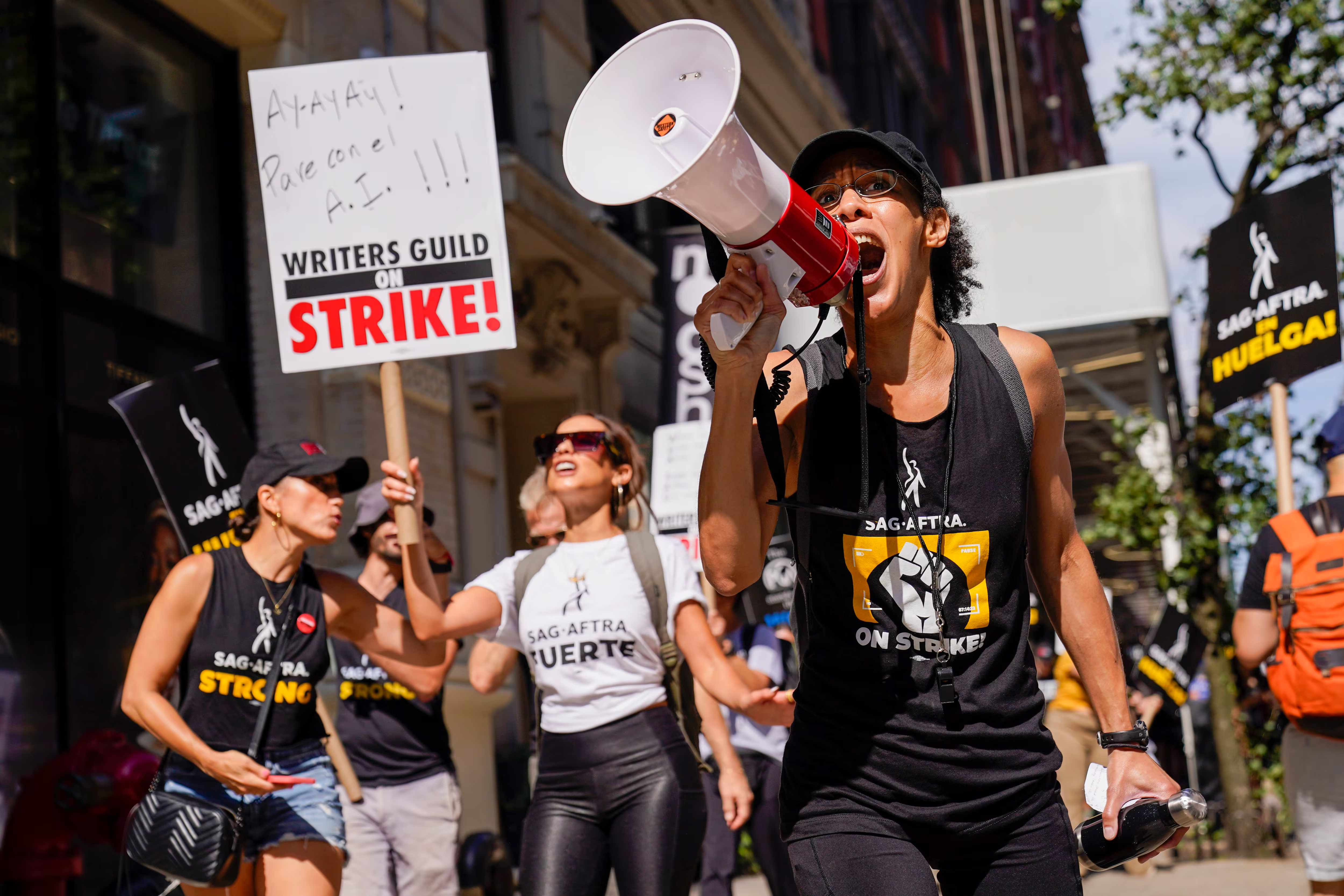
About 11,500 members of the Writers Guild of America walked off the job May 2 over issues of pay, the size of writing staffs on shows and the use of artificial intelligence in the creation of scripts. Actors, who joined the writers on strike in July, have their own issues but there have been no discussions about resuming negotiations with their union yet.
The writers strike immediately sent late-night talk shows and “Saturday Night Live” into hiatus, and has since sent dozens of scripted shows and other productions into limbo, including forthcoming seasons of Netflix's “Stranger Things," HBO's “The Last of Us,” and ABC's “Abbot Elementary," and films including “Deadpool 3” and “Superman: Legacy.” The Emmy Awards were also pushed from September to January.
More recently, writers had been targeting talk shows that were working around strike rules to return to air, including “ The Drew Barrymore Show,” “ Real Time With Bill Maher ” and “The Talk.” All reversed course in the face of picketing and pressure, and are likely to quickly return now.
The combined strikes made for a pivotal moment in Hollywood as creative labor faced off against executives in a business transformed and torn by technology, from the seismic shift to streaming in recent years to the potentially paradigm-shifting emergence of AI in the years to come.
Screenwriters had traditionally gone on strike more than any other segment of the industry, but had enjoyed a relatively long stretch of labor peace until spring negotiations for a new contract fell apart. The walkout was their first since 2007 and their longest since 1988.
On July 14, more than two months into the strike, the writers got a dose of solidarity and star power — along with a whole lot of new picketing partners — when they were joined by 65,000 striking film and television actors.
It was the first time the two groups had been on strike together since 1960. In that walkout, the writers strike started first and ended second. This time, studios opted to deal with the writers first.
The Alliance of Motion Picture and Television Producers, the group that represents employers in negotiations, first reached out to suggest renewing negotiations in August. The meetings were short, infrequent, and not productive, and talks went silent for another month.