By Damian J. Troise and Alex Veiga
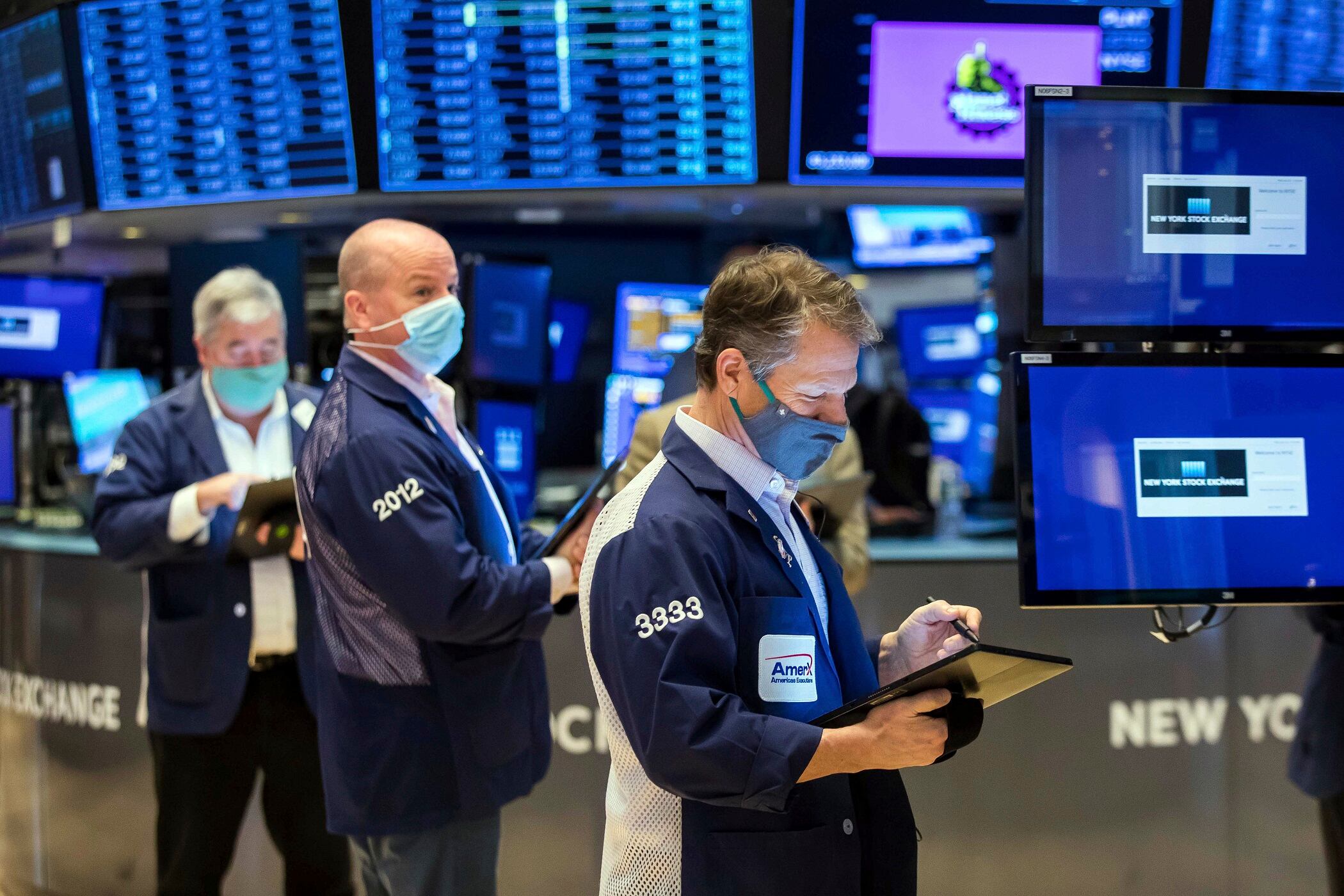
Stocks on Wall Street fell again Monday, though the market ended up bouncing nearly all the way back from an early slide led by technology companies.
A broad wave of selling pulled had the S&P 500 down by 2% in the early going, but a late-afternoon burst of buying left the benchmark index with a loss of just 0.1%. The Dow Jones Industrial Average fell 0.5% after having been down 1.6%, and the tech-heavy Nasdaq eked out a gain of less than 0.1% after having been down 2.7%.
The latest pullback followed a sell-off last week as investors shifted holdings in anticipation that the Federal Reserve will raise interest rates this year, among other moves aimed at lowering inflation. Wall Street is trying to get a better read on when and by how much the Fed will lift rates.
“It has the market a little bit rattled from the uncertainty of it all,” said J.J. Kinahan, chief strategist with TD Ameritrade. “I would expect volatility to continue to stay elevated for the rest of the first quarter, at least, as we continue to grapple with this question.”
The S&P 500 slipped 6.74 points to 4,670.29. The drop extended the index's losing streak to five days. It's now about 2.6% below the all-time high it set a week ago.
The Dow fell 162.79 points to 26,068.87, after having been down 591 points in the early going. The Nasdaq rose 6.93 points to 14,942.83, snapping a four-day losing streak. Small company stocks also lost ground. The Russell 2000 fell 8.66 points, or 0.4%, to 2,171.15.
The selling began to lose momentum at the same time as a rise in Treasury yields eased. The 10-year Treasury briefly hit 1.84% before slipping back to 1.76% by late afternoon. That matches where the yield was late Friday.
Early on, when bond yields were rising, technology stocks were the biggest drag on the S&P 500. Higher interest rates make the stocks of expensive tech companies and other pricey growth companies less attractive to investors, which is why the sector has been slipping as bond yields rise. The tech sector has been the biggest weight on the market through January and is coming off of its worst week since October 2020.
Big technology stocks have an outsized influence on the S&P 500 because of their huge size. Coming into the year, the technology sector represented 29.2% of the S&P 500.
Higher interest rates could help corral the high inflation sweeping the world, but they would also mark an end to the conditions that have put financial markets in “easy mode” for many investors since early 2020. The Fed has said it will accelerate the reduction of its bond purchases, which have helped keep interest rates low. The market now puts the chances of the Fed raising short-term rates by at least a quarter point in March at around 78%. A month ago, it was about 36%.
Industrial stocks, banks and a mix of companies that rely on consumer spending accounted for a big share of the S&P 500's decline Monday. Those losses were kept in check by gains in health care, technology and communication stocks.
A mix of deal news and financial updates moved several large stocks.
Take-Two Interactive, maker of “Grand Theft Auto,” plunged 13.1% for the biggest decline in the S&P 500 after announcing a deal to buy Zynga, which makes “Words With Friends” and “Farmville." Zynga jumped 40.7%.
Athletic apparel maker Lululemon Athletica fell 1.9% after warning investors that a surge in virus cases hurt its fourth-quarter financial results. Medical products maker and distributor Cardinal Health fell 5.9% after saying that supply chain problems will hurt profits for its medical segment.
Investors have a busy week of economic reports and corporate earnings.
On Wednesday, the Labor Department will release an update on how inflation is impacting prices with its Consumer Price Index for December. The agency will release give investors details on how inflation is impacting businesses with its Producer Price Index for December on Thursday.
On Friday, Citigroup, JPMorgan Chase and Wells Fargo will report their latest quarterly financial results.
Updated on January 10, 2022, at 5:19 p.m. ET.




