Solar power is the fastest growing part of the global energy industry. Inderpreet Wadhwa, CEO of Azure Power, one of the largest solar power producers in India, sat down with us to discuss why India is well positioned to capitalize on the trend.
Wadhwa emphasizes that over 200 million people in India do not have electricity. He says there is a lot of potential because solar radiation is available in most parts of the country, and India has over 300 days of sun. The fact that India is an emerging economy and has to build new infrastructure is another advantage, he says, because the country can "leapfrog" coal industry infrastructure.
For Azure Power, it is important to work closely with the government. Wadhwa says energy in India is highly regulated so they need favorable government policy. 90% of the company's contracts are with the government. With the price of solar much cheaper than energy consumed in many industries, Wadhwa says they are now doing more commercial contracts with industries such as the hotels.
Eric Harris, president and chief operating officer at Cheddar, joins us to talk about the company's participation in Cycle for Survival, an indoor charity cycling event raising money for rare cancers.
Snap is planning to release new versions of its hugely unpopular Spectacles. The Weinstein Co. lives to fight another day after a last-minute deal emerged Thursday night.
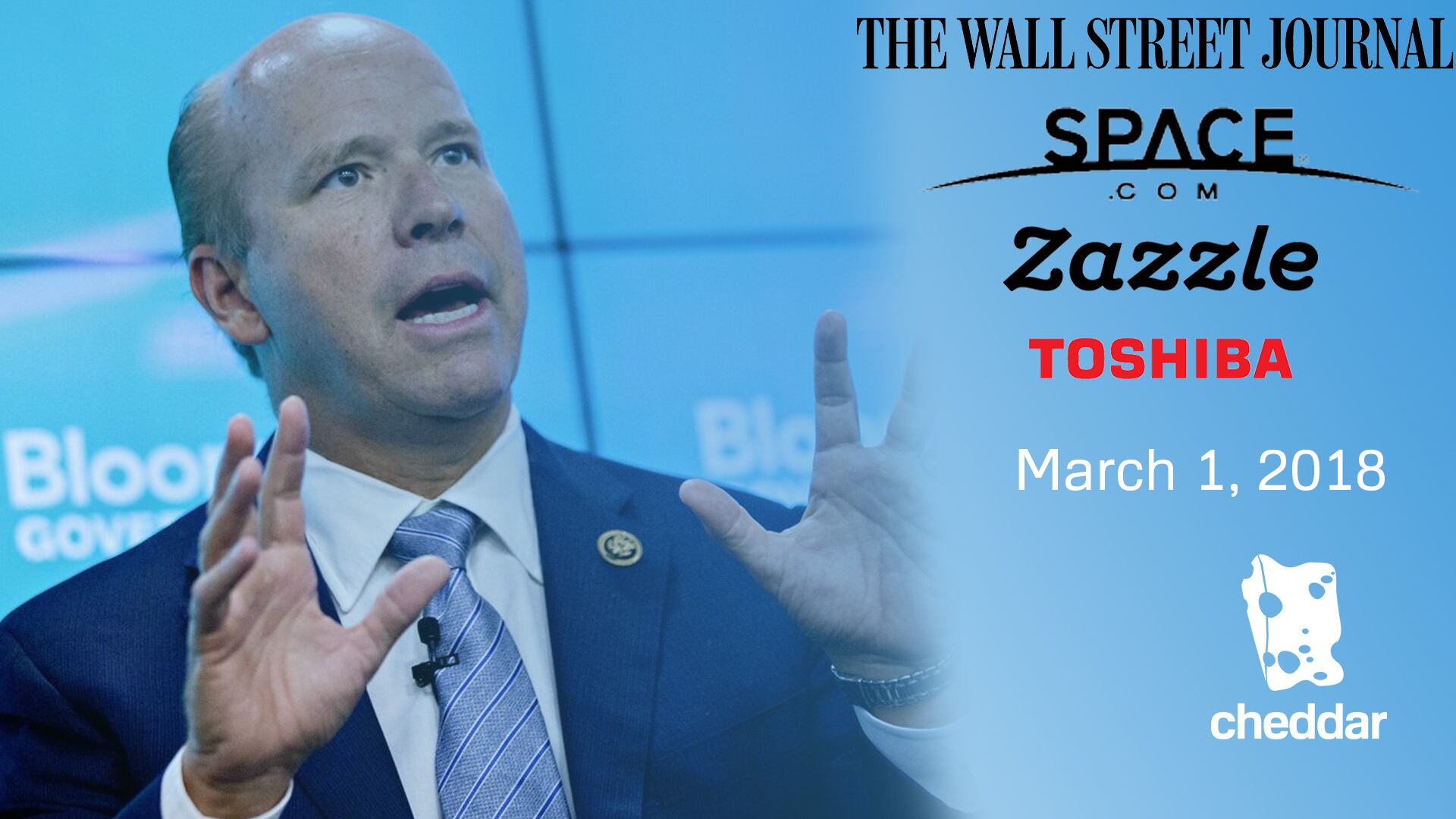
The Artificial Intelligence Caucus is a group of bipartisan lawmakers working together to ensure technology has a positive impact on America's future. Congressman John Delaney (D-MD) believes A.I. will be a "paradigm-shifting development," and he thinks the government needs to encourage its growth.
The bipartisan caucus aims to work with the private sector to make sure technological change "doesn't leave huge parts of the country behind," says Rep. John Delaney (D-MD), who founded the group.
Nordstrom and Gap release earnings. American Outdoor Brands says sales fell 32.6% year over year. The Dow drops after President Trump announced heavy tariffs on aluminum and steel. Twitter is asking the public to help it evaluate how toxic the social media platform really is
Kroger follows Walmart and Dick's Sporting Goods in becoming the third major retailer to impose tighter regulations on gun sales. NBC is cutting back on commercial time to compete with streaming giants like Netflix and Hulu. Hope Hicks, one of President Trump's closest aides, is out as White House communications director. And Congressman John Delaney (D-MD) joins us to discuss the future of artificial intelligence.
Hanneke Weitering, staff writer at Space.com, discusses Vodafone Germany teaming up with Nokia to bring a 4G network to the moon. The network will allow astronauts to stream HD video back to Earth on an upcoming mission.
Spotify files to go public. Dick's will immediately stop selling assault rifles. President Trump meets with lawmakers on gun control. White House communications director Hope Hicks is resigning from her post. Facebook launching a new initiative to take on sites like LinkedIn and Glassdoor.
It's been unseasonably warm in many parts of the country this winter, but nothing compared to the Arctic. Temperatures normally hover around four degrees below zero, but have been climbing much higher.
Between Bells: Ryan Seacrest Red Carpet controversy, NCAA scandal, and why is it so hot at the North Pole? With Salon, LiveScience, Pizza Hut, and Madame Noire.
Georgia's Lieutenant Governor is calling on Delta to reinstate its relationship with the NRA. The Dow closes down 300 points. Amazon is buying smart doorbell maker Ring. Former NBA star Al Harrington is looking to become the next marijuana mogul. Cronos Group started trading on the Nasdaq Tuesday. The vertically integrated company became the first marijuana company to join a major exchange in the United States.