Survey: Small Businesses are Feeling More Optimistic, Post-Election
By Mae Anderson
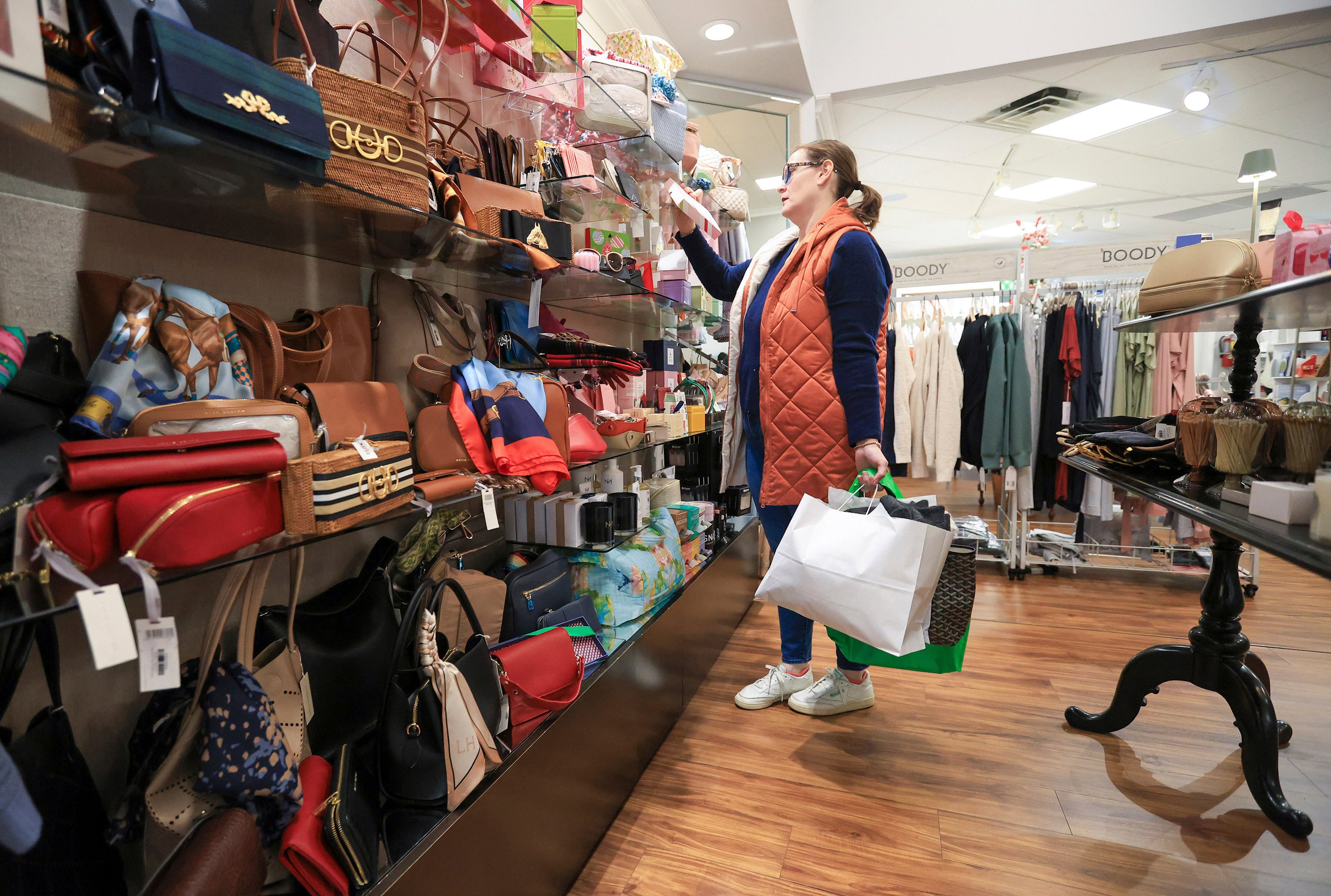
FILE - Jenna Brashear shops at Julep Home & Gift while taking advantage of Shop Small Saturday in Wesleyan Park Plaza, on Nov. 30, 2024, in Owensboro, Ky. (Greg Eans/The Messenger-Inquirer via AP, File)
A recent survey shows small business owners are feeling more optimistic about the economy following the election.
The National Federation of Independent Businesses’ Small Business Optimism Index rose by eight points in November to 101.7, its highest reading since June 2021.
The Uncertainty Index declined 12 points in November to 98, following October’s pre-election record high of 110.
NFIB Chief Economist Bill Dunkelberg said small business owners became more certain about future business conditions following the presidential election, breaking a nearly three-year streak of record high uncertainty.
“Owners are particularly hopeful for tax and regulation policies that favor strong economic growth as well as relief from inflationary pressures,” he said in a statement. “In addition, small business owners are eager to expand their operations.”
The net percent of owners expecting the economy to improve rose 41 points from October to a net 36%, the highest since June 2020.
Some owners are also hoping 2025 will be a good time to grow. The percent of small business owners believing it is a good time to expand their business rose eight points to a 14%. This is also the highest reading since June 2021.
While inflation has eased, it remains a top concern for owners. Twenty percent of owners reported that inflation was their single most important problem in operating their business (higher input and labor costs). It surpassed labor quality as the top issue by one point.
Deep Fission CEO Liz Muller discusses underground nuclear reactors, powering AI, cutting energy costs, and why the future of clean power may be below ground.
Adidas shares how FIFA World Cup 2026 will drive innovation, fan engagement, and billions in opportunity with new gear, technology, and business strategy.
Kristian Kerr, Head of Macro Strategy at LPL Financial, breaks down the firm's 2026 Mid-Year Outlook, recession risks, AI, the Fed, and what's next for markets.
Jess Inskip, Director of Investor Research at StockBrokers.com, breaks down Q2, the AI trade, Fed policy, earnings, and where investors should look next.
Quantum computing is moving from science fiction to national strategy. Infleqtion CEO Matt Kinsella explains Trump's new executive order and what it means.
Americans traveled in record numbers over July 4th despite rising costs. Skift's Sarah Kopit explains what it says about consumers, airfares, and summer travel.
The U.S. economy is being held up in part by the AI boom, but that boom could still lead to broader prosperity or inequality, says a Nobel Prize winner.