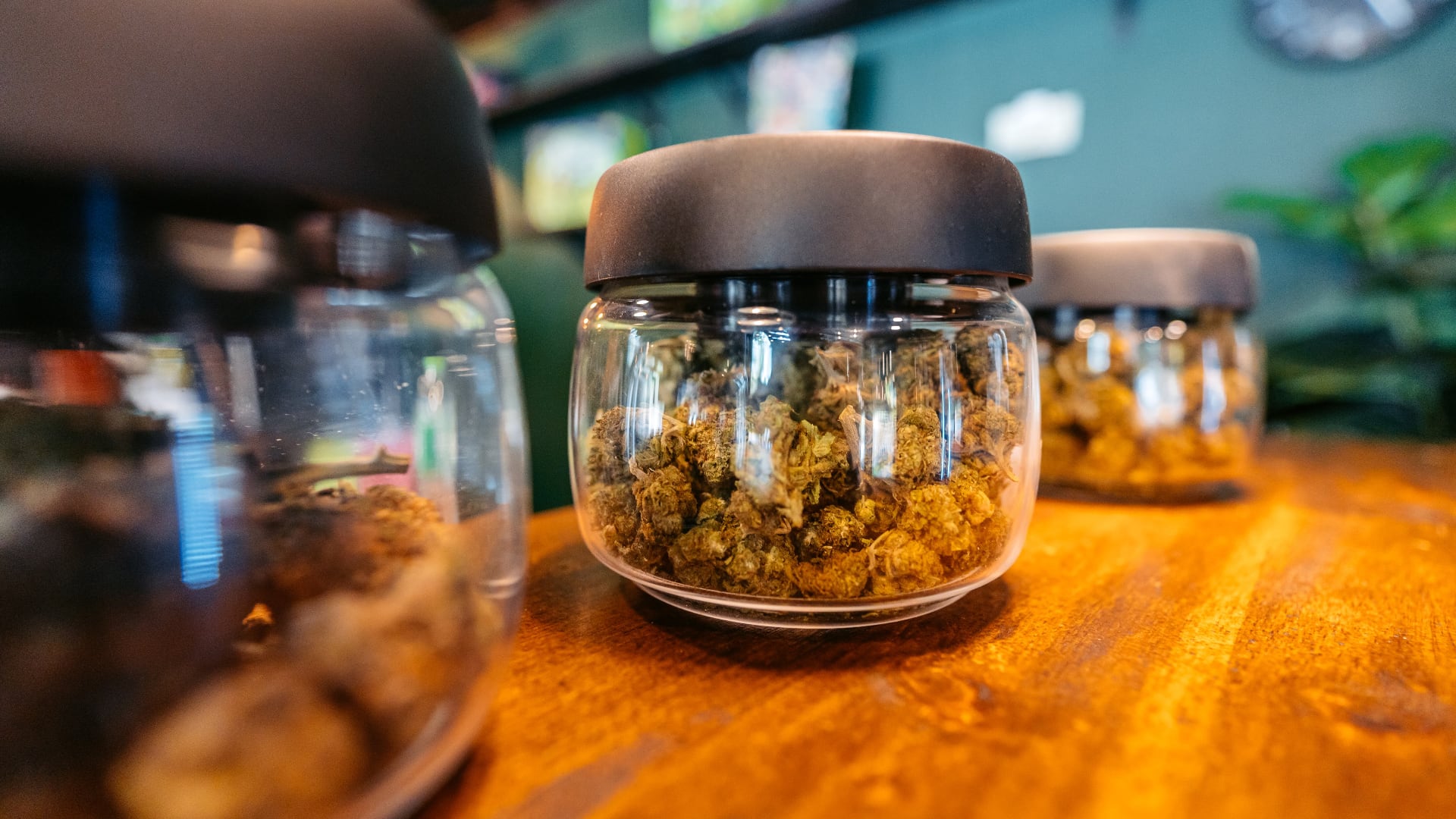
Dry January doesn't have to mean sober January — at least for the 21 percent of participants turning to cannabis or CBD to make it through the month.
According to a survey by Civic Science, 67 percent of Dry January participants, or those choosing to abstain from alcohol consumption for the month of January, reported they are replacing alcohol with something — whether that be mocktails and alcohol-free beers or sodas and seltzers.
The largest share, 21 percent, said they would enjoy cannabis or non-psychoactive CBD in place of alcohol. The preference for substitutes wasn't uniform across all respondents. Cannabis was the most popular substitute among the youngest respondents with 34 percent of 21- to 24-year-olds preferring it. Among the 55 and older crowd, by contrast, just 9 percent reported they'd enjoy cannabis or CBD instead of alcohol, and 54 percent reported they'd stay the course without any support.
Dry January's Growing Popularity
Interest in Dry January has climbed over the recent years. At the close of 2022, about 41 percent of respondents in a separate survey by Civic Science reported they were "somewhat to very likely" to participate in Dry January come 2023. That's in-line with pre-pandemic data for the start of 2020, but slightly behind 2022 responses, which rebounded after a lag in interest during the 2021 pandemic year.
As with the preference for cannabis, interest in Dry January tends to vary by age — and younger generations are leading the charge. For the year of 2023, more than half of the youngest respondents, aged 21 to 24 years old, said they were "somewhat to very likely" to participate versus just 41 percent of those 55 and older.
Studies suggest social media is contributing to a growing reluctance to drink with younger generations fearful of consequences if their drunk escapades are documented on the internet. According to 2019 research from Google, 49 percent of Generation Z reports their image online is "always at the back of their mind when they go out socializing and drinking." Some 76 percent reported it is important to have control of "all aspects of their life at all times," according to the research.
A new report from Dr. Michael Worobey alleges that it is likely that COVID-19 originated from a raccoon dog at the Wuhan live animal market in China. While his report does not rule out the coronavirus could have escaped from a lab, Worobey's evidence points to a natural origin.
Jill and Carlo are back to cover the latest in the Rittenhouse trial, new information on the origins of Covid, return-to-office and more.
JOIN US FOR THE YOUTUBE WATCH PARTY @ 9aET: http://www.youtube.com/cheddarnow
Over the weekend, Russia fired a missile at one of its own satellites, triggering an explosion that launched thousands of pieces of shrapnel through space and forced the astronauts aboard the International Space Station to shelter in place. Senior Writer from Space.com Chelsea 'Foxanne' Gohd, joined Cheddar to discuss more.
Gerald Comissiong, CEO of Todos Medical, joins None of the Above to discuss why we're seeing surges of COVID-19 cases in Europe, the potential for a winter surge of COVID-19, the benefits of high vaccination rates in a community, and the coming COVID treatment pills.
Cognitive healthcare platform BrainCheck recently raised $10 million in a Series B round. The platform offers neurologists a new way to detect and care for brain disorders like Alzeheimer's, and brain injuries like concussions. BrainCheck CEO Yael Katz joined Cheddar News' Closing Bell to discuss.
On this episode of Cheddar Innovates: Ice Barrel CEO breaks down the physical and mental health benefits to cold therapy training; Dishcraft CEO explains how its robotics is transforming the role of a dishwasher in restaurant kitchens; A look at Curiosity Stream's original series 'The Year That Rocked The World.'
Jill Wagner is joined by Baker to talk about kids and vaccines: we finally know how many young kids are getting vaccinated. Plus, Democrats are working on a Plan B for paid family leave. And the salad chain Sweetgreen goes public.
A breakthrough deal between the U.S. and China when it comes to climate has finally been reached. The two countries have pledged to work together to curb carbon emissions. Amy Harder, executive editor at Cipher, joined Cheddar News to discuss more.
Joey Roulette, space reporter for The New York Times, joined Cheddar to break down the intense backlash Russia is seeing after its missile test sent destroyed a non-functioning satellite and sent thousands of pieces of debris potentially at the ISS, endangering astronauts onboard. He said while the blast happened days ago, there is still some risk to the station as the space junk threat remains. So far, the U.S., NATO, and the European Union have condemned Russia for the test.
Jill is joined by “Friend of the Pod” Mosheh Oinounou to talk booster shots, and whether “fully vaccinated” will eventually mean three shots, not two. Plus, the latest on the Kyle Rittenhouse trial. And the research is in: we know now the perfect way to hug. Also, Jill and Mosheh debate whether Airpods are passé.