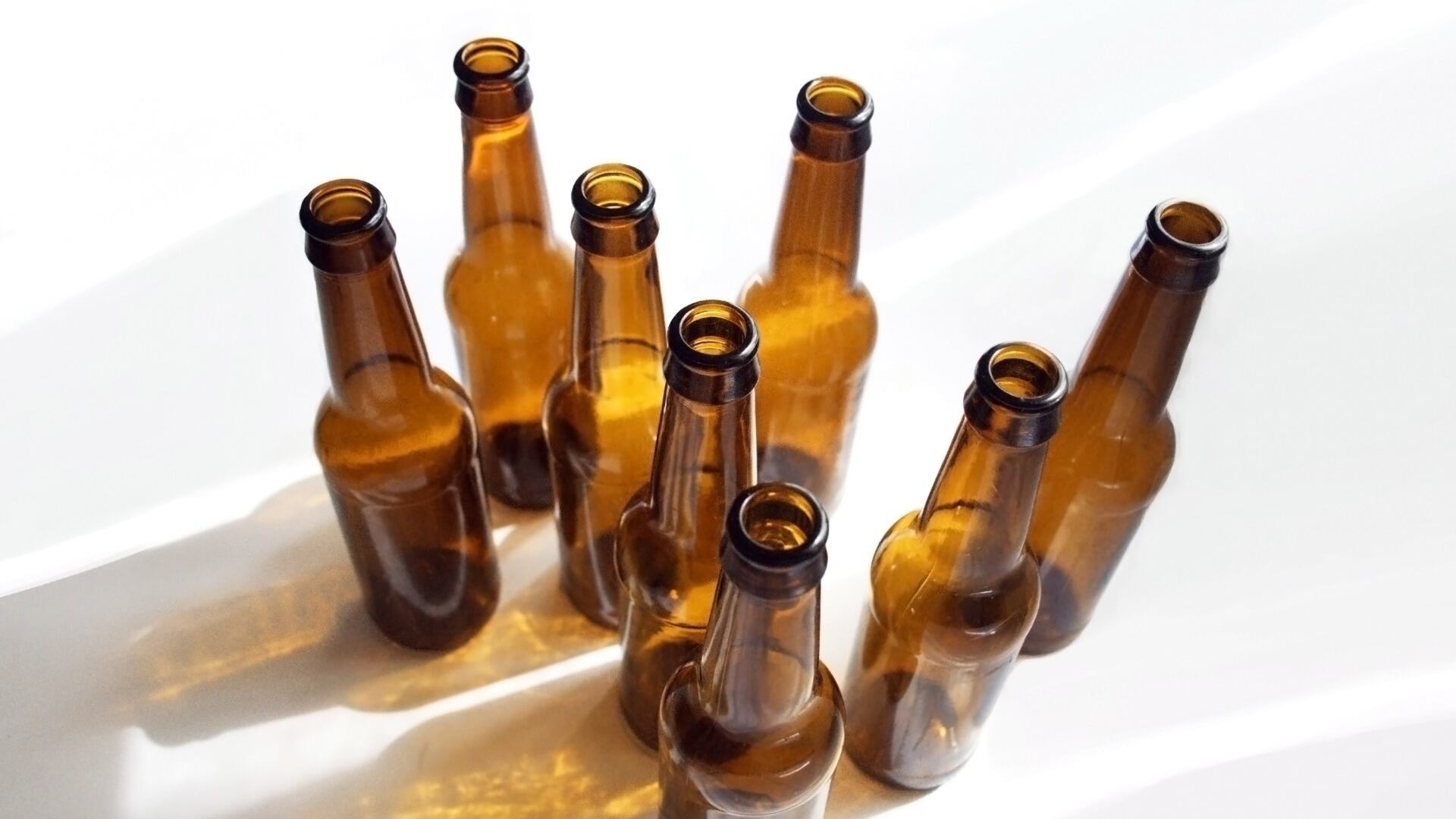
Dry January doesn't have to mean sober January — at least for the 21 percent of participants turning to cannabis or CBD to make it through the month.
According to a survey by Civic Science, 67 percent of Dry January participants, or those choosing to abstain from alcohol consumption for the month of January, reported they are replacing alcohol with something — whether that be mocktails and alcohol-free beers or sodas and seltzers.
The largest share, 21 percent, said they would enjoy cannabis or non-psychoactive CBD in place of alcohol. The preference for substitutes wasn't uniform across all respondents. Cannabis was the most popular substitute among the youngest respondents with 34 percent of 21- to 24-year-olds preferring it. Among the 55 and older crowd, by contrast, just 9 percent reported they'd enjoy cannabis or CBD instead of alcohol, and 54 percent reported they'd stay the course without any support.
Dry January's Growing Popularity
Interest in Dry January has climbed over the recent years. At the close of 2022, about 41 percent of respondents in a separate survey by Civic Science reported they were "somewhat to very likely" to participate in Dry January come 2023. That's in-line with pre-pandemic data for the start of 2020, but slightly behind 2022 responses, which rebounded after a lag in interest during the 2021 pandemic year.
As with the preference for cannabis, interest in Dry January tends to vary by age — and younger generations are leading the charge. For the year of 2023, more than half of the youngest respondents, aged 21 to 24 years old, said they were "somewhat to very likely" to participate versus just 41 percent of those 55 and older.
Studies suggest social media is contributing to a growing reluctance to drink with younger generations fearful of consequences if their drunk escapades are documented on the internet. According to 2019 research from Google, 49 percent of Generation Z reports their image online is "always at the back of their mind when they go out socializing and drinking." Some 76 percent reported it is important to have control of "all aspects of their life at all times," according to the research.
Amazon is betting that ammonia could be the fuel of the future, participating in a Series A round for the Brooklyn-based company Amogy in December. Amogy aims to de-carbonize transportation with a clean energy system that uses ammonia as a renewable fuel. Amogy is partnering with Amazon on its first commercial product - an ammonia-powered cargo-shipping vessel. Amogy CEO Seonghoon Woo joins Cheddar Climate to discuss.
Cryptocurrency is expected to become a part of our daily lives — but what sort of environmental impact does it have? As the U.S. becomes the crypto mining capital of the world, climate advocates are worried about mining companies reopening old coal plants, using massive amounts of energy, wasteful hardware, and more. Congressional Democrats led by Senator Elizabeth Warren are demanding answers from mining firms about their electricity use and waste levels. John Belizaire, CEO of Soluna Computing, joins Cheddar Climate to discuss the congressional letters, how crypto mining can become a green industry, and more.
Driver assistance monitoring systems are meant to keep the driver's eyes on the road, but according to a report from AAA, different ways of monitoring provide significantly different results. The study found that direct camera-based systems that scanned the driver's eye movements were faster and more reliable than those indirect systems that looked at steering-wheel input. Megan McKernan, the manager of automotive services for the Automobile Club of Southern California, joined Cheddar to discuss the findings. "Triple-A is recommending that automakers include both direct and indirect systems just to really prevent consumers from trying to misuse these systems," she said, noting that neither system on its own is not foolproof.
Wave Neuroscience is a neurological health tech company that specializes in clinical and at-home personalized brain stimulation technology. Erik Won, president and chief medical officer and Fred Walke, CEO, joined Cheddar's Opening Bell to discuss their company's hopes for allowing patients to identify and treat unique brain disorders while empowering them to understand their unique neurological makeups — including for the high-stress positions of professional athletes. "We have a mobile device that provides a very light stimulation that gives them a therapy that gives them confidence so there's a just knowing that they're doing something for it," said Walke. "But it also helps them get back into a rhythm. It helps their brain synchronize around certain frequencies that that we target, and it helps them really understand that they've done everything they can to get to their highest level of success."
Democratic lawmakers are now calling on Bitcoin mining companies in the U.S. to assess how much electricity they use and how it could all potentially impact residents and the environment in the near future. Since its conception, crypto mining has been at the center of a debate. The question is: Is crypto mining playing a key role in renewable energy or could it totally derail U.S. climate goals? Host of The Wendy O show Wendy O, joined Cheddar to discuss more.
Nutritional supplement beverage company Athletic Greens has achieved unicorn status. The company announced a new $115 million funding round, bringing its valuation to $1.2 billion. The company's flagship product AG1 combines 75 different vitamins, minerals, and other nutrients into one daily serving. Athletic Greens says it is poised to reach the millions of consumers who are currently driving the health and wellness market's exponential growth. Athletic Greens founder and CEO Chris Ashenden joins Cheddar News' Closing Bell to discuss.
A powerful winter storm hit the Northeast over the weekend leaving 100,000 New Yorkers in the dark as well as snowfall up to 30.9 inches in parts of Massachusetts. The nor'easter hit with blizzard conditions of wind speed and poor visibility.