The Supreme Court seemed skeptical Wednesday of a lawsuit trying to hold social media companies responsible for a terrorist attack at a Turkish nightclub that killed 39 people.
During arguments at the high court several justices underscored that there was no evidence linking Twitter, Facebook and Google directly to the 2017 attack on the Reina nightclub in Istanbul. The family of a man killed in the attack says the companies aided and abetted the attack because they assisted in the growth of the Islamic State group, which claimed responsibility for the attack . A lower court let the lawsuit go forward.
The court’s disposition of Wednesday’s case and a related one it heard a day earlier is important, particularly because the companies have been shielded from liability on the internet, allowing them to grow into the giants they are today.
If the court bars the lawsuit involving the attack in Turkey from going forward it could avoid a major ruling on the companies' legal immunity. That outcome would leave the current system in place, but also leave open the possibility that the justices could take up the issue again in a later case.
Justice Amy Coney Barrett was among the members of the court who suggested that the suit against the companies lacks the kind of specificity required under a federal anti-terrorism law. Barrett said there would have to be specific allegations in the complaint, “not just general recruitment or radicalizing people.”
Justice Neil Gorsuch, participating remotely for a second straight day because of illness, told a lawyer for the family that he was "struggling with how your complaint lines up with the three requirements of the statute” that the companies knowingly helped a person commit a terrorist act.
The law the case involves is the Justice Against Sponsors of Terrorism Act, which allows Americans injured by a terrorist attack abroad to sue for money damages in federal court. U.S. citizens who are family members of Nawras Alassaf, who was killed in the Reina nightclub attack, sued Twitter, Facebook and YouTube parent Google under the law.
Tech analyst Rene Ritchie discusses new EU legislation that will force iPhones to use a USB-C charger in fall 2024 and what that means for Apple's strategy in Europe.
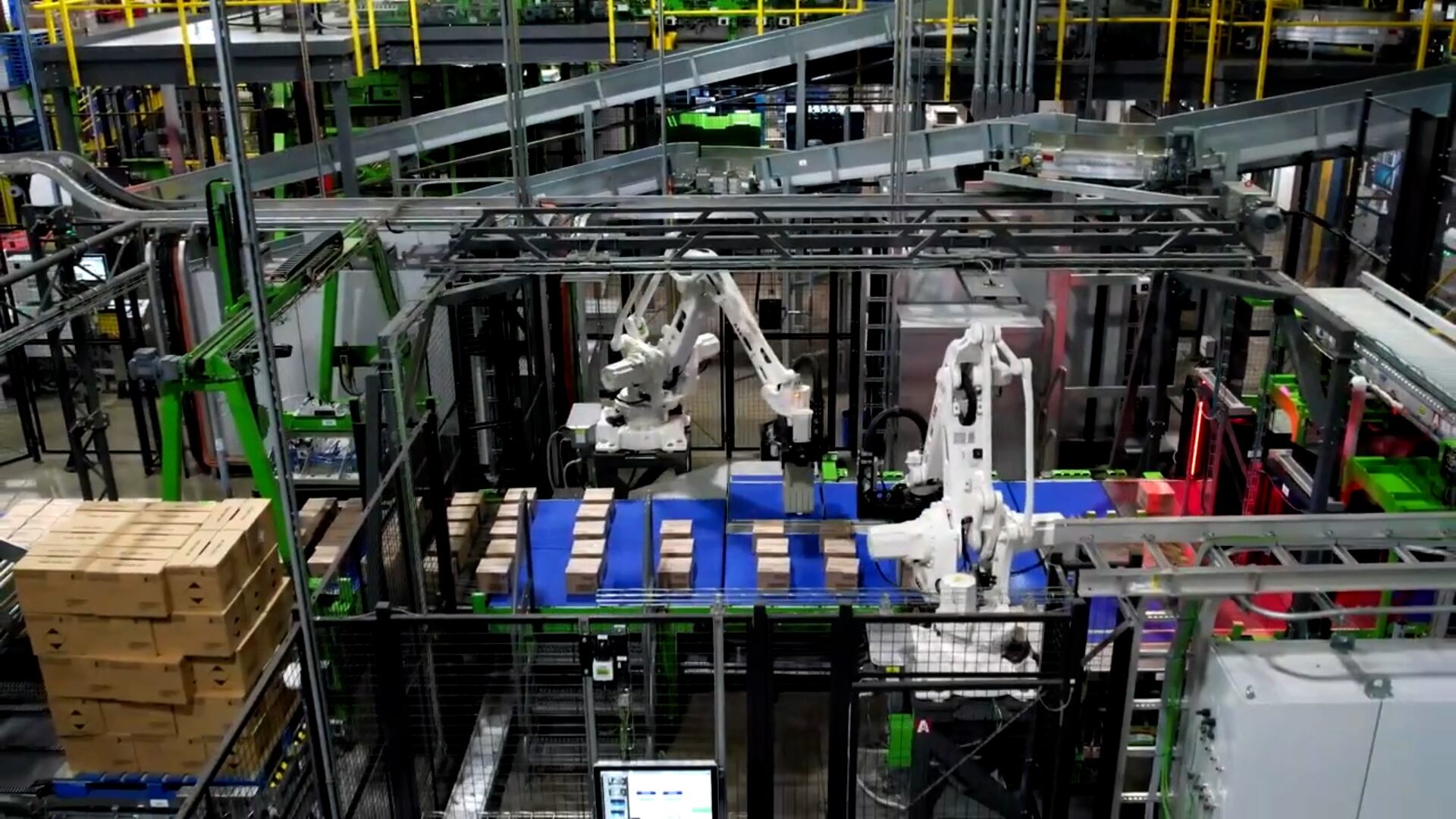
Robotics automation technology company Symbotic made its market debut on the Nasdaq via a SPAC merger with SVF Investment Corp. 3, a special purpose acquisition company sponsored by an affiliate of SoftBank Investment Advisers. Symbotic rang the Opening Bell at the Nasdaq to celebrate the occasion this morning. Its debut on Wall Street comes amid an urgent need for logistics solutions, as it aims to reimagine supply chains with its A.I.-powered robotic and software platform. Tom Earnst, CFO of Symbotic, and Vikas Parekh, managing partner at Softbank Investment Advisors, join Cheddar News' Closing Bell to discuss.
Michelle Castillo joined Closing Bell to break down Elon Musk's announcement to SpaceX employees that the Starlink internet business might not see itself as an IPO until 2025, Twitter planning to hand over the user data he requested as a condition of the acquisition, and Warren Buffet-backed Chinese EV company BYD stating it will be supplying batteries to Tesla "very soon."
Meta announced its plans to join the Cannes Lions International Festival of Creativity. This is leaving businesses and customers wondering what the tech giant has in store for the event. Nicola Mendelsohn, the vice president of the global business group at Meta, joined Cheddar News to preview what the tech giant will discuss at this year's festival. "We're going to be showcasing more about reels. We're going to be talking about our commerce solutions, are messaging solutions, and of course, the method of us speaking of new ways to kind of connect with customers," she said.
Paul Tracey, Founder & CEO of Innovative Technologies, and author of 'Delete The Hacker Playbook' and 'Cyber Storm', joins Cheddar to discuss the most effective ways to protect small businesses from cyber attacks, the labor shortage's effects on cybercrime, and how businesses and employees can stay cyber secure while working from home.