Sen. Jeff Merkley (D-Ore.), a noted proponent of environmental protection efforts, said that the Supreme Court vacancy left by the death of Justice Ruth Bader Ginsburg could end up having dire consequences for the nation's fight against the climate crisis.
"It has enormous impact, both directly and indirectly," said Merkley, citing Supreme Court decisions that have disenfranchised voters, which he says ultimately helps fossil fuel companies.
"It is a very big deal, indeed, to lose a champion for civil rights and election integrity, as well as a champion for consumer interest over corporate interest because there is, of course, vast corporate interest in the fossil fuel world and they are winning case after case before the court," he added.
The fossil fuel industry already has an outsized impact on blocking climate regulations, using "dark money" extensively to sway votes that favor their businesses, the senator said.
In an effort to combat extreme weather affecting the U.S., Merkley and other Senate Democrats formed a special committee.
"I think we are now building tremendous political momentum to address this challenge," he said.
The committee, according to Merkley, wants to designate "$400 billion per year" to battle climate change, as well as "provide extensive subsidies" that would fast-track the transition to renewable energy.
He also said it would set 2035 as a target for the U.S. to completely stop selling fossil-fueled cars, vans, and pickup trucks.
However, in order to affect change, the group of Democrats currently needs to work with Republicans and President Donald Trump, who often downplays the reality of the climate crisis and the science backing it.
"It's a complete failure of leadership on, perhaps, the most important issue facing human civilization on this planet," Merkley said.
In order for the U.S. to reverse course on climate, according to the senator, the best option is to elect Joe Biden and Kamala Harris.
"In other words, putting America back in a position of global dialogue, global leadership so we're not only getting our own house in order, we're working in partnership with the world. It's only through that kind of partnership that human civilization is going to be able to tackle this issue,"
While the World Health Organization strongly advises against a COVID-19 vaccine mandate, national and local governments are moving to make inoculations compulsory. Cheddar News speaks with Dr. Joel Zinberg of the Competitive Enterprise Institute on the issue.
Face to face for just over two hours, President Joe Biden and Russia’s Vladimir Putin squared off in a secure video call Tuesday as the U.S. president put Moscow on notice that an invasion of Ukraine would bring enormous harm to the Russian economy.
Ahead of Instagram head Adam Mosseri's congressional hearing on the mental impact of the social platform on teens, the company announced a number of updates aimed at teen safety.
Troubled Chinese real estate giant Evergrande is once again nearing the brink of collapse. Shares of Evergrande sunk to a new record low on Monday, closing down 20 percent, as debt default fears resurfaced. Drew Bernstein, co-chairman at consultancy MarcumBP, joined Cheddar's Opening Bell to discuss. He said U.S. investors have to understand that "there is no company in China that's too big to fail, that's for sure," and that the Chinese government will be prioritizing the social welfare of the populace. Bernstein did note that it would be a managed collapse in some form.
Joan Greve, a politics reporter at The Guardian US, joined Wake Up With Cheddar to break down the implications of the Biden administration announcing a diplomatic boycott of the 2022 Beijing games in response to allegations of human rights abuses against Uyghur Muslims. She noted the significance of the move, assessing the already frayed relationship between the U.S. and China. "The Chinese have said that a boycott would be politically manipulative, and now they are actually threatening countermeasures," she said. "And that will certainly have an impact on the spirit of the games at the very least."
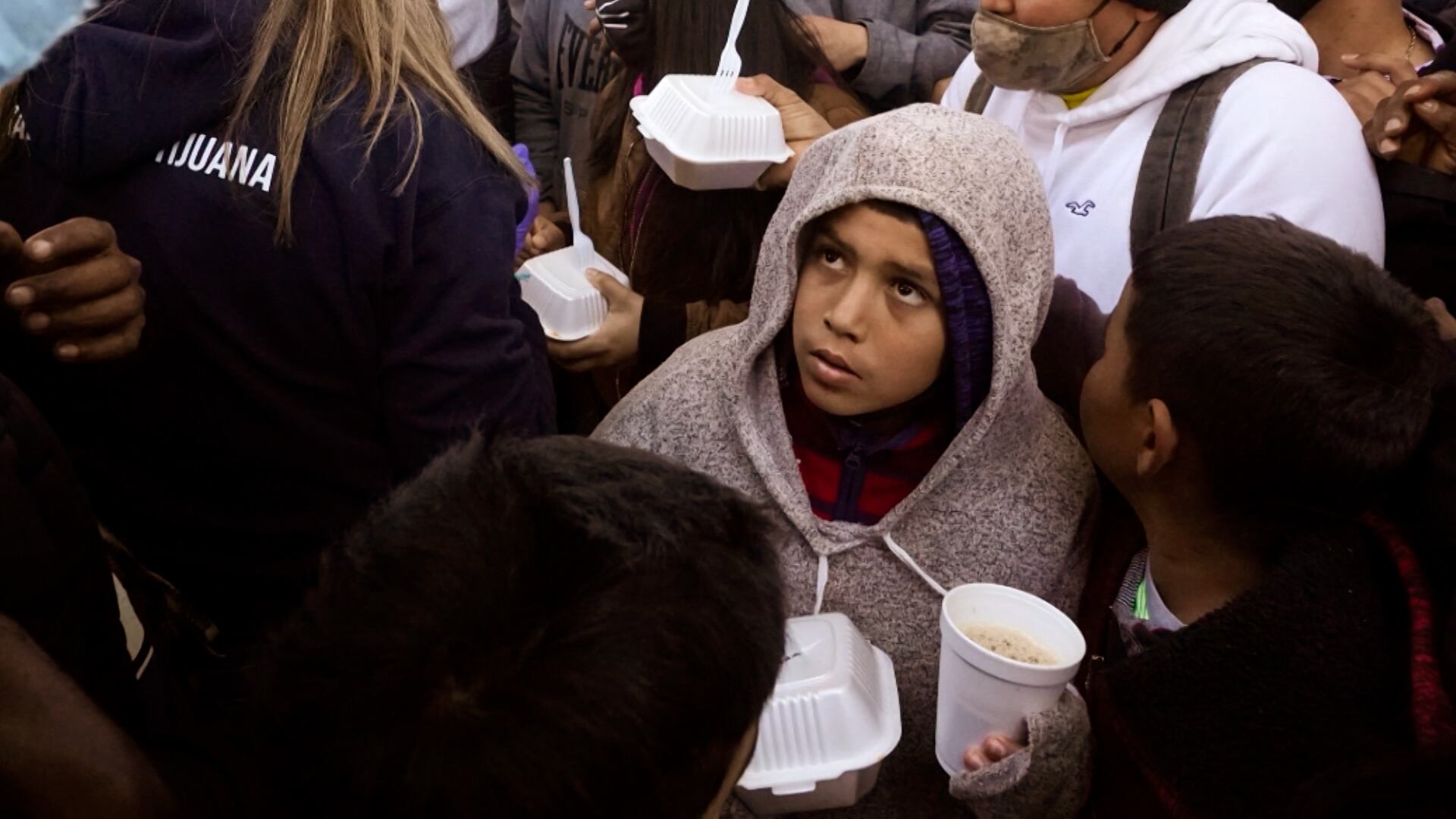
The Biden administration has reached an agreement with the Mexican government to resume the "Remain-in-Mexico" policy under court order. By reinstating a Trump-era border policy, asylum-seekers will be forced to stay in Mexico until their U.S. immigration court date. The program is set to resume on Monday. Ryan Devereaux, a reporter for The Intercept, joins Cheddar News to discuss.
The U.S. announced it will not send any official representation to the upcoming Beijing winter Olympics. Cheddar's Hena Doba speaks with East Asia expert Michael Swaine about the reasons behind the diplomatic move.
COVID-19 is still battering the nation's criminal justice system, causing a massive backlog in cases and delaying verdicts for months on end. This, combined with the fear of crowded prisons during a pandemic, has prompted many defendants to plead guilty in exchange for time served or probation. Tina Luongo, attorney-in-charge of the Criminal Defense Practice, joined Cheddar to discuss the court backlog, the rise in plea bargains, and why this was an issue long before the pandemic.