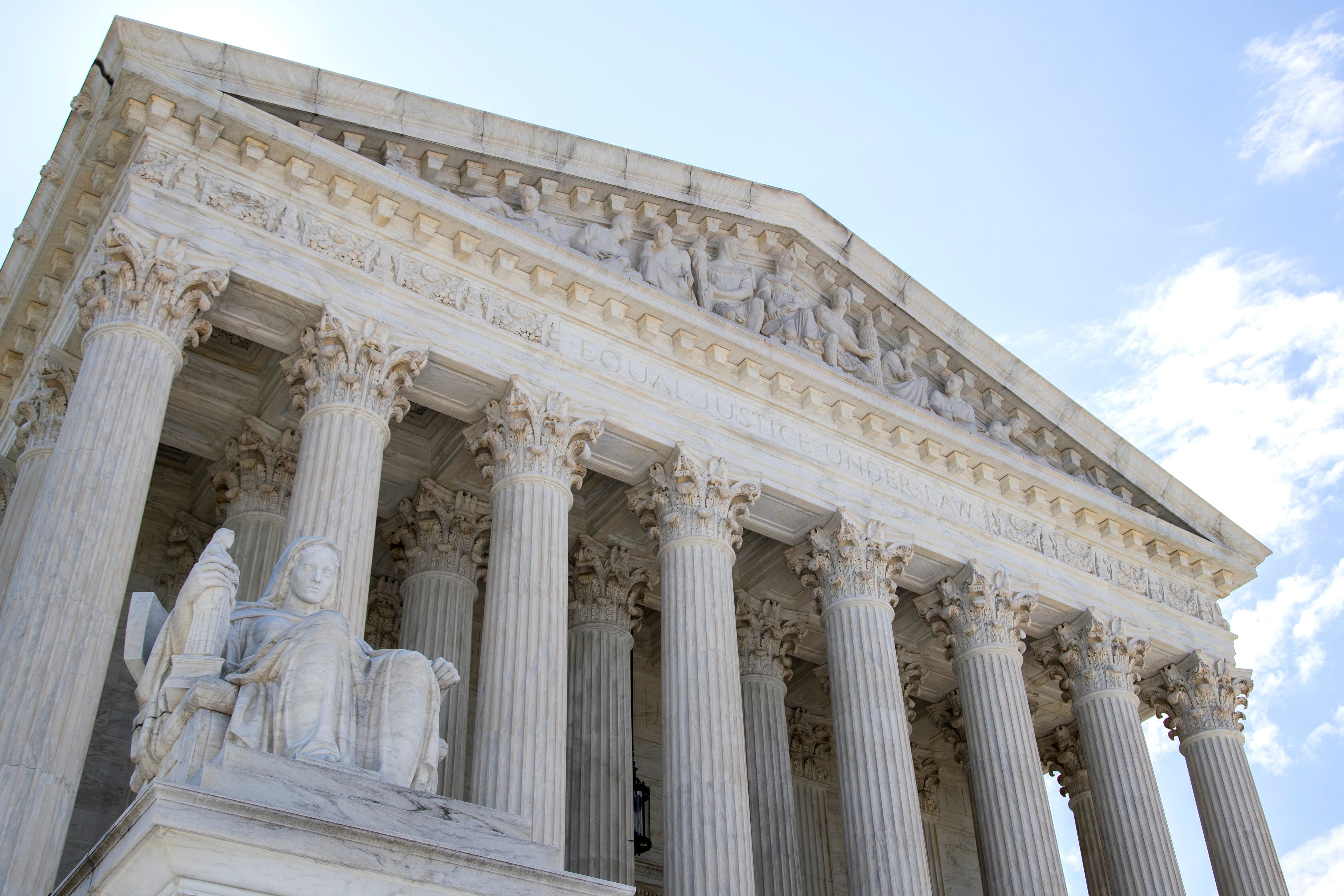
The U.S. Supreme Court is seen Tuesday, June 30, 2020 in Washington. (AP Photo/Manuel Balce Ceneta)
The Supreme Court on Monday upheld a 1991 law that bars robocalls to cellphones.
The case, argued by telephone in May because of the coronavirus pandemic, only arose after Congress in 2015 created an exception in the law that allowed the automated calls for collection of government debt.
Political consultants and pollsters were among those who asked the Supreme Court to strike down the entire 1991 law that bars them from making robocalls to cellphones as a violation of their free speech rights under the Constitution. The issue was whether, by allowing one kind of speech but not others, the exception made the whole law unconstitutional.
Six justices agreed that by allowing debt collection calls to cellphones Congress "impermissibly favored debt-collection speech over political and other speech, in violation of the First Amendment," Justice Brett Kavanaugh wrote. And seven justices agreed that the 2015 exception should be stricken from the law.
"Americans passionately disagree about many things. But they are largely united in their disdain for robocalls," Kavanaugh noted at the outset of his opinion.
During arguments in the case in May, Justice Stephen Breyer got cut off when someone tried calling him. Breyer said after he rejoined the court's arguments: "The telephone started to ring, and it cut me off the call and I don't think it was a robocall."
President Biden says he’s “convinced” that Russian President Vladimir Putin has decided to launch a further invasion of Ukraine, saying Friday he has “reason to believe” it will occur in the "coming days."
The crypto lobbying boom kicked off last year, sparked by a broadly-worded provision in the bipartisan infrastructure bill. Cheddar's Alex Vuocolo takes a deeper look.
U.S. stocks ended Wednesday's session mixed following the release of the minutes from the Federal Reserve’s most recent meeting, and amid ongoing tensions between Russia and Ukraine. Dan Eye, Chief Investment Officer at Fort Pitt Capital Group joined Cheddar News' Closing Bell to discuss.
Applications for U.S. unemployment benefits rose last week, but remain near historically low levels, reflecting relatively few layoffs across the economy
As we celebrate Black History Month, Cheddar is highlighting prominent Black Americans who are carving their own historic paths and trailblazing in their fields. Today we feature activist Tamika Mallory.
As more and more states end mask mandates and ease other COVID restrictions, discussions about the endemic phase of the pandemic have been growing. For weeks, scientists have warned about how contagious the omicron variant is, but now it seems the tone has shifted and governors are rolling back policies they've had in place for months. Dr. Eric Feigl-Ding, epidemiologist and senior fellow at the Federation of American Scientists, joined Cheddar's Opening Bell to discuss what the next phase of the pandemic might look like, how to act now that mask mandates are ending, and if we should be worried about another variant emerging.