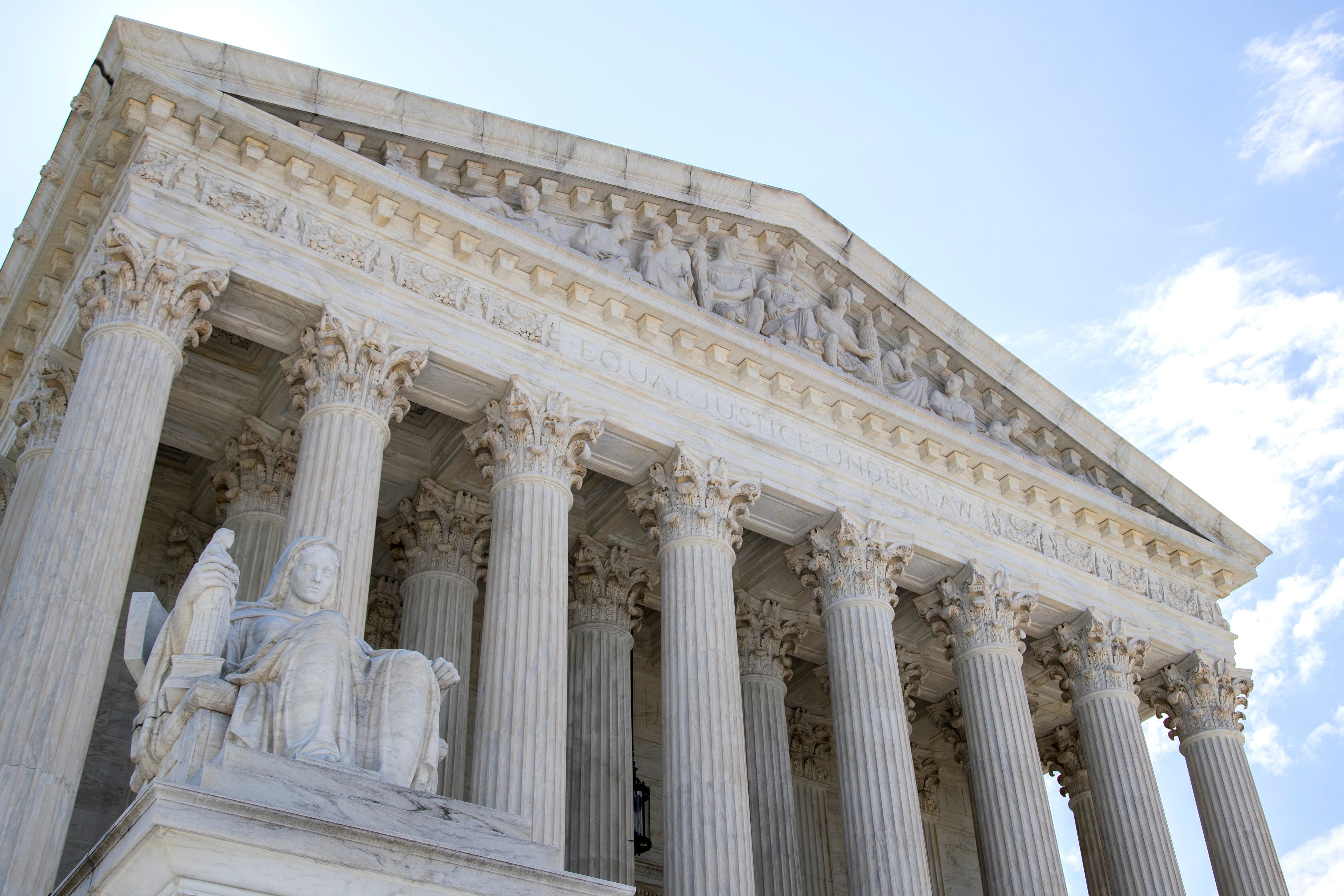
The U.S. Supreme Court is seen Tuesday, June 30, 2020 in Washington. (AP Photo/Manuel Balce Ceneta)
The Supreme Court on Monday upheld a 1991 law that bars robocalls to cellphones.
The case, argued by telephone in May because of the coronavirus pandemic, only arose after Congress in 2015 created an exception in the law that allowed the automated calls for collection of government debt.
Political consultants and pollsters were among those who asked the Supreme Court to strike down the entire 1991 law that bars them from making robocalls to cellphones as a violation of their free speech rights under the Constitution. The issue was whether, by allowing one kind of speech but not others, the exception made the whole law unconstitutional.
Six justices agreed that by allowing debt collection calls to cellphones Congress "impermissibly favored debt-collection speech over political and other speech, in violation of the First Amendment," Justice Brett Kavanaugh wrote. And seven justices agreed that the 2015 exception should be stricken from the law.
"Americans passionately disagree about many things. But they are largely united in their disdain for robocalls," Kavanaugh noted at the outset of his opinion.
During arguments in the case in May, Justice Stephen Breyer got cut off when someone tried calling him. Breyer said after he rejoined the court's arguments: "The telephone started to ring, and it cut me off the call and I don't think it was a robocall."
None Of The Above's J.D. Durkin pens his open letter to Gov. Asa Hutchinson (R-AR) after the governor says he regrets signing a controversial COVID-19 law.
House Democrats are dealing with one of the thinnest majorities in years. Right now it's sitting at just three seats, and a handful of appointments to cabinet positions didn't help the situation. Next week, however, Democrats in Ohio's 11th Congressional District in Cleveland will decide who will ultimately replace former Rep. Marcia Fudge after the general election in November.
John Barnes, one of the many democratic candidates in the Ohio 11 primary, joins Cheddar Politics to discuss.
As Stablecoins become more popular, U.S. regulators are planning to come up with a set of parameters these companies must abide by. Even Treasury Secretary Janet Yellen and Fed Chairman Jerome Powell say regulations are necessary before Stablecoins are widely adopted. But what's the best way to regulate them and how? Cheddar's Alex Vuocolo explains.