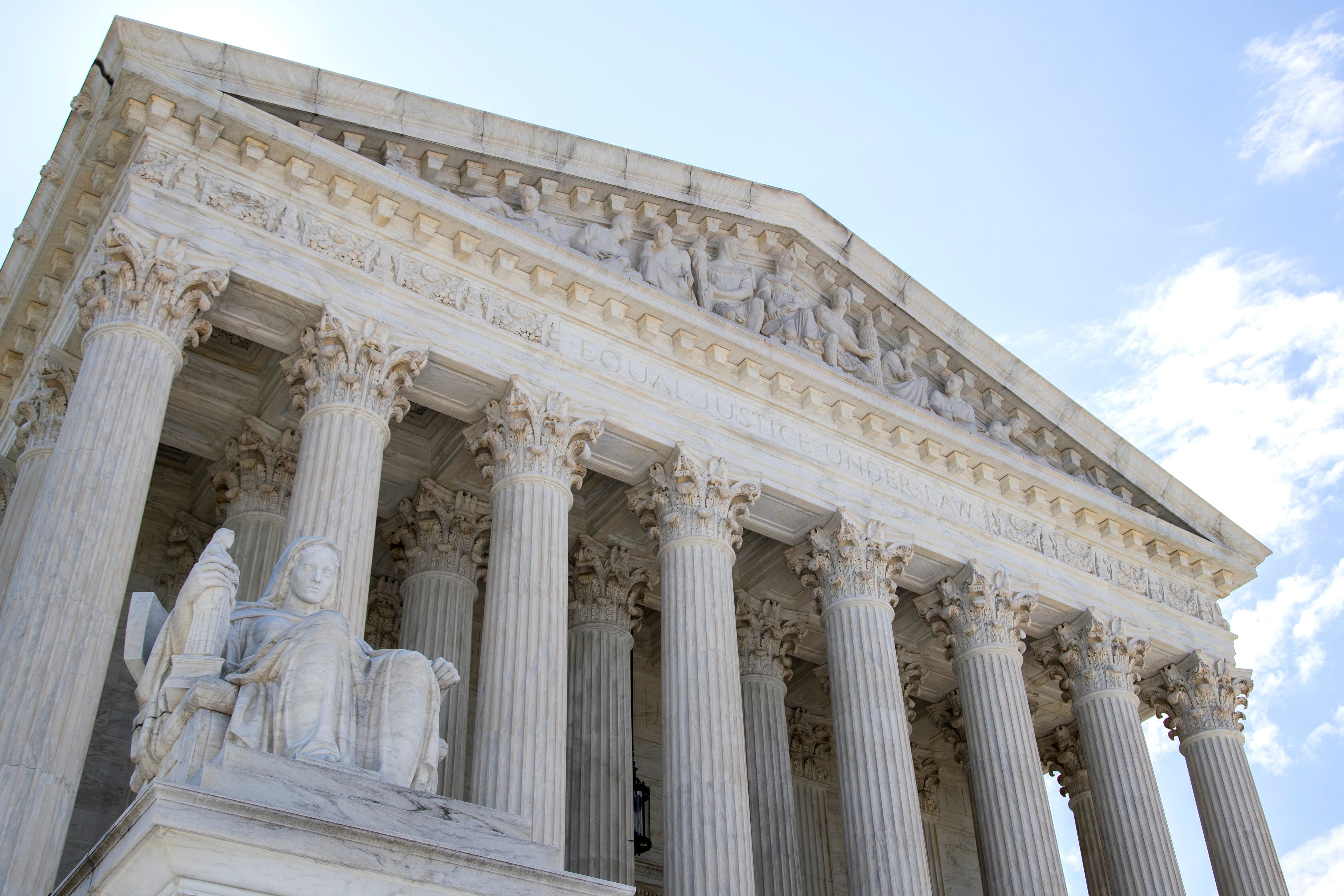
The U.S. Supreme Court is seen Tuesday, June 30, 2020 in Washington. (AP Photo/Manuel Balce Ceneta)
The Supreme Court on Monday upheld a 1991 law that bars robocalls to cellphones.
The case, argued by telephone in May because of the coronavirus pandemic, only arose after Congress in 2015 created an exception in the law that allowed the automated calls for collection of government debt.
Political consultants and pollsters were among those who asked the Supreme Court to strike down the entire 1991 law that bars them from making robocalls to cellphones as a violation of their free speech rights under the Constitution. The issue was whether, by allowing one kind of speech but not others, the exception made the whole law unconstitutional.
Six justices agreed that by allowing debt collection calls to cellphones Congress "impermissibly favored debt-collection speech over political and other speech, in violation of the First Amendment," Justice Brett Kavanaugh wrote. And seven justices agreed that the 2015 exception should be stricken from the law.
"Americans passionately disagree about many things. But they are largely united in their disdain for robocalls," Kavanaugh noted at the outset of his opinion.
During arguments in the case in May, Justice Stephen Breyer got cut off when someone tried calling him. Breyer said after he rejoined the court's arguments: "The telephone started to ring, and it cut me off the call and I don't think it was a robocall."
A U.S. general says Russia has operationally lost the war in Ukraine, a court says federal workers are not owed COVID-19 hazard pay, and Microsoft officially shuts down Internet Explorer. Here is everything you Need2Know for Wednesday, February 15, 2023.
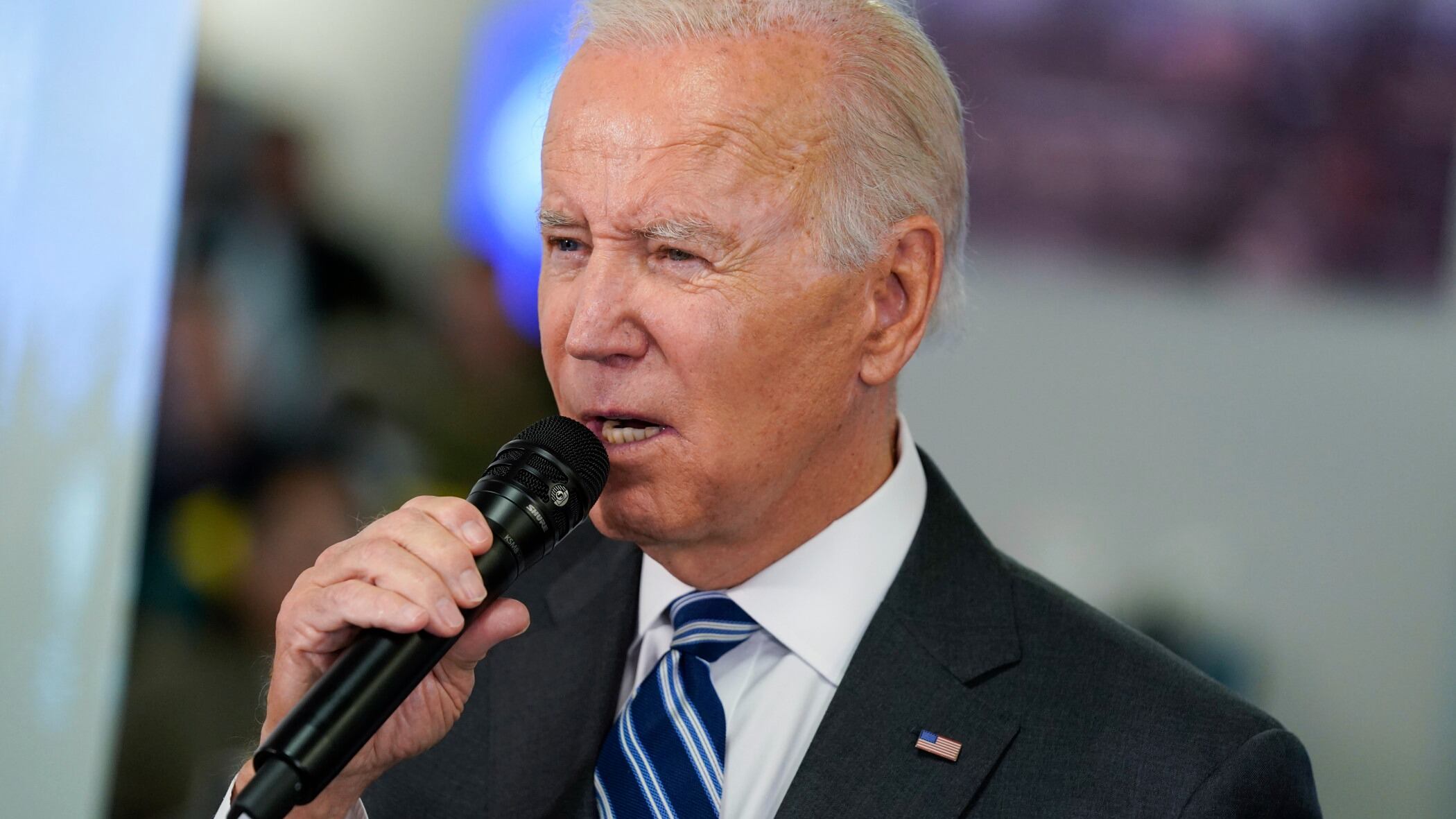
The Biden administration on Wednesday announced a new program under the Bipartisan Infrastructure Law that aims to expand the infrastructure needed to keep electric vehicles charged.
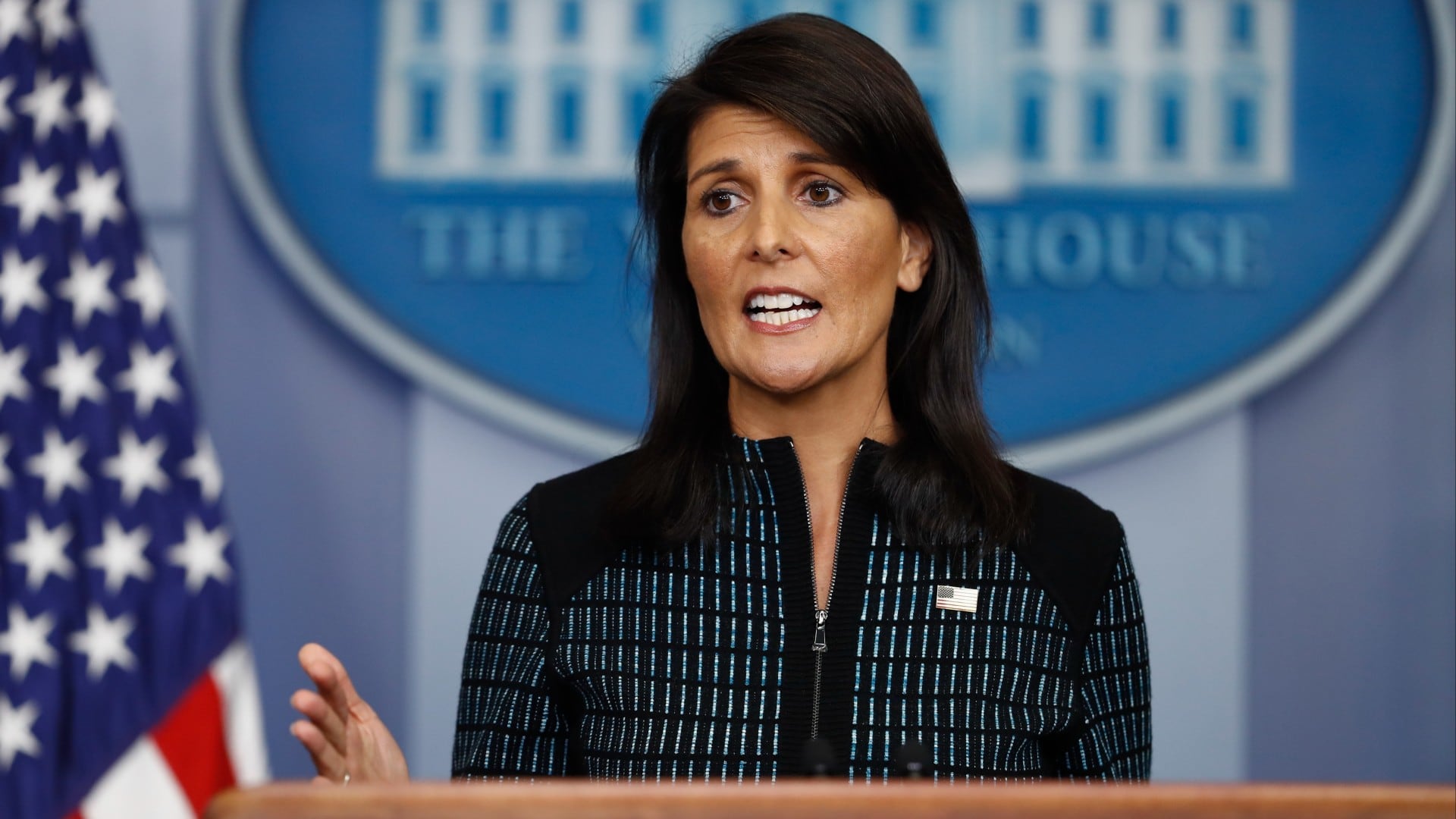
Nikki Haley, the former South Carolina governor and United Nations ambassador, announced her candidacy for president on Tuesday, becoming the first major challenger to former President Donald Trump for the 2024 Republican nomination.
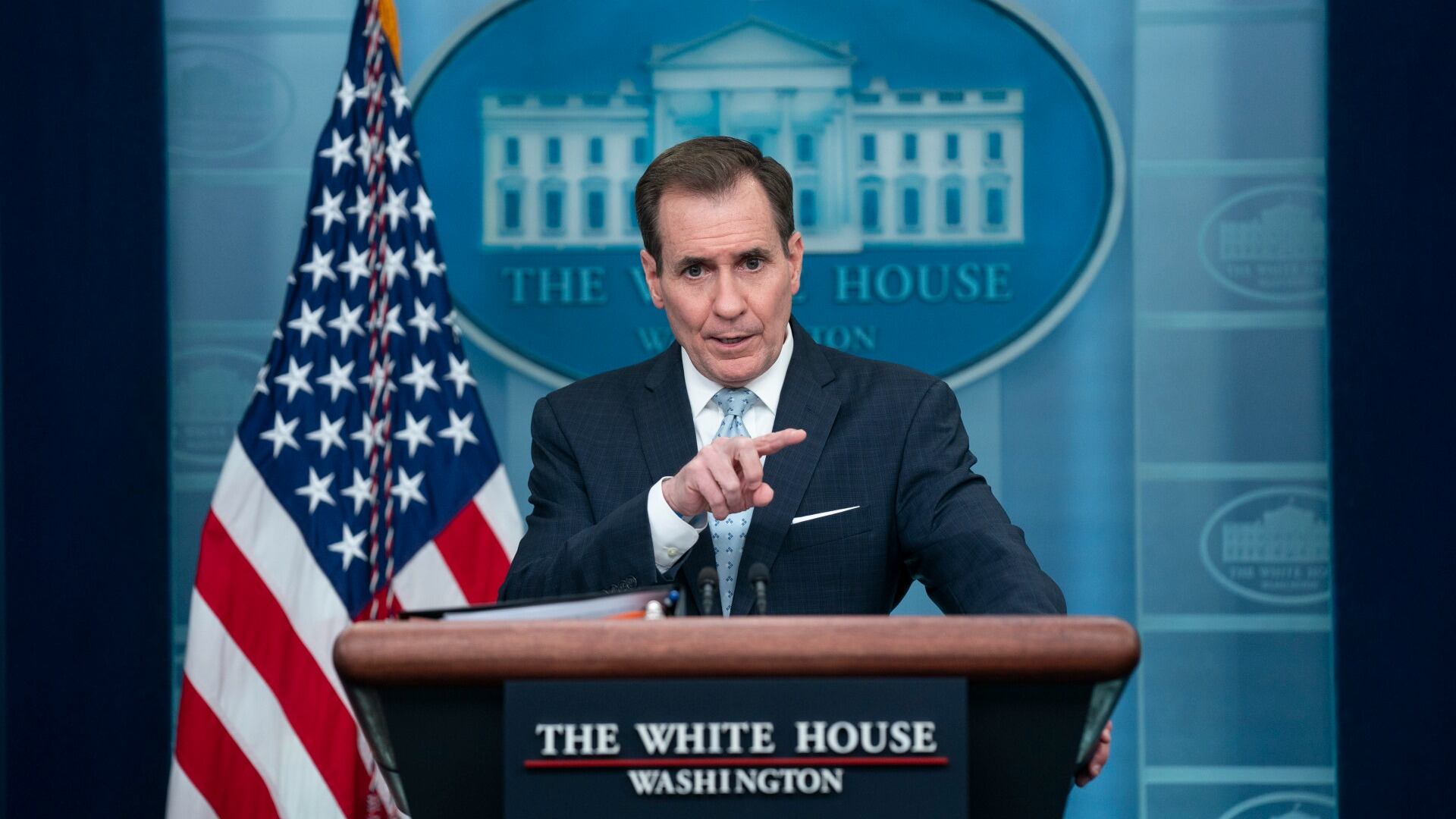
The White House defended the shootdowns of three unidentified objects in as many days even as it acknowledged that officials had no indication the objects were intended for surveillance in the same manner as the high-altitude Chinese balloon that traversed American airspace earlier this month.
Millions of Medicaid recipients could find relief in the form of food shopping funds as the Biden administration begins approving state requests to use the coverage for groceries.
It is still not known where the second, third, and fourth flying objects shot down by U.S. military fighter jets originated from, a White House spokesperson said Monday.
A judge has ordered the release of parts of a report produced by a special grand jury that investigated efforts by former President Donald Trump and his allies to overturn his narrow 2020 election loss in Georgia.