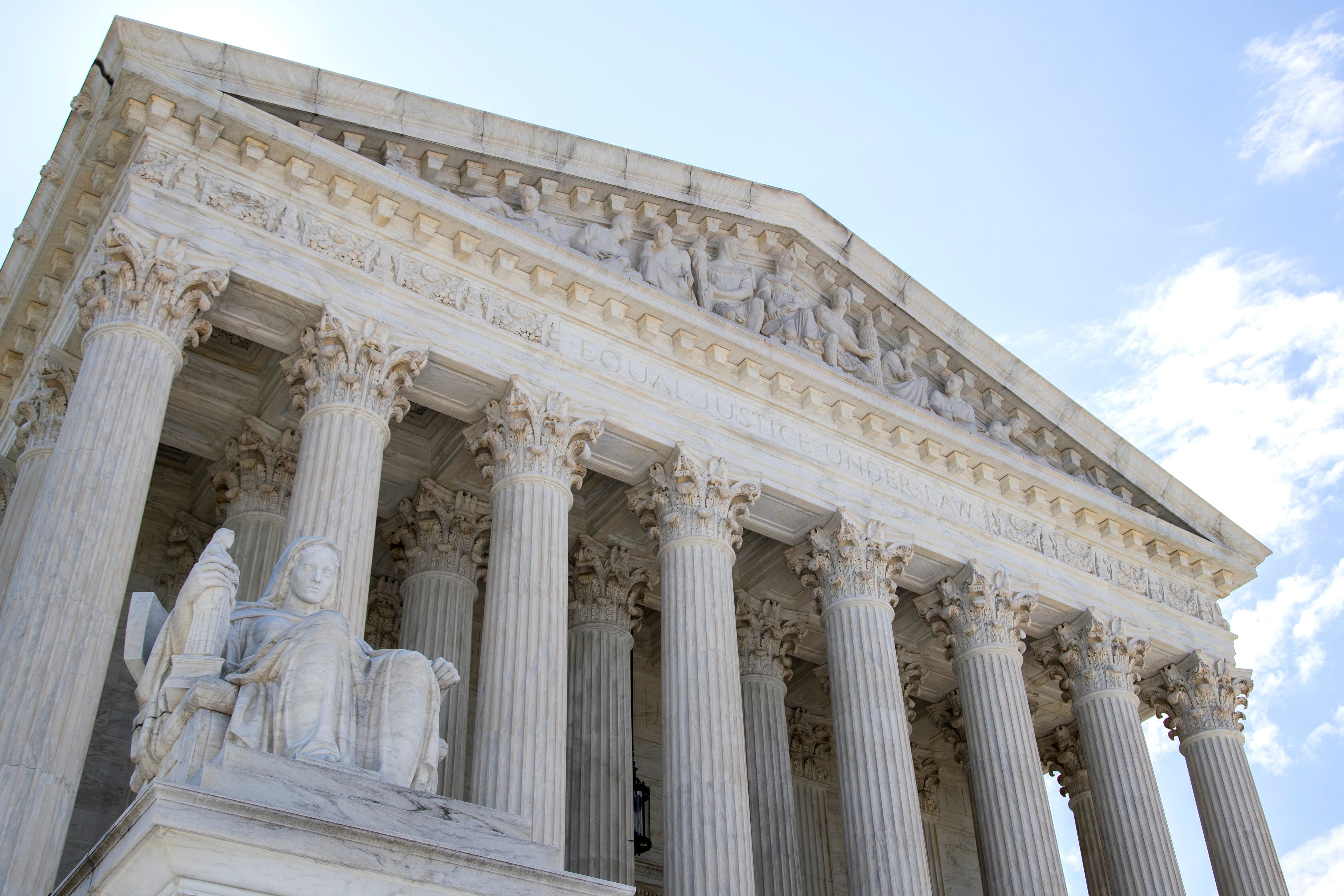
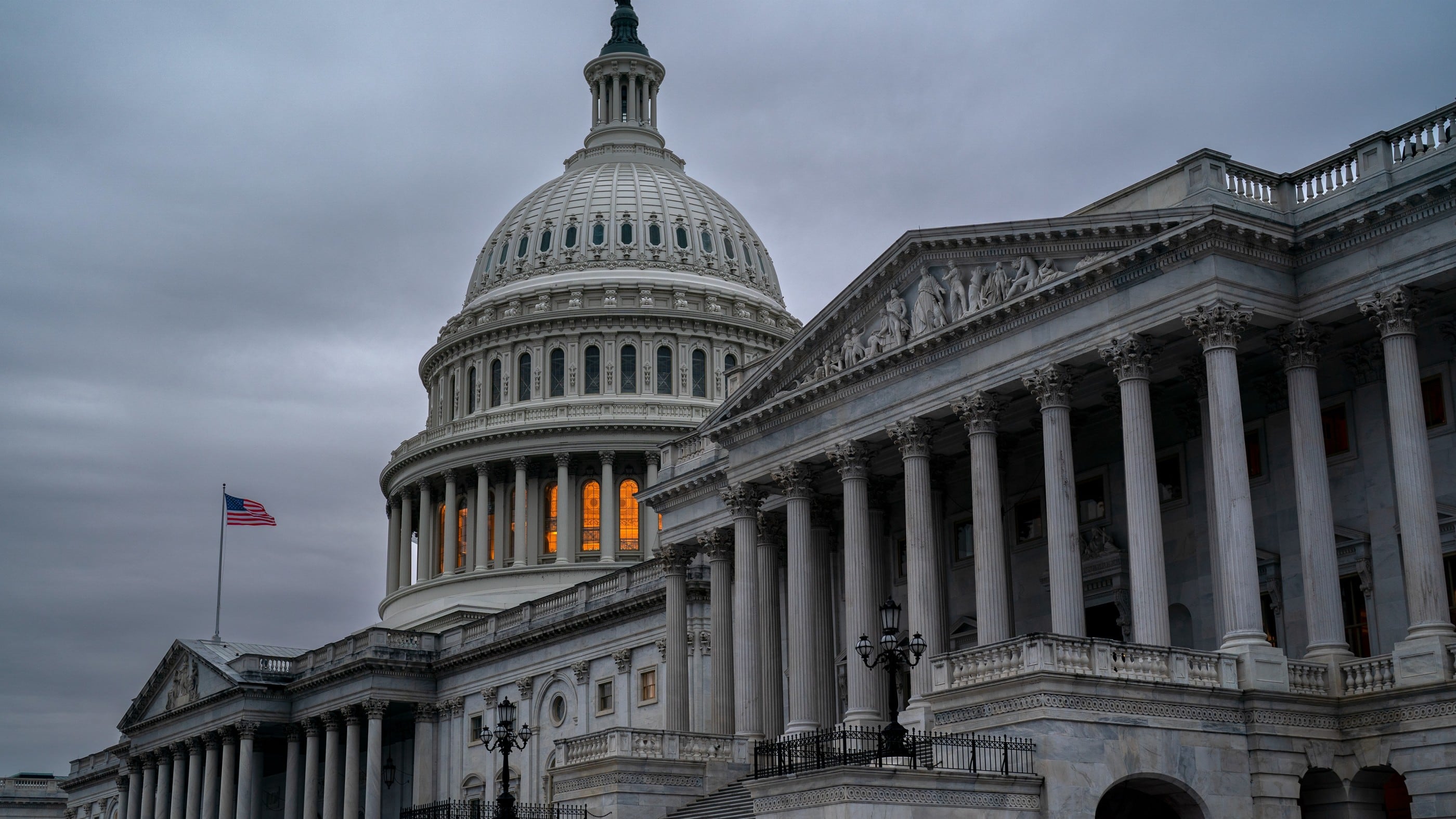
The U.S. Supreme Court is seen Tuesday, June 30, 2020 in Washington. (AP Photo/Manuel Balce Ceneta)
The Supreme Court on Monday upheld a 1991 law that bars robocalls to cellphones.
The case, argued by telephone in May because of the coronavirus pandemic, only arose after Congress in 2015 created an exception in the law that allowed the automated calls for collection of government debt.
Political consultants and pollsters were among those who asked the Supreme Court to strike down the entire 1991 law that bars them from making robocalls to cellphones as a violation of their free speech rights under the Constitution. The issue was whether, by allowing one kind of speech but not others, the exception made the whole law unconstitutional.
Six justices agreed that by allowing debt collection calls to cellphones Congress "impermissibly favored debt-collection speech over political and other speech, in violation of the First Amendment," Justice Brett Kavanaugh wrote. And seven justices agreed that the 2015 exception should be stricken from the law.
"Americans passionately disagree about many things. But they are largely united in their disdain for robocalls," Kavanaugh noted at the outset of his opinion.
During arguments in the case in May, Justice Stephen Breyer got cut off when someone tried calling him. Breyer said after he rejoined the court's arguments: "The telephone started to ring, and it cut me off the call and I don't think it was a robocall."
If the fight with Congress over raising the government's debt limit is such a dire threat, why doesn't President Joe Biden just raise the borrowing ceiling himself? It's theoretically possible, but he's all but ruled it out for now.
An Associated Press analysis of more than 130 bills in 40 state legislatures found of the proposals, as introduced or passed, are identical or very similar to some model legislation, the AP found.
A new poll finds that most U.S. adults say they are highly concerned about how the nation's economy would be affected if the debt limit isn't increased and the government can't pay its debts.
Orlando, FL Mayor Buddy Dyer spoke with Cheddar News about what's in store this summer for his city as Memorial Day weekend kicks off next week and how his administration is navigating certain political challenges.
The Walt Disney Co. says it's scrapping plans to build a new campus in central Florida and relocate 2,000 employees from Southern California to work in digital technology, finance and product development.