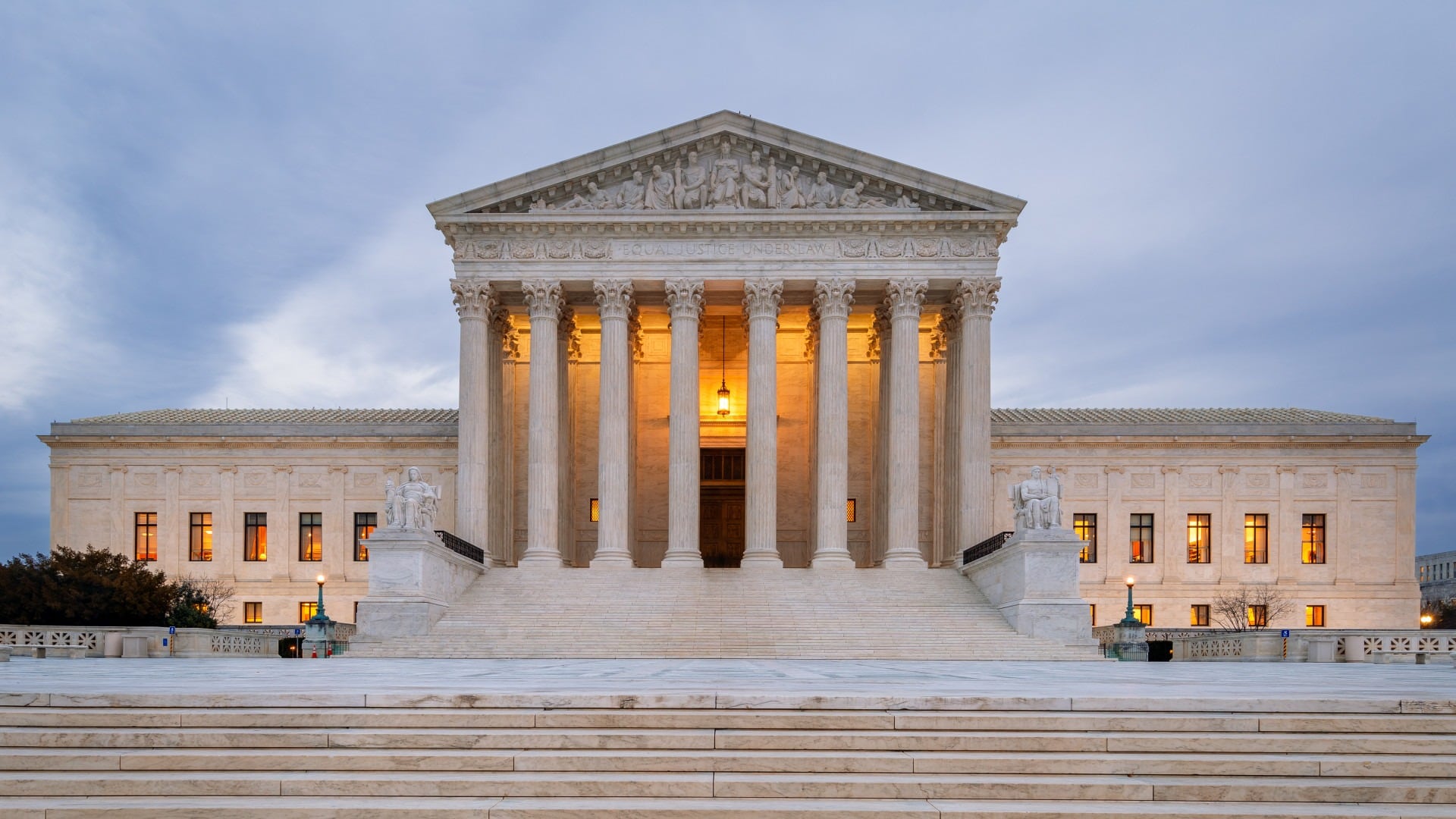
The Supreme Court said Monday it will take up a Republican-led challenge to the Consumer Financial Protection Bureau, a case that could threaten how the consumer watchdog agency functions. It is the second time in three years that the justices will be examining the federal agency, which was created in the wake of the 2008 financial crisis.
The case will not be heard before October. That's when the court begins its next term.
Late last year, a federal appeals court — the U.S. Court of Appeals for the 5th Circuit — ruled that the agency’s funding structure is unconstitutional, threatening its ability to function. The Biden administration asked the high court to review that decision, which it has now agreed to do.
The administration said the lower court’s ruling “calls into question virtually every action the CFPB has taken” since its creation. The decision “threatens to inflict immense legal and practical harms on the CFPB, consumers, and the nation’s financial sector,” the administration said.
Since the bureau was created more than a decade ago by the Dodd-Frank Act, it has varied in its aggressiveness. During the Obama administration, it used its muscle to collect fines from banks and credit card companies; during the Trump administration, it drastically scaled back enforcement actions. Republicans have argued that the agency has unchecked power.
The case the justices agreed to hear centers on the agency's funding. Unlike a majority of agencies, the CFPB does not get its funding from the annual budget process in Congress. Instead, it is funded directly by the Federal Reserve. The agency’s budget is capped at 12% of the total operating expenses of the Federal Reserve System. In the 2022 fiscal year, the agency received about $640 million.
The case the justices will hear began when two associations sued over the agency's Payday Lending Rule. They argued in part that the agency's funding structure violated the Constitution, improperly insulating the agency from congressional supervision. A trial court ruled against the associations, but the appeals court agreed the funding structure was unconstitutional. Other courts that had previously looked at the agency's funding structure found no issue.
In urging the justices to take the case, a group of 16 mostly Republican-led states called the CFPB “a failed experiment in administrative governance.”
Just three years ago, in 2020, the high court dealt with a different challenge to the agency. That case involved the agency's structure. The justices ultimately ruled that Congress had improperly insulated the head of the bureau from removal. The justices said the agency could continue to operate but that its director had to be removable by the president at will.
The CFPB was the brainchild of Sen. Elizabeth Warren of Massachusetts and former Democratic presidential candidate.
The Biden administration on Tuesday quietly launched its website for Americans to request free at-home COVID-19 tests, a day before the site was scheduled to officially launch.
Just 27% of voters aged 18-29 approve of the job Biden is doing as president, according to a survey from The Economist and YouGov late last year. Santiago Mayer, executive director of Voters of Tomorrow, joins Cheddar Politics to discuss why President Biden is losing support among young voters.
Jesse Lehrich, co-founder of Accountable Tech, joins Cheddar News to discuss it being one year since Trump was exiled from social media and the former President's new platform 'Truth Social.'
Cliff Albright, co-founder of the group Black Voters Matter, joins Cheddar Politics to discuss why he boycotted President Biden's voting rights speech this week, and the push from Senate Democrats to debate and vote on the Freedom to Vote Act and the John Lewis Voting Rights Advancement Act.
Senator Jon Ossoff (D-Ga.) has teamed up with fellow Democratic senator and former astronaut Mark Kelly to introduce the Ban Congressional Stock Trading Act, a bill to essentially end stock trading by sitting lawmakers. From the other side of the aisle, Senator Josh Hawley (R-Mo.) introduced his own legislation to enact something similar. The dueling bills come at a time when it's popular to constrain members of Congress from owning and trading stocks. Karl Evers-Hillstrom, a business and lobbying reporter at The Hill, spoke to Cheddar about the significance of the bills, and what they could mean for lawmakers, their families, and staffers moving forward.
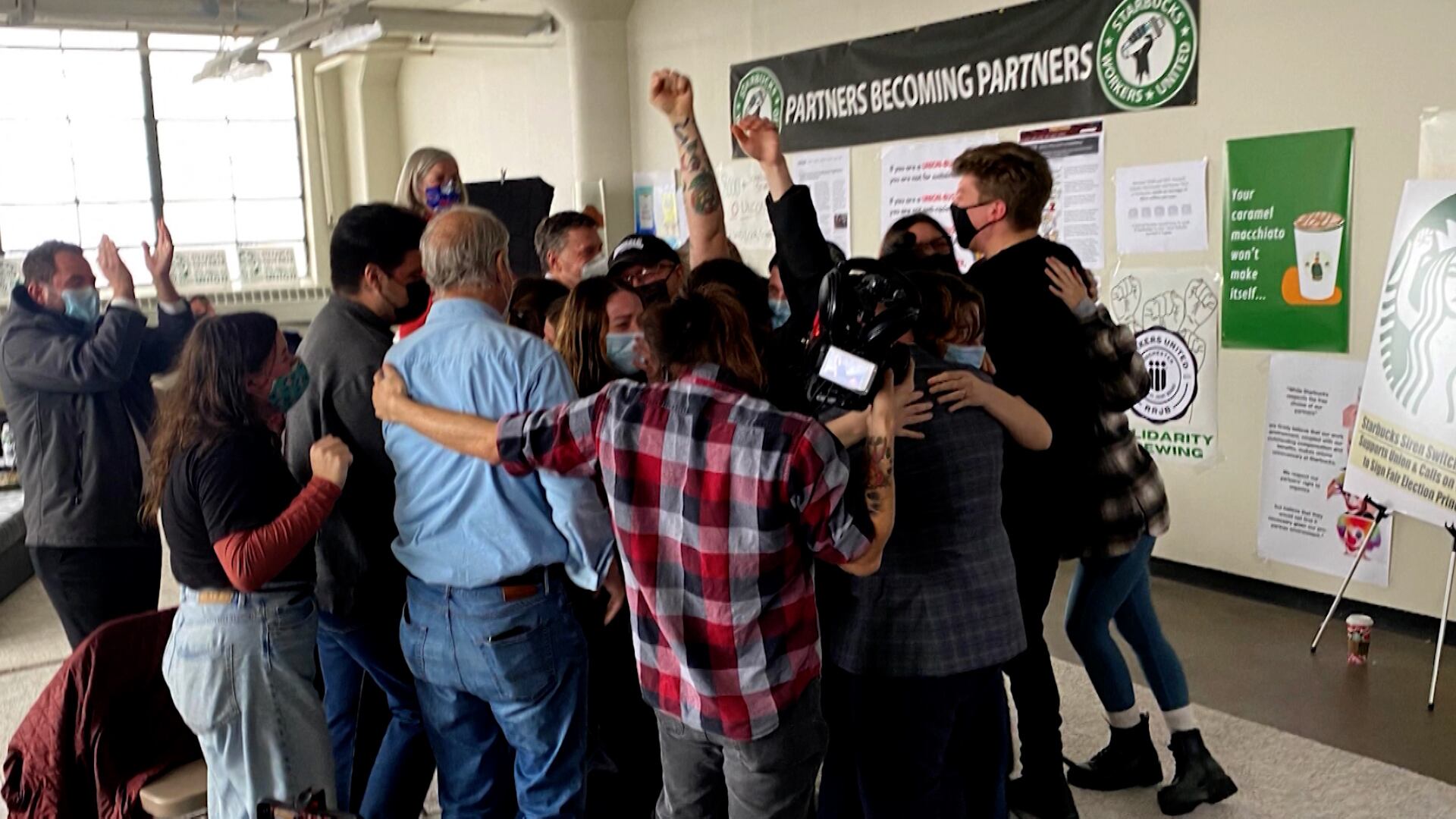
A second Starbucks location in the U.S. has officially voted to unionize. On Monday, the National Labor Relations Board announced workers at the Starbucks store located in the Buffalo, NY suburb of Cheektowaga voted 15-9 in favor of being represented by Workers United, an affiliate of the Service Employees International Union. The New York Times reports votes were tallied in December but remained inconclusive as the union challenged the ballots of several employees it said did not work at the store. A Starbucks spokesperson has said that it may appeal the labor board's decision, which comes as several other Starbucks stores across the country are also pushing to form a union. Danka Dragic, shift supervisor for the second Starbucks store in the country to unionize, joined Cheddar News' Closing Bell to discuss.