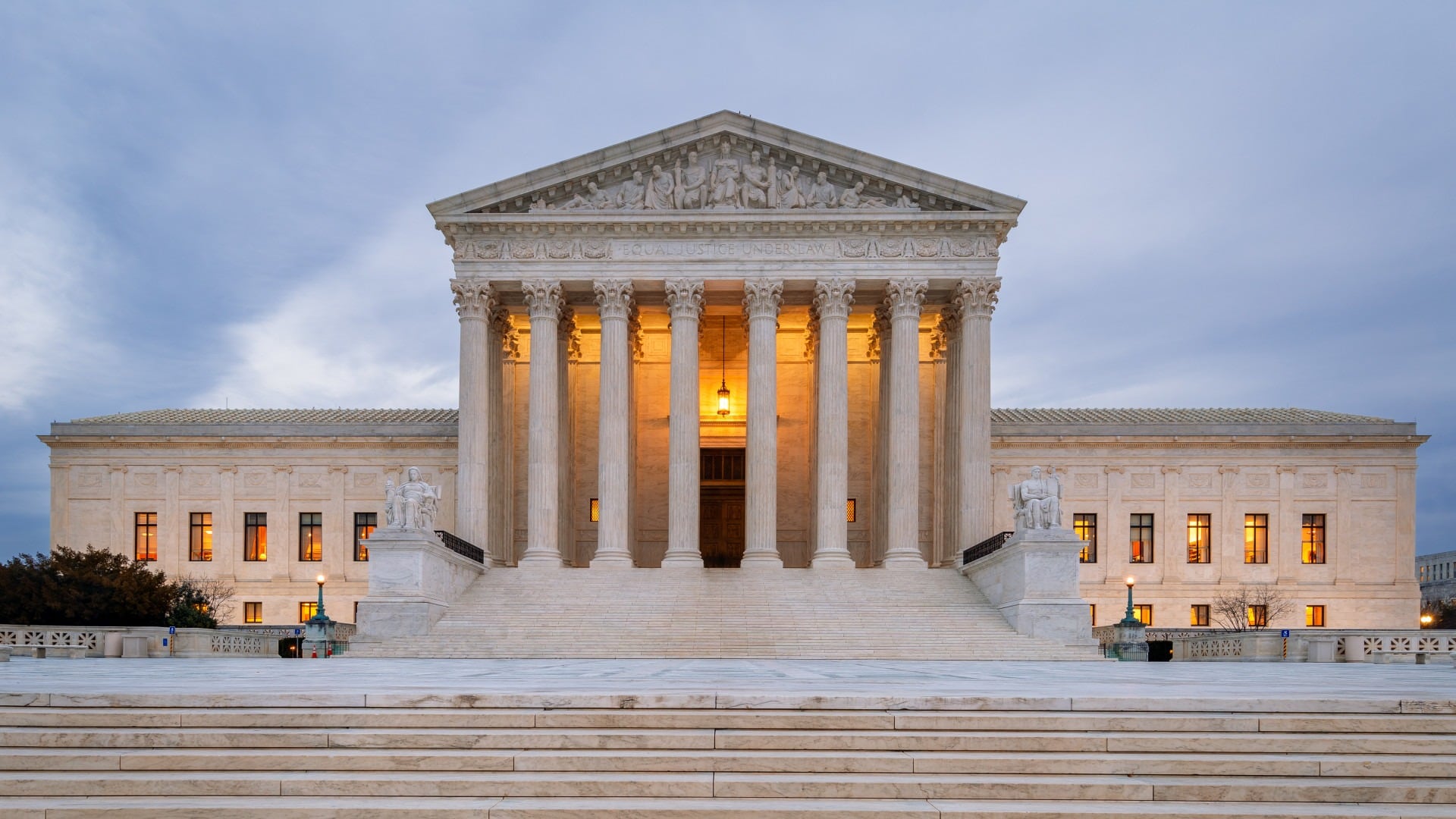
The Supreme Court said Monday it will take up a Republican-led challenge to the Consumer Financial Protection Bureau, a case that could threaten how the consumer watchdog agency functions. It is the second time in three years that the justices will be examining the federal agency, which was created in the wake of the 2008 financial crisis.
The case will not be heard before October. That's when the court begins its next term.
Late last year, a federal appeals court — the U.S. Court of Appeals for the 5th Circuit — ruled that the agency’s funding structure is unconstitutional, threatening its ability to function. The Biden administration asked the high court to review that decision, which it has now agreed to do.
The administration said the lower court’s ruling “calls into question virtually every action the CFPB has taken” since its creation. The decision “threatens to inflict immense legal and practical harms on the CFPB, consumers, and the nation’s financial sector,” the administration said.
Since the bureau was created more than a decade ago by the Dodd-Frank Act, it has varied in its aggressiveness. During the Obama administration, it used its muscle to collect fines from banks and credit card companies; during the Trump administration, it drastically scaled back enforcement actions. Republicans have argued that the agency has unchecked power.
The case the justices agreed to hear centers on the agency's funding. Unlike a majority of agencies, the CFPB does not get its funding from the annual budget process in Congress. Instead, it is funded directly by the Federal Reserve. The agency’s budget is capped at 12% of the total operating expenses of the Federal Reserve System. In the 2022 fiscal year, the agency received about $640 million.
The case the justices will hear began when two associations sued over the agency's Payday Lending Rule. They argued in part that the agency's funding structure violated the Constitution, improperly insulating the agency from congressional supervision. A trial court ruled against the associations, but the appeals court agreed the funding structure was unconstitutional. Other courts that had previously looked at the agency's funding structure found no issue.
In urging the justices to take the case, a group of 16 mostly Republican-led states called the CFPB “a failed experiment in administrative governance.”
Just three years ago, in 2020, the high court dealt with a different challenge to the agency. That case involved the agency's structure. The justices ultimately ruled that Congress had improperly insulated the head of the bureau from removal. The justices said the agency could continue to operate but that its director had to be removable by the president at will.
The CFPB was the brainchild of Sen. Elizabeth Warren of Massachusetts and former Democratic presidential candidate.
Catching you up with what you need to know on Apr 1, 2022, with Ukrainians hoping to flee the besieged city of Mariupol with a ceasefire is in place, President Biden orders the release of oil from U.S.reserves, LGBT activists suing Florida Governor Ron DeSantis over the "Don't Say Gay" Law, U.S. passports offering an "x" option for gender, and more.
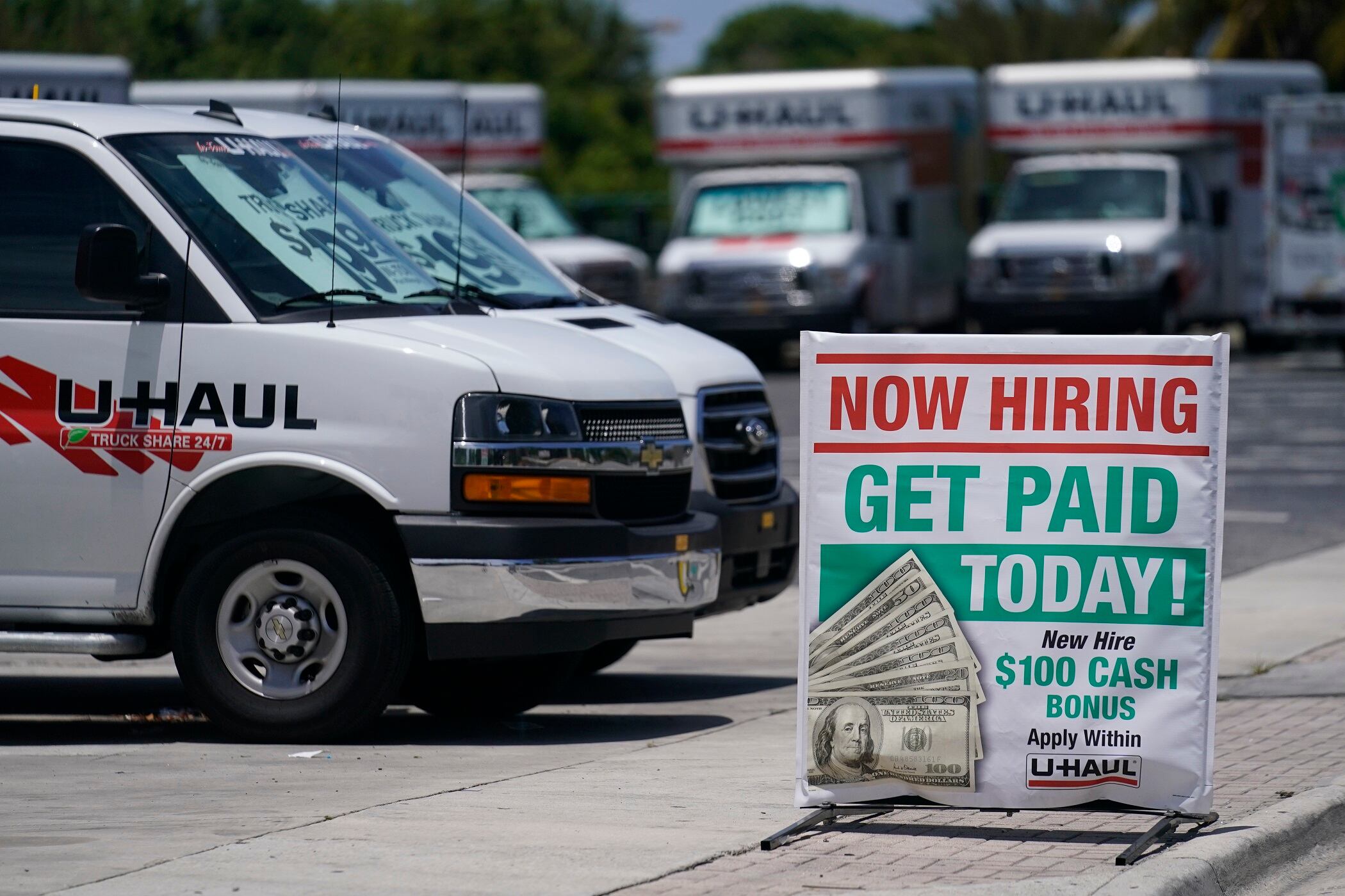
America’s employers extended a streak of robust hiring in March, adding 431,000 jobs in a sign of the economy’s resilience in the face of a still-destructive pandemic and the highest inflation in 40 years.
Progress for the LGBTQ community was made last week when Andi Mudryk, a long-time disability advocate, became the first openly transgender person appointed to the bench in California. Chris Johnson, White House reporter for the Washington Blade, joins Cheddar News to discuss.
President Biden proposed a new billionaire’s tax, that would subject the richest Americans to a minimum tax rate of 20 percent. The White House says billionaires pay an average tax rate of just eight percent, much lower than the national average of 22 percent. Cheddar News speaks with ProPublica’s Paul Kiel who explains how the regulation would work.
The most popular and most valuable cryptocurrency is also the least eco-friendly - data shows that Bitcoin mining generates the same amount of carbon emissions as the entire country of Thailand. According to nonprofit Fair Planet, 96 million tons of carbon dioxide emissions come from Bitcoin mining every year. Now, a consortium of climate activist groups is calling on the Bitcoin industry to cut its energy use by making changes to its software code. Michael Brune, former executive director of the Sierra Club, joins Cheddar News' Closing Bell to discuss.
Imani Gandy, senior editor for law and policy at Rewire News Group, and co-host of the podcast Boom! Lawyered, joins Cheddar Politics to discuss Ketanji Brown Jackson's upcoming confirmation hearings, and the politics surrounding several Republican attack lines against her in the lead-up.
Susannah Wellford, founder and CEO of Running Start, joins Cheddar News to discuss getting more women involved in politics. Running Start helps provide women and girls the tools they need to get involved in politics, and to see a future where they can become political leaders.
Congressional candidate Melanie D'Arrigo came on Cheddar Politics to talk about her campaign for the Democratic nomination in New York's Third Congressional district. The progressive activist ran in the 2020 primary against incumbent Democratic Rep. Tom Suozzi. The seat is open this time, as Suozzi seeks the New York Governorship.
Reecie Colbert, founder of Black Women Views Media, breaks down the roles of race and partisanship in the Senate hearings for Supreme Court Nominee Judge Ketanji Brown Jackson. She also discusses the importance of standing up for Black women in the public sphere.