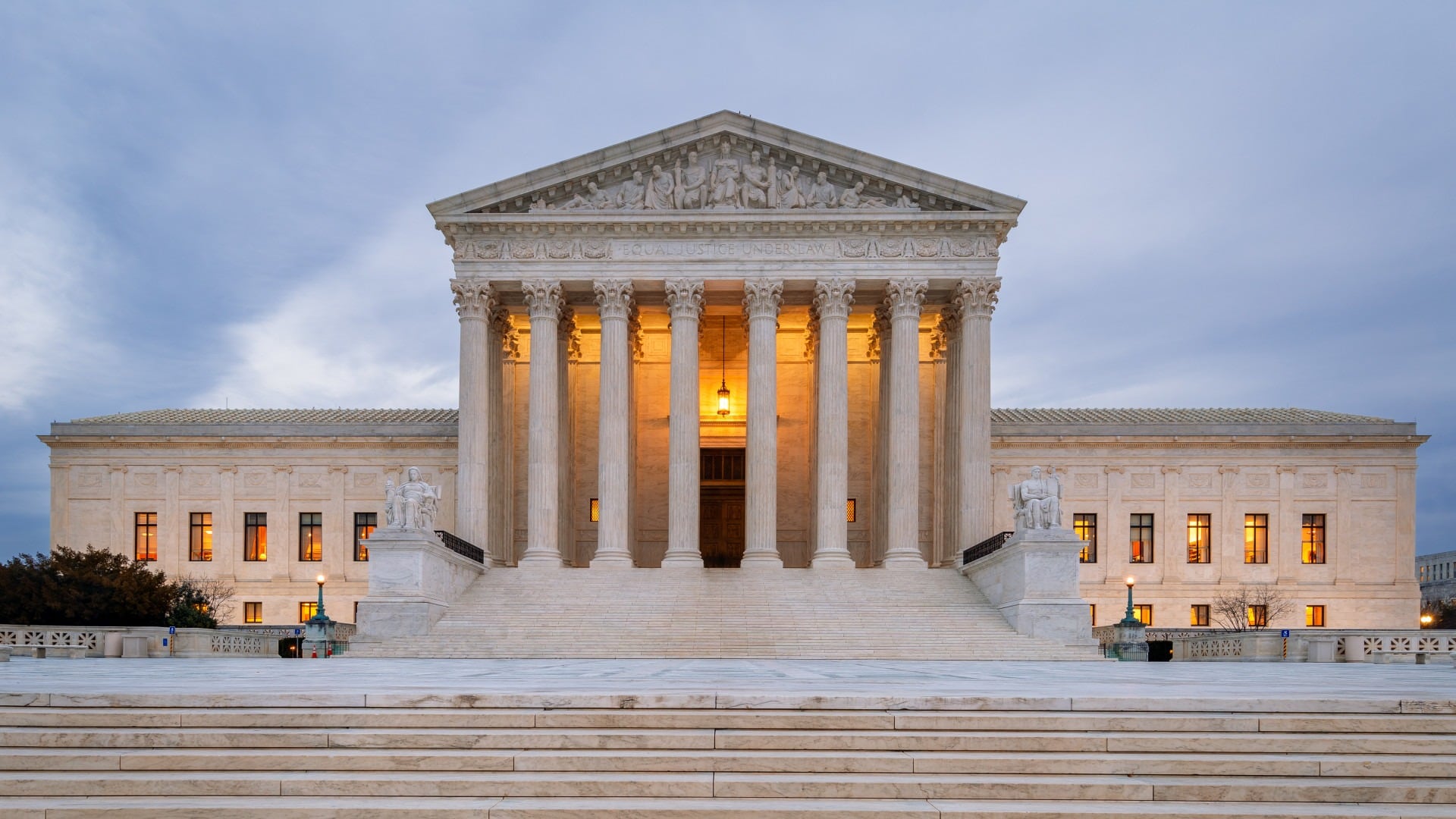
The Supreme Court said Monday it will take up a Republican-led challenge to the Consumer Financial Protection Bureau, a case that could threaten how the consumer watchdog agency functions. It is the second time in three years that the justices will be examining the federal agency, which was created in the wake of the 2008 financial crisis.
The case will not be heard before October. That's when the court begins its next term.
Late last year, a federal appeals court — the U.S. Court of Appeals for the 5th Circuit — ruled that the agency’s funding structure is unconstitutional, threatening its ability to function. The Biden administration asked the high court to review that decision, which it has now agreed to do.
The administration said the lower court’s ruling “calls into question virtually every action the CFPB has taken” since its creation. The decision “threatens to inflict immense legal and practical harms on the CFPB, consumers, and the nation’s financial sector,” the administration said.
Since the bureau was created more than a decade ago by the Dodd-Frank Act, it has varied in its aggressiveness. During the Obama administration, it used its muscle to collect fines from banks and credit card companies; during the Trump administration, it drastically scaled back enforcement actions. Republicans have argued that the agency has unchecked power.
The case the justices agreed to hear centers on the agency's funding. Unlike a majority of agencies, the CFPB does not get its funding from the annual budget process in Congress. Instead, it is funded directly by the Federal Reserve. The agency’s budget is capped at 12% of the total operating expenses of the Federal Reserve System. In the 2022 fiscal year, the agency received about $640 million.
The case the justices will hear began when two associations sued over the agency's Payday Lending Rule. They argued in part that the agency's funding structure violated the Constitution, improperly insulating the agency from congressional supervision. A trial court ruled against the associations, but the appeals court agreed the funding structure was unconstitutional. Other courts that had previously looked at the agency's funding structure found no issue.
In urging the justices to take the case, a group of 16 mostly Republican-led states called the CFPB “a failed experiment in administrative governance.”
Just three years ago, in 2020, the high court dealt with a different challenge to the agency. That case involved the agency's structure. The justices ultimately ruled that Congress had improperly insulated the head of the bureau from removal. The justices said the agency could continue to operate but that its director had to be removable by the president at will.
The CFPB was the brainchild of Sen. Elizabeth Warren of Massachusetts and former Democratic presidential candidate.
This March 19, 2018, file photo shows the Yelp app on an iPad in Baltimore. Yelp reports financial results Thursday, Nov. 7, 2019. The online review service will cover the travel expenses of employees who have to travel out of state for abortions, joining the ranks of major employers trying to help workers affected by restrictions being placed on the procedure in Texas and other states. The benefit announced Tuesday, April 12, 2022 covers Yelp's entire workforce of 4,000 employees, but seems most likely to have its biggest immediate impact on its 200 workers in Texas, which has passed a law banning abortions within the state after six weeks of pregnancy. (AP Photo/Patrick Semansky, File)
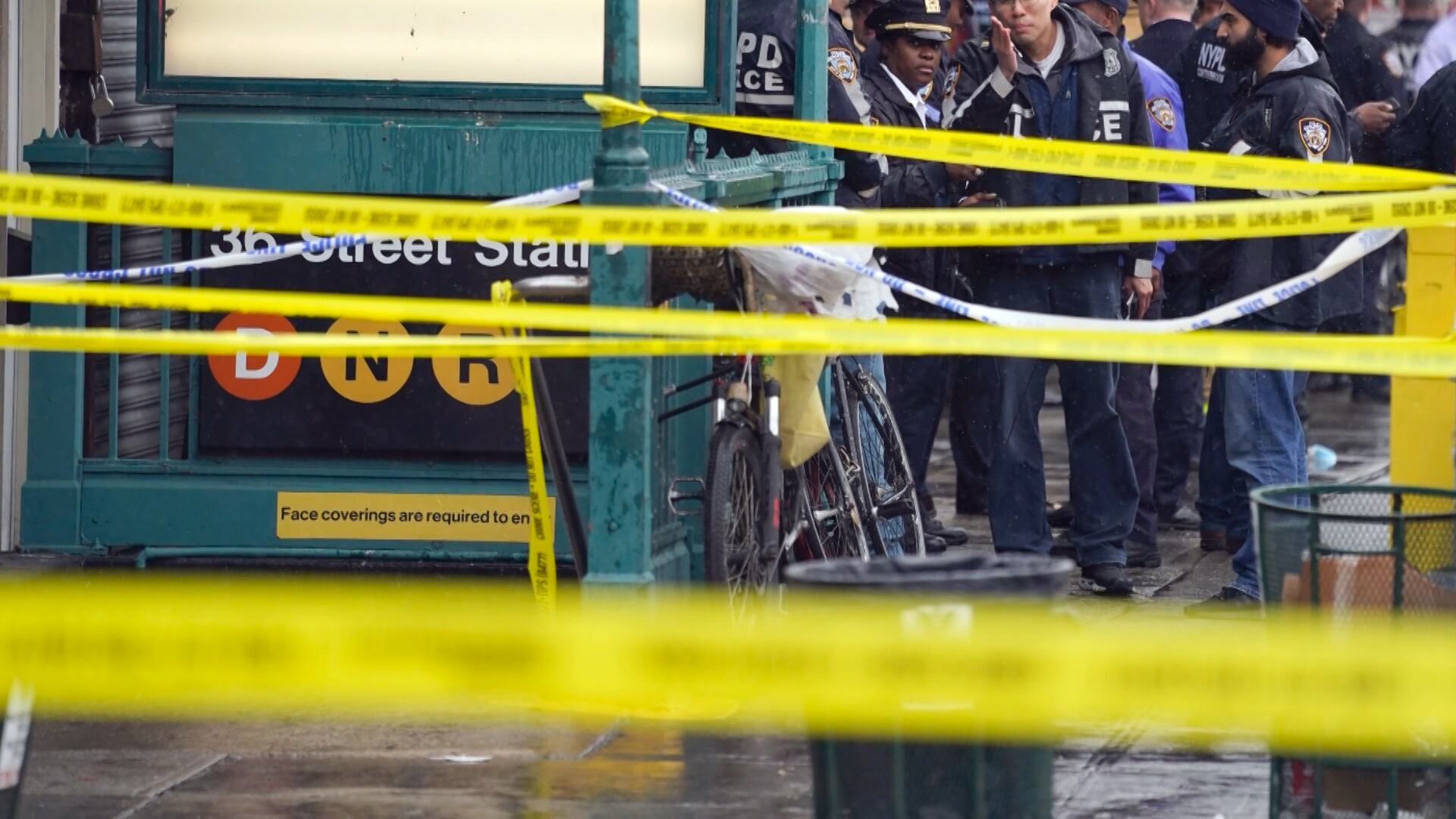
Catching you up on what you need to know on April 13, 2022, with President Biden referring to the Russian invasion of Ukraine as a genocide, a suspect has been identified in the Brooklyn subway shooting that injured 23 people, New York’s lieutenant governor has resigned due to bribery allegations, and more.
A shooter opened fire inside a busy subway car in New York on Tuesday creating chaos. Cheddar News speaks with Ralph Cilento, Professor of Police Science at John Jay College of Criminal Justice who gives tips on how to proceed in active shooter situations.
David Katz, a former federal agent with the Department of Justice, and currently founder, CEO, and owner of Global Security Group, joined Cheddar News to talk about the Tuesday mass shooting on a subway train in Brooklyn, N.Y. even as local authorities have so far stated it was not being investigated as a potential terrorist attack. "At this point between the commissioner of the NYPD and the governor of New York, they're almost saying, 'well, it's an active shooter incident.' Okay, but active shooter incidents can also be motivated by terrorism, so until we know motive, we can't make that conclusion at all," Katz said.
Catching you up with what you need to know on Apr 12, 2022, with Russia concentrating forces in eastern Ukraine, rising inflation, severe weather from Minnesota to the Gulf Coast, Philadelphia brings back its indoor mask mandate, PG&E pays $55 million for wildfire settlement, and more
President Joe Biden is visiting corn-rich Iowa to announce he’ll suspend a federal rule preventing the sale of higher ethanol blend gasoline in the summer.
The March consumer price index showed a 1.2 percent month-over-month increase and 8.5 percent increase from a year ago, which was the highest reading since 1981.
U.S. stocks saw a jump in the final hour of Thursday's session, and ultimately closed slightly higher for the day. Tim Pagliara, Chief Investment Officer of CapWealth, joined Cheddar News' Closing Bell to discuss. "The markets have had to digest a lot of action from the federal reserve this quarter and it's affecting everything from mortgage rates to how they value stocks," he said.