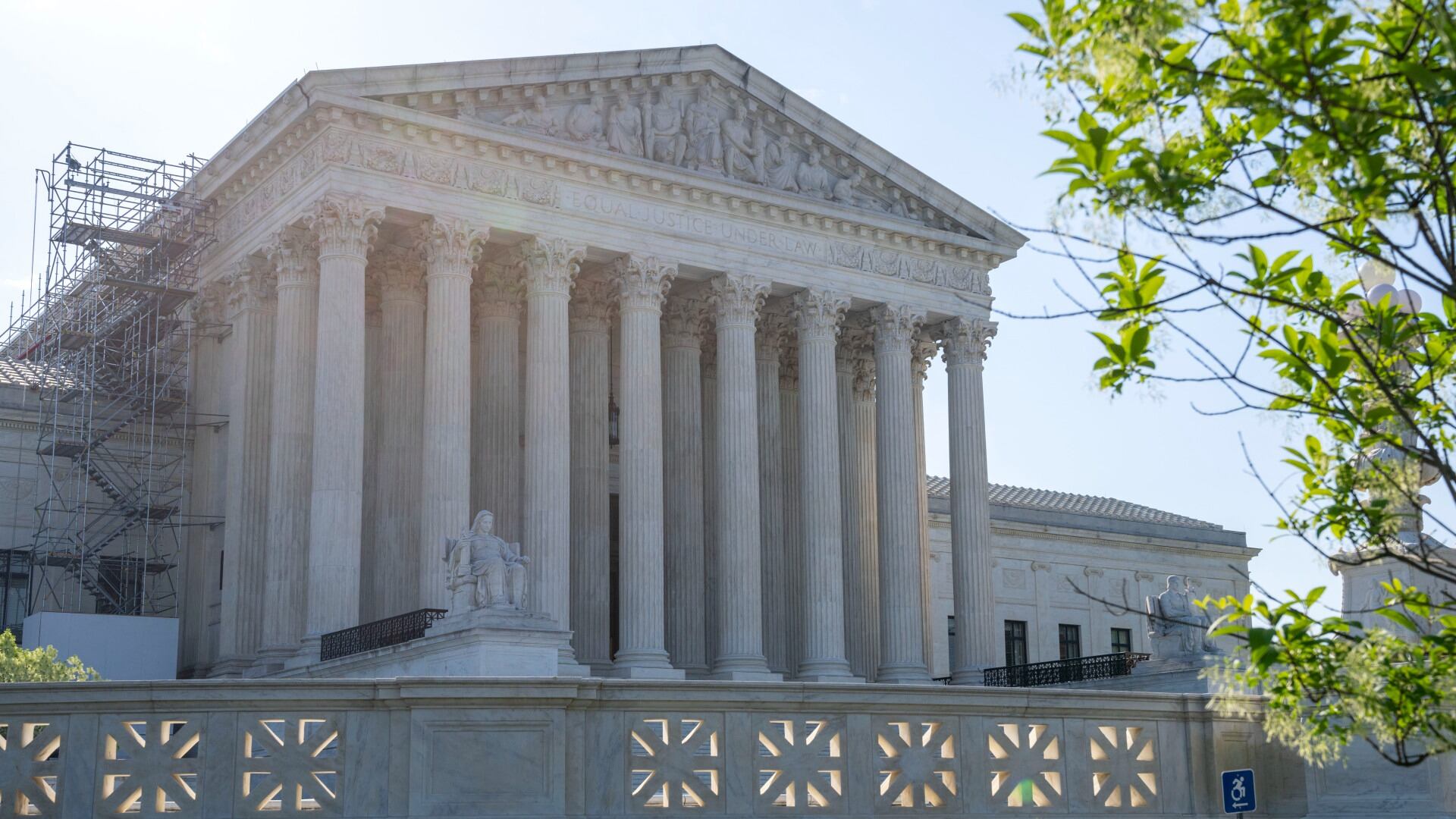
The Supreme Court is seen, Friday, April 21, 2023, ahead of an abortion pill decision in Washington. (AP Photo/Jacquelyn Martin)
The Supreme Court on Tuesday dismissed a case surrounding a Maine hotel that could have made it harder for people with disabilities to learn in advance whether a hotel's accommodations meet their needs.
Hotels and other business interests had urged the justices to limit the ability of so-called testers to file lawsuits against hotels that fail to disclose accessibility information on their websites and through other reservation services.
The information is required by a 2010 Justice Department rule. People who suffer discrimination can sue under the landmark Americans With Disabilities Act, signed into law in 1990.
The justices did not issue a decision on the substance of the case. Instead, they dismissed the case and threw out a lower court ruling in favor of tester lawsuits. The outcome leaves the issue unresolved nationally.
Federal courts in some parts of the country allow such lawsuits. In others, those suits are barred.
The case in front of the court involved whether Deborah Laufer, a woman with disabilities, has the right to sue a hotel in Maine that lacked the accessibility information on its website, despite having no plans to visit it.
In an effort to forestall an unfavorable ruling, Laufer withdrew her lawsuit against the hotel.
An independent watchdog within the IRS reports that while taxpayer services have vastly improved, the agency is still too slow to resolve identity theft cases. And National Taxpayer Advocate Erin Collins says those delays are “unconscionable.” Erin M. Collins said in the report released Wednesday that overall the 2024 filing season went smoothly, though IRS delays in resolving identity theft victim assistance cases are worsening. It took nearly 19 months to resolve self-reported identity theft cases as of January, and Wednesday's report states that now it takes 22 months to resolve these cases.
Amazon.com Inc. surpassed $2 trillion in market value for the first time in afternoon trading on Wednesday. The push higher for Amazon’s stock market valuation comes a little more than a week after Nvidia hit $3 trillion and briefly became the most valuable company on Wall Street. Nvidia’s chips are used to power many AI application and its valuation has soared as a result. Amazon has also been making big investments in AI as global interest has grown in the technology. Most of the company’s focus has been on business-focused products.
Climate change doesn’t just mean more extreme weather – it also leads to billions of dollars in lost productivity, tourism, and stresses infrastructure.
It’s an annual tradition: the Fed’s banking ‘stress test.’ A year after the regional banking crisis, there are good reasons to make sure they’re prepped.
Summer is upon us, which means weddings, trips overseas, and trips to see Taylor Swift. Avoid a “Cruel Summer” with these budget-friendly tips and tricks.
While Nvidia's meteoric rise led it to briefly dethrone Microsoft as the world's biggest public company, there's a lot more going on in this market than A.I.