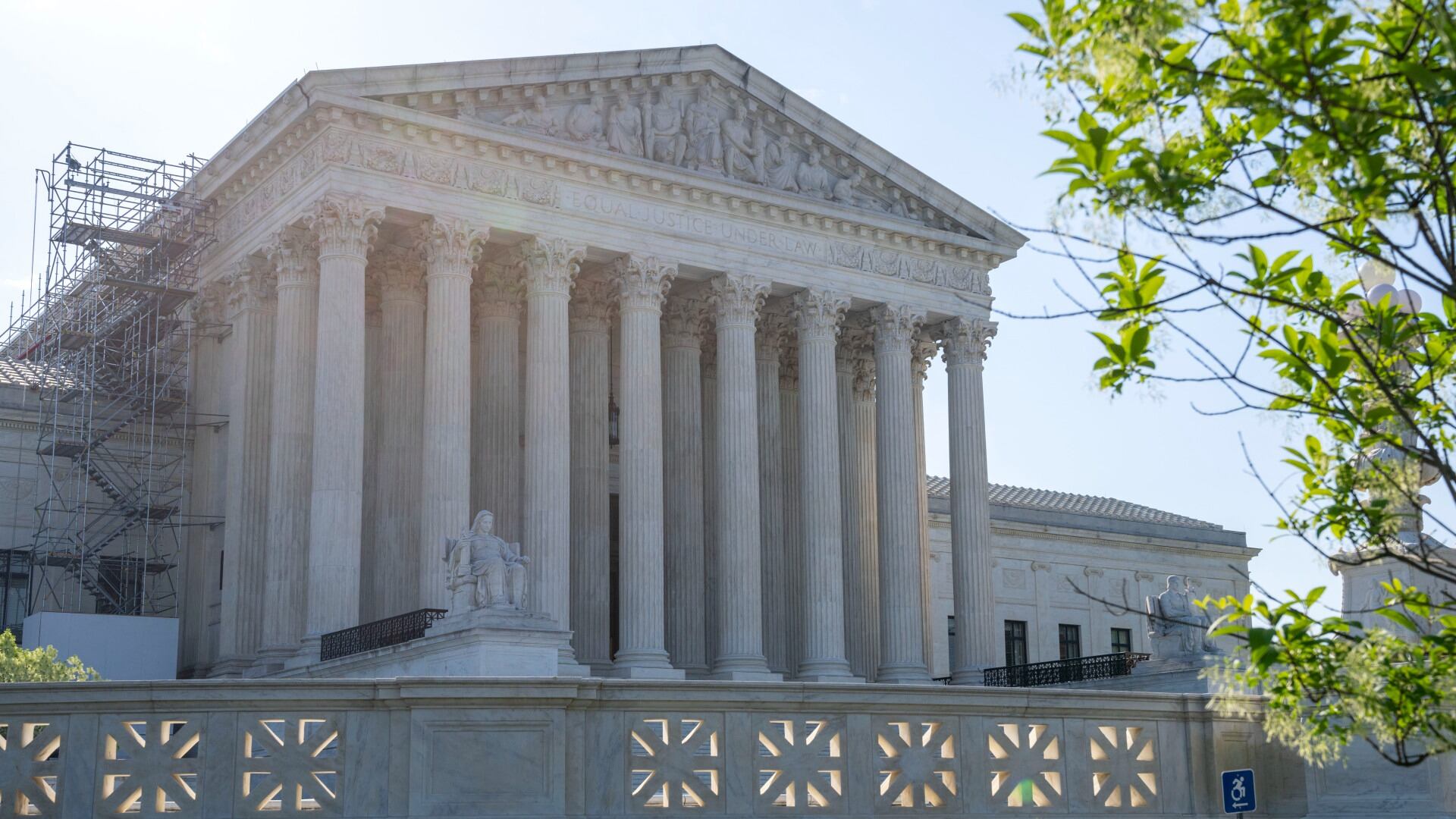
The Supreme Court is seen, Friday, April 21, 2023, ahead of an abortion pill decision in Washington. (AP Photo/Jacquelyn Martin)
The Supreme Court on Tuesday dismissed a case surrounding a Maine hotel that could have made it harder for people with disabilities to learn in advance whether a hotel's accommodations meet their needs.
Hotels and other business interests had urged the justices to limit the ability of so-called testers to file lawsuits against hotels that fail to disclose accessibility information on their websites and through other reservation services.
The information is required by a 2010 Justice Department rule. People who suffer discrimination can sue under the landmark Americans With Disabilities Act, signed into law in 1990.
The justices did not issue a decision on the substance of the case. Instead, they dismissed the case and threw out a lower court ruling in favor of tester lawsuits. The outcome leaves the issue unresolved nationally.
Federal courts in some parts of the country allow such lawsuits. In others, those suits are barred.
The case in front of the court involved whether Deborah Laufer, a woman with disabilities, has the right to sue a hotel in Maine that lacked the accessibility information on its website, despite having no plans to visit it.
In an effort to forestall an unfavorable ruling, Laufer withdrew her lawsuit against the hotel.
From dire wolves to new species targets, scientists at Colossal Biosciences are using gene editing to revive extinction and reshape biodiversity as we know it.
R.J. Hottovy, Head of Analytical Research at Placer.ai, breaks down restaurant trends, pricing power, and which chains are winning this earnings season.
William Shatner and LifeWave CEO David Schmidt share lessons from his “world’s oldest intern” experience and offer advice for young professionals starting out.
The Live Nation ruling is in. Diana Moss of the Progressive Policy Institute joins us to unpack what it means for competition, consumers, and live music.