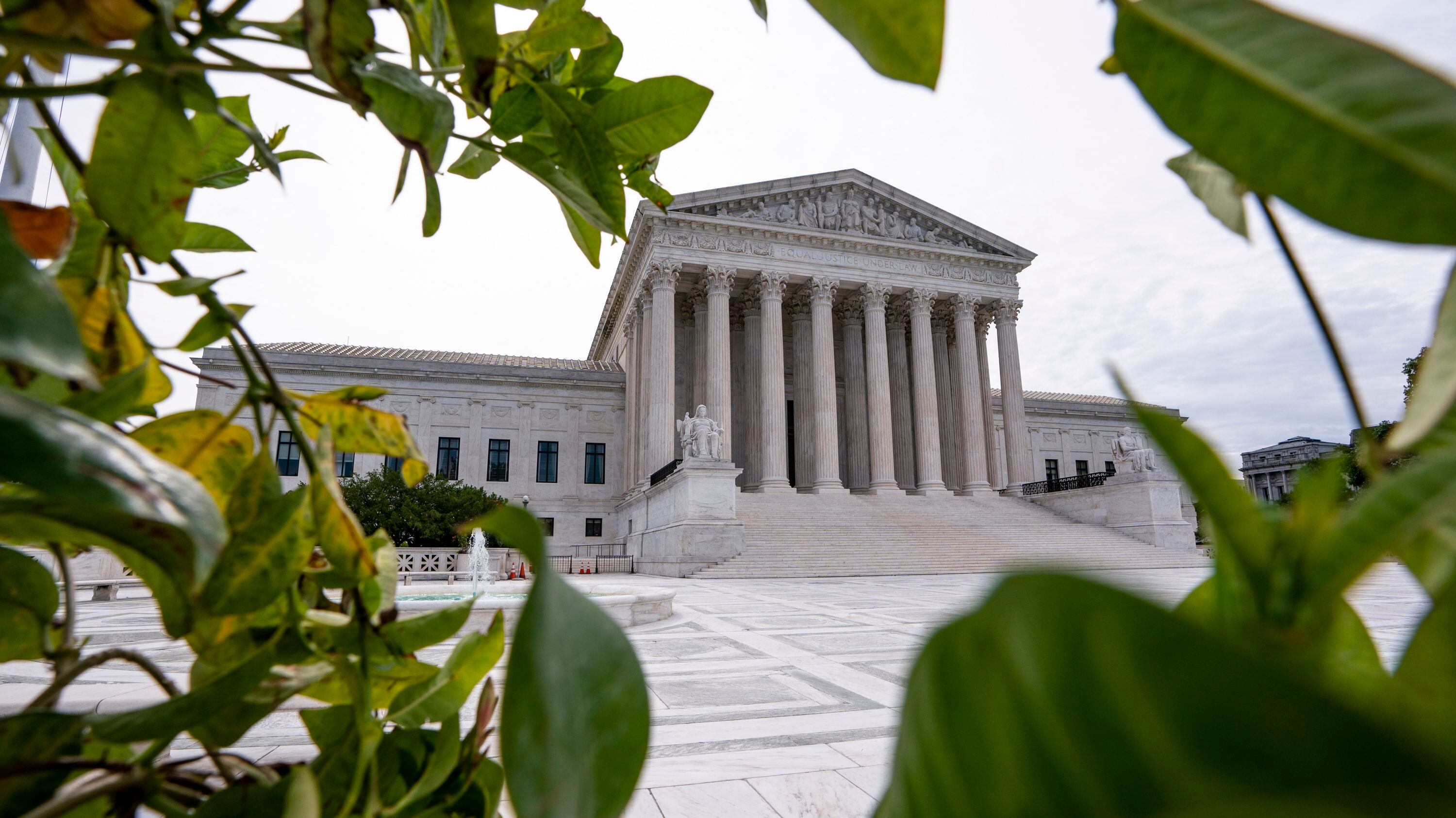
The Supreme Court is seen in Washington, early Monday, June 15, 2020. (AP Photo/J. Scott Applewhite)
By Mark Sherman
Updated 11:36 am ET
A divided Supreme Court on Monday struck down a Louisiana law regulating abortion clinics, reasserting a commitment to abortion rights over fierce opposition from dissenting conservative justices in the first big abortion case of the Trump era.
Chief Justice John Roberts and his four more liberal colleagues ruled that the law requiring doctors who perform abortions have admitting privileges at nearby hospitals violates the abortion rights the court first announced in the landmark Roe v. Wade decision in 1973.
The Louisiana law is virtually identical to one in Texas that the court struck down in 2016.
But Roberts, who had dissented in that Texas case, did not join the opinion written by Justice Stephen Breyer for the other liberals in Monday's decision, and his position left abortion-rights supporters more relieved than elated.
The chief justice explained that he continues to think the Texas case was wrongly decided, but believes it's important for the court to stand by its prior decisions.
"The result in this case is controlled by our decision four years ago invalidating a nearly identical Texas law," Roberts wrote.
In dissent, Justice Clarence Thomas wrote, "Today a majority of the Court perpetuates its ill-founded abortion jurisprudence by enjoining a perfectly legitimate state law and doing so without jurisdiction."
President Donald Trump's two appointees, Justices Neil Gorsuch and Brett Kavanaugh, were in dissent, along with Justice Samuel Alito. The presence of the new justices is what fueled hopes among abortion opponents, and fears on the other side, that the Supreme Court would be more likely to uphold restrictions.
Nancy Northup, president and CEO of the Center for Reproductive Rights, said Monday's decision by no means ends the struggle over abortion rights in legislatures and the courts.
"We're relieved that the Louisiana law has been blocked today but we're concerned about tomorrow. With this win, the clinics in Louisiana can stay open to serve the one million women of reproductive age in the state. But the Court's decision could embolden states to pass even more restrictive laws when clarity is needed if abortion rights are to be protected," Northup said.
Marjorie Dannenfelser, president of the anti-abortion Susan B. Anthony List, said, "Today's ruling is a bitter disappointment. It demonstrates once again the failure of the Supreme Court to allow the American people to protect the well-being of women from the tentacles of a brutal and profit-seeking abortion industry."
A trial judge had said the law would not provide health benefits to women and would leave only one clinic open in Louisiana, in New Orleans. That would make it too hard for women to get an abortion, in violation of the Constitution, the judge ruled.
But the appeals court in New Orleans rejected the judge's findings and upheld the law in 2018, doubting that any clinics would have to close and saying the doctors had not tried hard enough to establish relationships with local hospitals.
The clinics filed an emergency appeal at the Supreme Court, asking that the law be blocked while the justices evaluated the case.
Early last year, Roberts joined with the four liberal members of the court to grant that request and keep the law on hold.
Roberts' vote was a bit of a surprise because he voted in the Texas case to uphold the clinic restrictions. It may have reflected his new role since Justice Anthony Kennedy's retirement as the court's swing justice, his concern about the court being perceived as a partisan institution and respect for a prior decision of the court, even one he disagreed with. Roberts didn't write anything explaining his position at the time, but he had never before cast a vote on the side of abortion rights.
The regulations at issue in Louisiana are distinct from other state laws making their way through court challenges that would ban abortions early in a pregnancy. Those include bans on abortion once a fetal heartbeat is detected, as early as 6 weeks, and the almost total ban passed in Alabama.
It was 'game on' for sports bettors in the state of New York, as mobile betting kicked off on four major betting operating platforms Saturday. This comes at an exciting time for sports fans with some of the biggest NFL games of the season right around the corner. Cam Rogers - Host of Lock It In with Cam Rogers, Betting Analyst at the Bleav Podcast Network joined Cheddar's Opening Bell to discuss.
The United States purchased over 600,000 doses of a monoclonal antibody treatment from Glaxosmithkline and Vir Biotechnology, bringing the total worldwide doses purchased to 1.7 million. This comes as the country attempts to ramp up treatment options as cases of the omicron variant continue to surge. Dr. Asha Shah, Director of Infectious Diseases at Stamford Health joined Cheddar's Opening Bell to discuss.
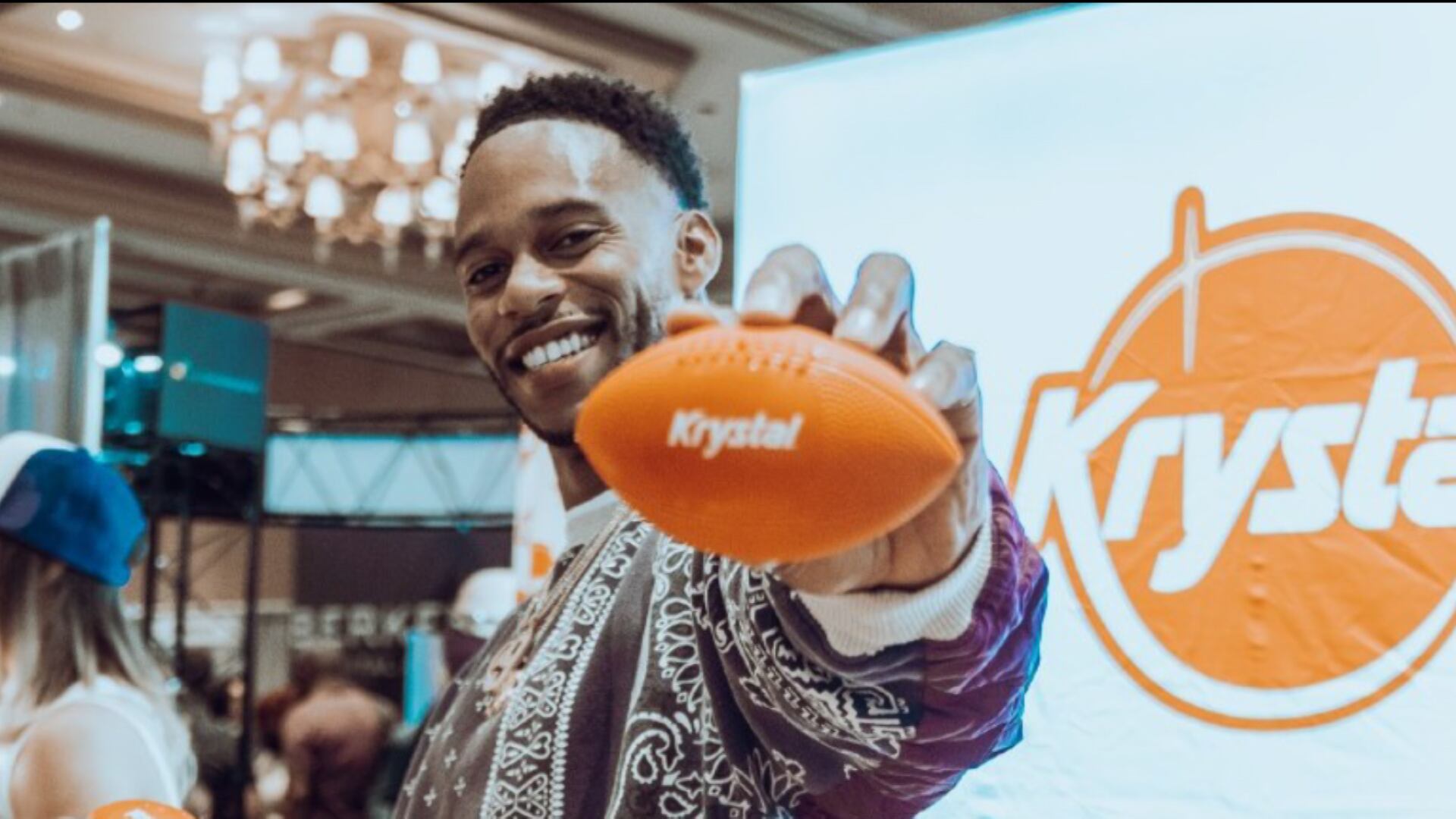
Former wide receiver for the New York Giants, Victor Cruz has partnered with Krystal Restaurants, a popular burger chain in the South, to bring the franchise to his home state of New Jersey. Cruz and Alice Crowder, CMO of Krystal Restaurants, joined Cheddar's Opening Bell to discuss the venture. The five new locations will be known as "Victor Cruz's Krystal," decked out with memorabilia from his football career, with the former player explaining how "hands-on" he plans on being. "You never know, OK? You might walk in and Victor Cruz will be flipping a burger back there, and you might be getting it directly from the source," he said.
Max Bichsel, vice president at Gambling.com Group joins Cheddar News to talk about the growing sports betting industry, New York legalizing mobile betting, and 2022 predictions for the sector.
Cody Roark, NFL analyst at Pro Football Network joins Cheddar News to talk about NFL playoff predictions and which teams have a shot at the Super Bowl.
Mario Stefanidis, Vice President of Research at Roundhill Investments, joined Wake Up With Cheddar to break down the implications of the Take-Two deal to purchase Zynga, as the gaming giant looks to become a major player in mobile gaming.
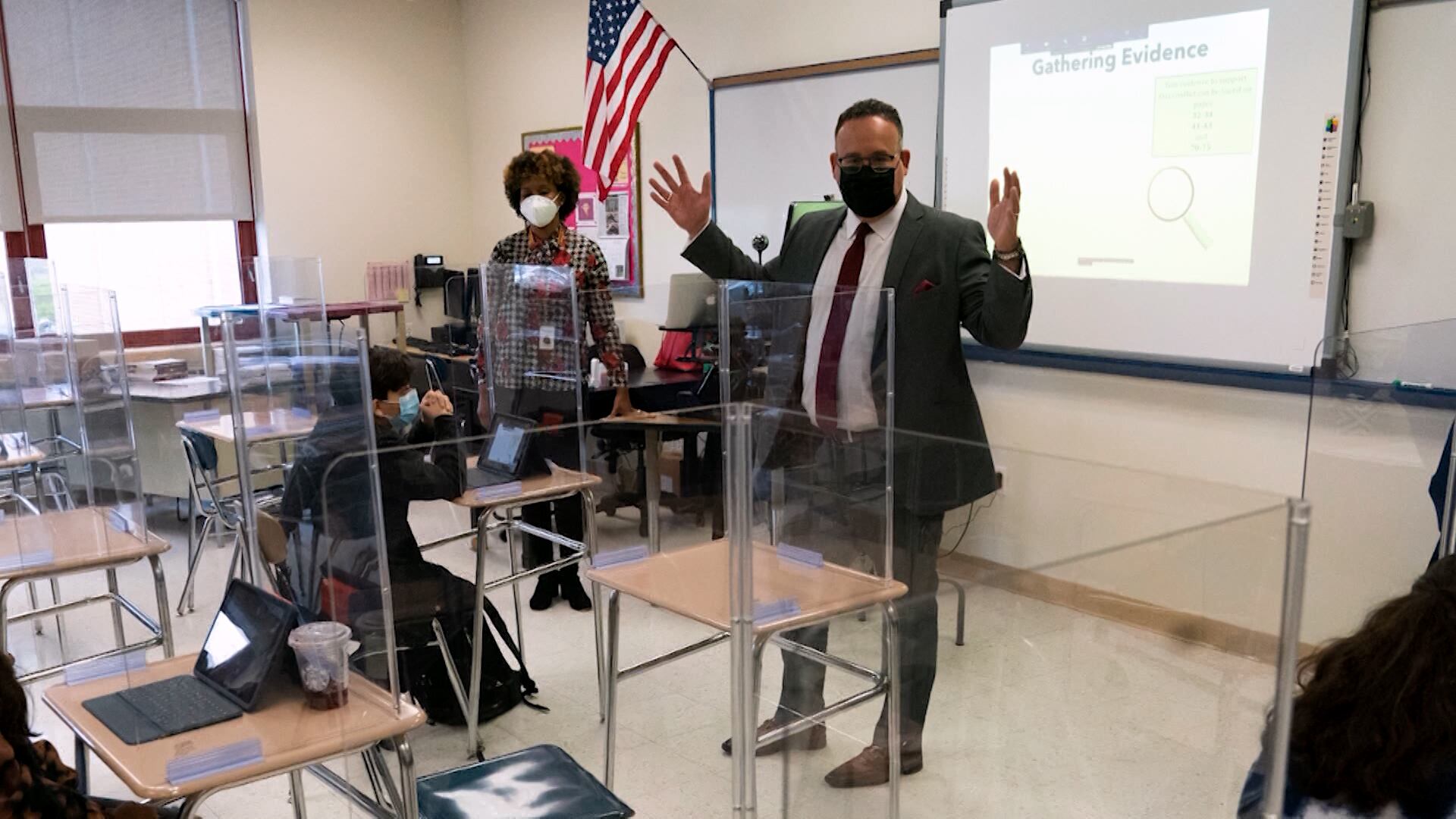
Covid cases have started to spike again across the nation, and this time they seem to be hitting some of our youngest and most vulnerable - school-aged children. School districts across the nation - including the country's largest public school system in New York City- are all grappling with what to do as teachers and students alike continue to miss school in droves.
Katie Honan, reporter for the New York City-based non profit news organization, The City explains how educational leaders across the country are handling covid demands from both teachers and parents alike.
For the first time since September, Bitcoin fell below $40,000 early Monday. The currency's average short-term price has now dipped below its average long-term price, which is known by a rather dramatic term, a death cross. According to analysts, the indicator appears to be a result of mounting concerns of faster liquidity withdrawal by the US Federal Reserve. The crypto slump also follows a week of rough trading for equities overall. CEO Snickerdoodle Labs and Co-Founder of the Stanford Future of Digital Currency Initiative, Jonathan Padilla, joined Cheddar to discuss more.
Throughout this pandemic, we witnessed a mass exodus of women in particular, from the workforce. A number of women say an increase in home and child care responsibilities forced them to make a decision they never thought they would; to simply quit their jobs. Many others had the decision made for them and were laid off. In fact, we did a LinkedIn poll today where 29 percent of women said their careers took a back seat. Reporting Fellow at Type Media Center and Author of "Work Won't Love You Back" Sarah Jaffe, joined Cheddar to discuss more.
David Bowie's entire catalog of songs has officially been sold to Warner Music Group by his estate for an estimated $250 million. This means the group now has the full rights to almost all of David Bowie's recordings. But Bowie, just the latest music mega deal. Just last month, Bruce Springsteen sold his entire catalog to Sony Music Entertainment at what in fact maybe be the biggest transaction ever for a single artist's body of work. In addition, John Legend also cashed in by selling rights to his songs from 2004 to early last year. Culture Correspondent at NPR, Anastasia Tsioulcas, joined Cheddar to discuss more.