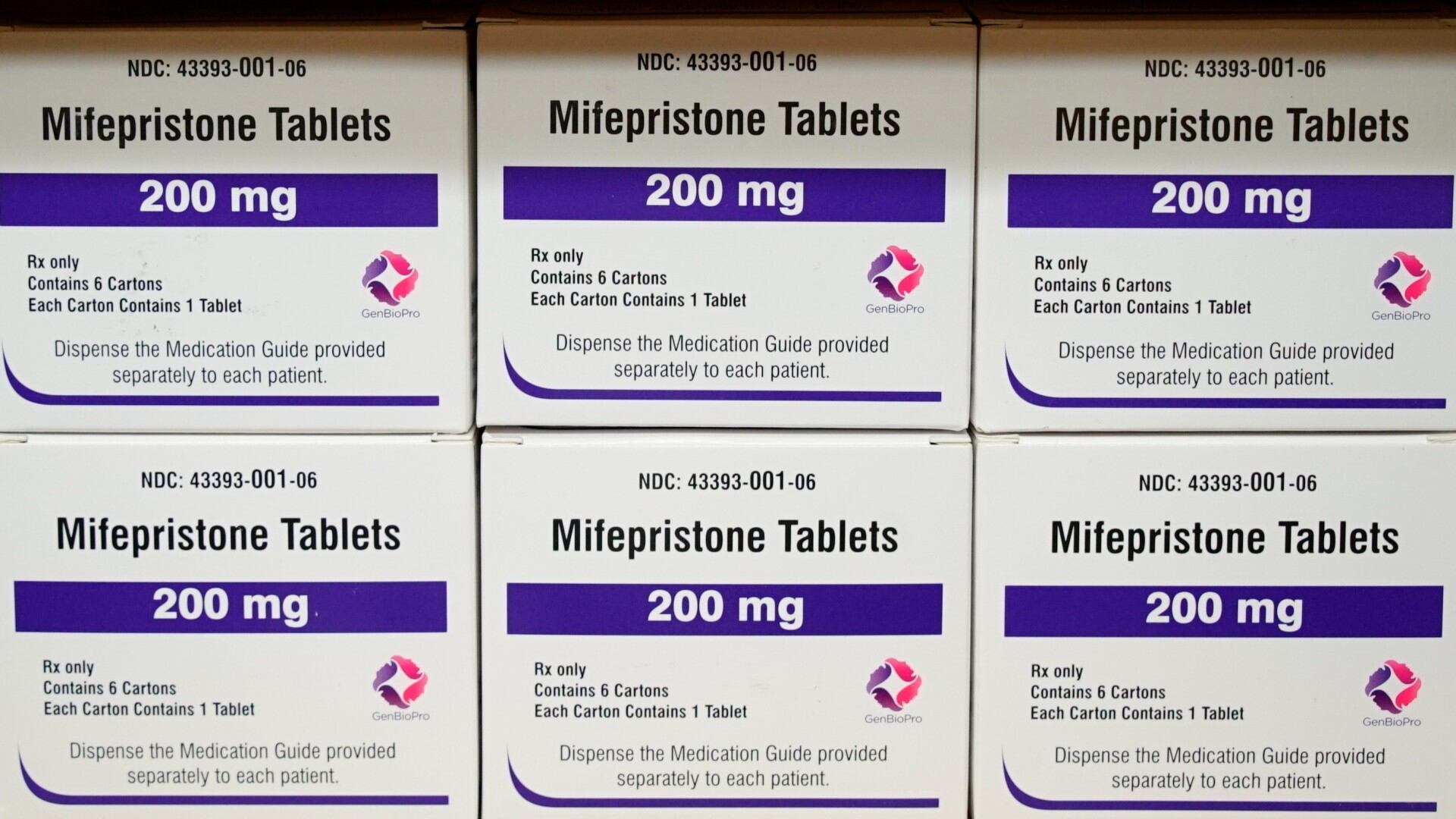
WASHINGTON (AP) — The Supreme Court on Friday preserved women’s access to a drug used in the most common method of abortion, rejecting lower-court restrictions while a lawsuit continues.
The justices granted emergency requests from the Biden administration and New York-based Danco Laboratories, maker of the drug mifepristone. They are appealing a lower court ruling that would roll back Food and Drug Administration approval of mifepristone.
The drug has been approved for use in the U.S. since 2000 and more than 5 million people have used it. Mifepristone is used in combination with a second drug, misoprostol, in more than half of all abortions in the U.S.
The court's action Friday almost certainly will leave access to mifepristone unchanged at least into next year, as appeals play out, including a potential appeal to the high court.
Justices Samuel Alito, the author of last year’s decision overturning Roe v. Wade, and Clarence Thomas voted to allow restrictions to take effect. No other justices commented.
President Joe Biden praised the high court for keeping mifepristone available while the court fight continues.
“The stakes could not be higher for women across America. I will continue to fight politically-driven attacks on women’s health. But let’s be clear — the American people must continue to use their vote as their voice, and elect a Congress who will pass a law restoring the protections of Roe v. Wade,” Biden said in a statement.
The justices weighed arguments that allowing restrictions contained in lower-court rulings to take effect would severely disrupt the availability of mifepristone.
The Supreme Court had initially said it would decide by Wednesday whether the restrictions could take effect while the case continues. A one-sentence order signed by Alito on Wednesday gave the justices two additional days, without explanation.
The challenge to mifepristone, brought by abortion foes, is the first abortion controversy to reach the nation's highest court since its conservative majority overturned Roe v. Wade 10 months ago and allowed more than a dozen states to effectively ban abortion outright.
In his majority opinion last June, Alito said one reason for overturning Roe was to remove federal courts from the abortion fight. “It is time to heed the Constitution and return the issue of abortion to the people’s elected representatives,” he wrote.
But even with their court victory, abortion opponents returned to federal court with a new target: medication abortions, which make up more than half of all abortions in the United States.
Women seeking to end their pregnancies in the first 10 weeks without more invasive surgical abortion can take mifepristone, along with misoprostol. The FDA has eased the terms of mifepristone's use over the years, including allowing it to be sent through the mail in states that allow access.
The abortion opponents filed suit in Texas in November, asserting that the FDA's original approval of mifepristone 23 years ago and subsequent changes were flawed.
They won a ruling on April 7 by U.S. District Judge Matthew Kacsmaryk, an appointee of former President Donald Trump, revoking FDA approval of mifepristone. The judge gave the Biden administration and Danco Laboratories a week to appeal and seek to keep his ruling on hold.
Responding to a quick appeal, two more Trump appointees on the 5th U.S. Circuit Court of Appeals said the FDA's original approval would stand for now. But Judges Andrew Oldham and Kurt Englehardt said most of the rest of Kacsmaryk's ruling could take effect while the case winds through federal courts.
Their ruling would effectively nullify changes made by the FDA starting in 2016, including extending from seven to 10 weeks of pregnancy when mifepristone can be safely used. The court also said that the drug can’t be mailed or dispensed as a generic and that patients who seek it need to make three in-person visits with a doctor. Women also might be required to take a higher dosage of the drug than the FDA says is necessary.
The administration and Danco have said that chaos would ensue if those restrictions were to take effect while the case proceeds. Potentially adding to the confusion, a federal judge in Washington has ordered the FDA to preserve access to mifepristone under the current rules in 17 Democratic-led states and the District of Columbia that filed a separate lawsuit.
The Biden administration has said the rulings conflict and create an untenable situation for the FDA.
And a new legal wrinkle threatened even more complications. GenBioPro, which makes the generic version of mifepristone, filed a lawsuit Wednesday to preemptively block the FDA from removing its drug from the market, in the event that the Supreme Court doesn’t intervene.
The Supreme Court was only being asked to block the lower-court rulings through the end of the legal case.
The New Orleans-based 5th circuit already has ordered an accelerated schedule for hearing the case, with arguments set for May 17. The court gave no timetable for a ruling.
Any appeal to the Supreme Court would follow within three months of a ruling, but with no deadline for the justices to decide whether to review the case.