Photo taken on March 12, 2020 shows the U.S. Supreme Court in Washington DC, (Xinhua/Ting Shen via Getty Images)
By Mark Sherman
The Supreme Court announced Monday that it is postponing arguments for late March and early April because of the coronavirus, including fights over subpoenas for President Donald Trump’s financial records.
Other business will go on as planned, including the justices' private conference on Friday and the release of orders in a week's time. Some justices may participate by telephone, the court said in a statement.
Six of the nine justices are 65 and older, at higher risk of getting very sick from the illness, according to the Centers for Disease Control and Prevention. Justices Ruth Bader Ginsburg, 87, and Stephen Breyer, 81, are the oldest members of the court.
There is no new date set for the postponed arguments. the building has been closed to the public since last week.
The only other time the 85-year-old court building was closed for arguments was in October 2001, when anthrax was detected in the court mailroom. That led the justices to hold arguments in the federal courthouse about a half mile from the Supreme Court,
Within a week and after a thorough cleaning, the court reopened.
In 1918, when the court still met inside the Capitol, arguments were postponed for a month because of the flu pandemic. In the nation's early years, in August 1793 and August 1798, adjustments were made because of yellow fever outbreaks, the court said.
During the pandemic, student loan debt repayment was put on pause amid an unprecedented crisis. However, on February 1, 2022, the schedule is set to resume, and currently it looks as though the Biden administration has no plans to extend it. Cody Hounanian, the executive director of the Student Debt Crisis Center, spoke to Cheddar about why he believes the loan collection pause needs to at least be extended as borrowers are still struggling with the resurgent pandemic and inflation. "There's really no good economic or policy or political reason as far as why they're focused on getting payments started now," Hounanian said. "We surveyed 33,000 people with student loans last month. Nine out of 10 told us that they are not ready to resume payments."
As the 2022 midterm elections fast approach, here are some politicians Americans should be on the lookout for. Democratic Massachusetts state senator Sonia Chang-Diaz, who was the first Latina and Asian American woman to be elected to the state's senate, now has her eye on the governorship with Republican Charlie Baker leaving. New Jersey GOP candidate for Congress, Billy Prempeh also bears watching, and while Boston's newest mayor, Democrat Michelle Wu, was already sworn in last month, all eyes will be on Beantown as the first woman and first person of color to hold the office tries to usher in a new era for the city.
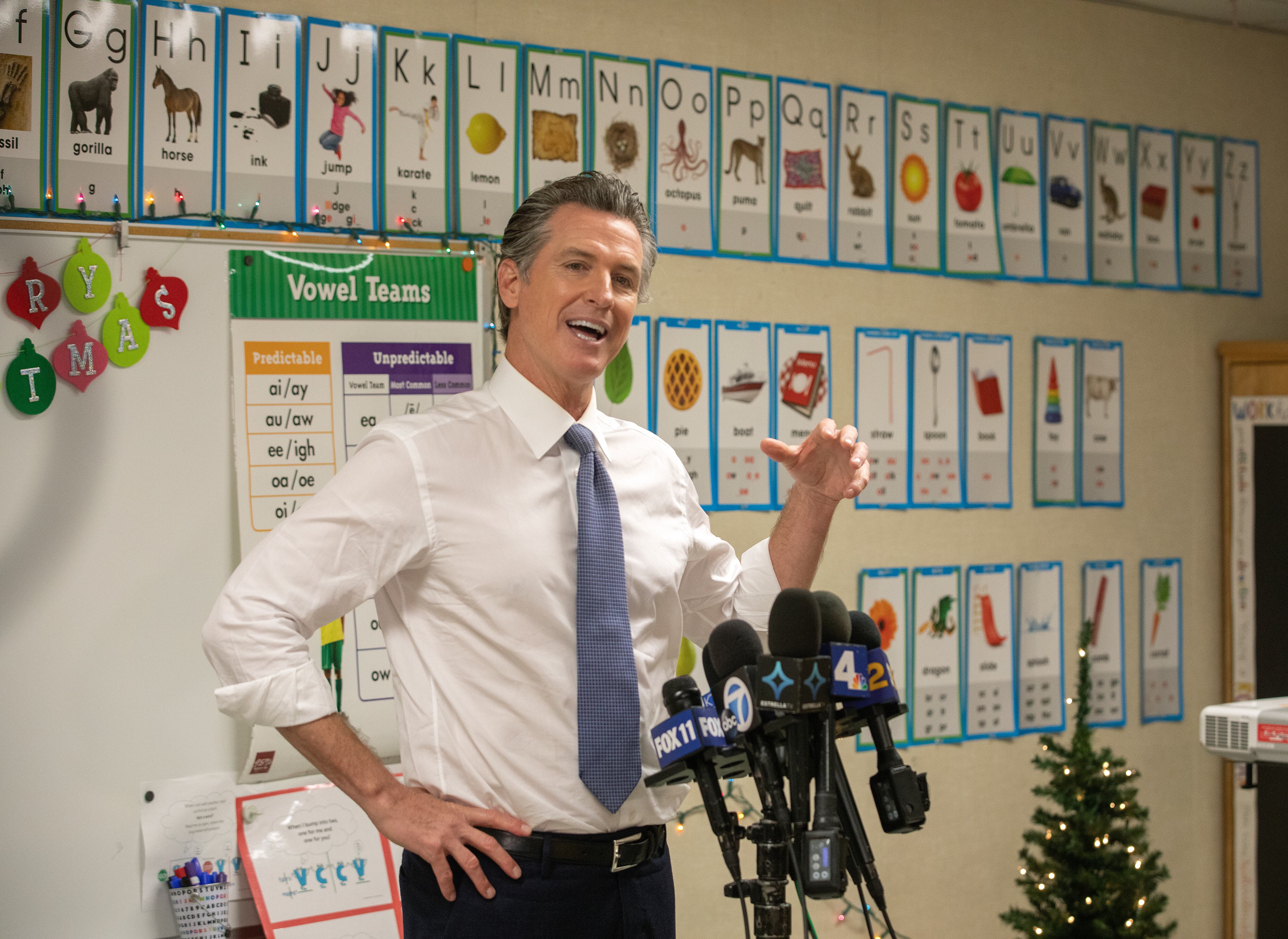
Emily Hoeven, newsletter editor at CalMatters, joins Cheddar News to discuss California Governor Gavin Newsom's gun law modeled after Texas's abortion law.
Chuck Rocha, host of 'Nuestro' podcast and opinion contributor at The New York Times, joins Cheddar News to discuss why Democrats are losing Hispanic voters.
More businesses are requiring workers to return to the office, but there is concern that many employees in the middle class, especially women and people of color, need remote work options for reasons including childcare and financial security. Joan Williams, director of the Center for WorkLife Law at the University of California, joined Cheddar to discuss why office mandates could be detrimental to the middle class. She noted that while companies claim a return to offices would help foster more collaboration and efficiency, reports show that they are successfully able to do their jobs from home.
The U.S. postal service has confirmed that it secretly developed and tested a blockchain-based mobile voting system ahead of the 2020 election. Susan Greenhalgh, senior advisor on election security, Free Speech for People, joins Cheddar News to discuss the cybersecurity complications of a mobile voting system.
The U.S. Supreme Court ruled to allow the controversial Texas abortion law to remain in effect, banning abortion at six weeks and allowing any private citizen to sue a person or doctor aiding or abetting someone seeking an abortion. Outraged at this decision, California Governor Gavin Newsom is working to draft a proposal in line with the law as it relates to guns. Shawn Hubler, California correspondent at the New York Times, joins Cheddar News to discuss.