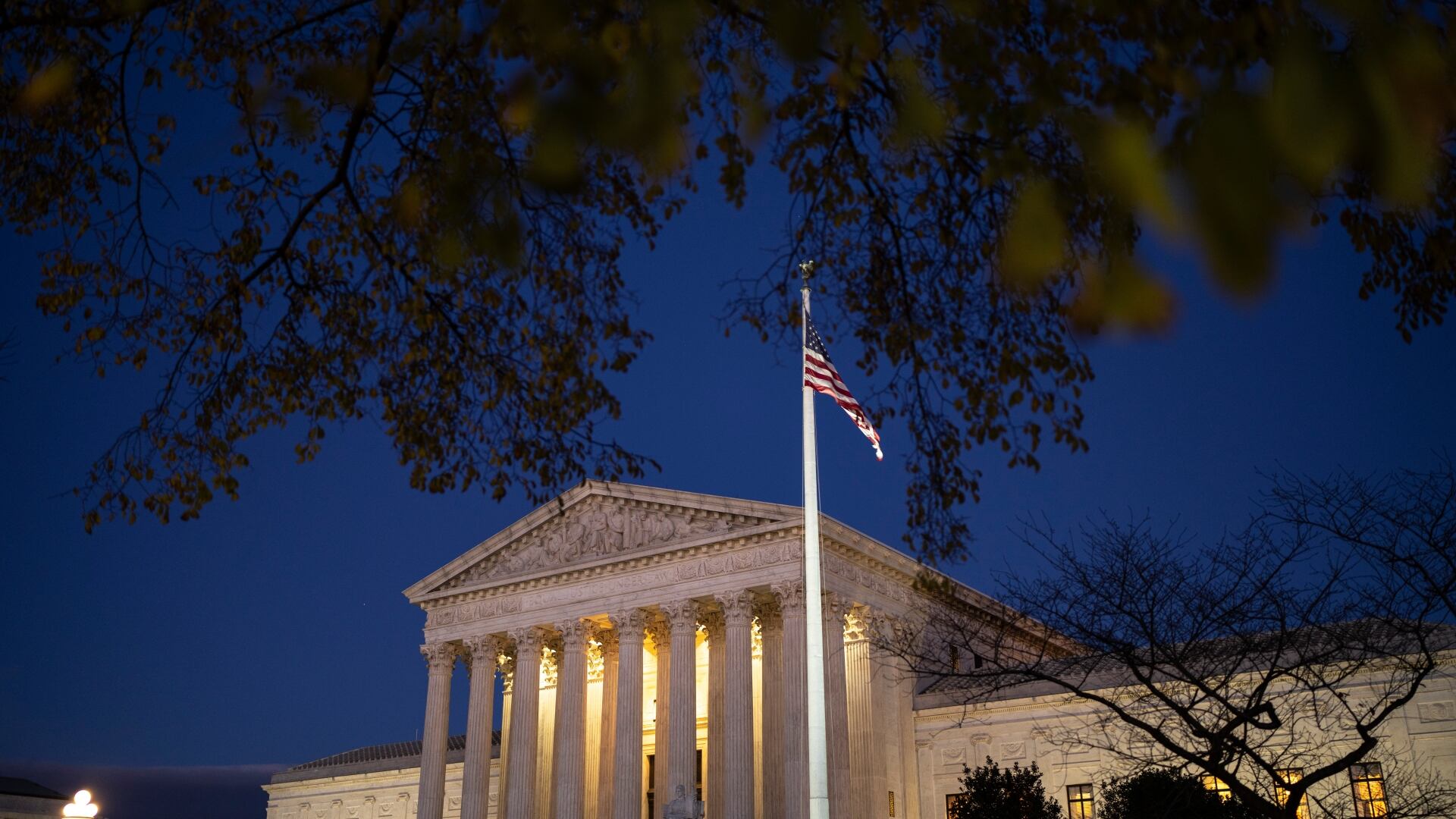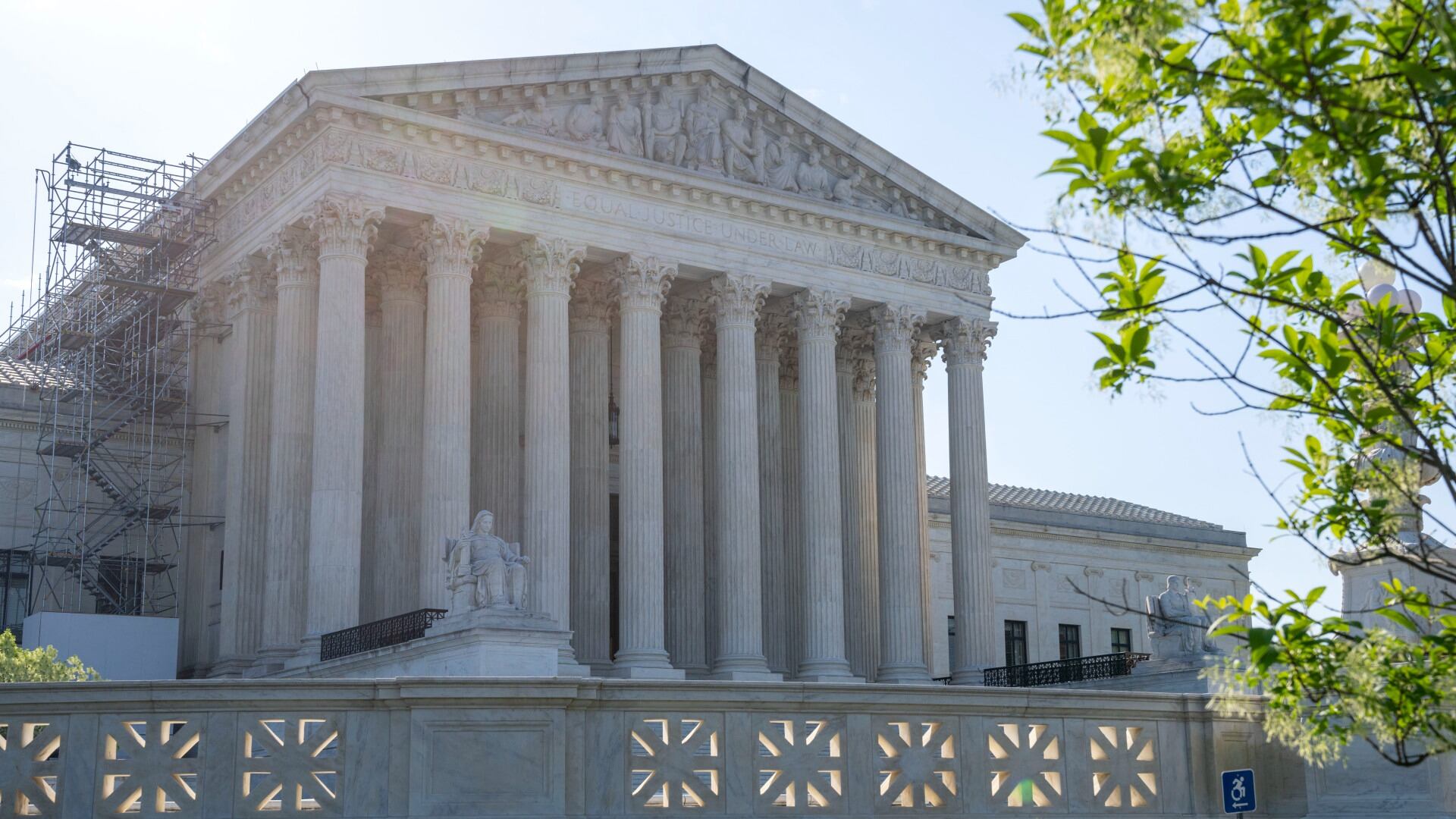
The Supreme Court said Wednesday that Illinois can, for now, keep in place a new law that bars the sale of certain semiautomatic guns and large-capacity magazines.
The high court denied an emergency request from people challenging the law, which bans so-called assault weapons. The law’s opponents had asked the court to put the law on hold while a court challenge continues. The court did not comment and no justice publicly dissented.
The high court’s action comes at a time when gun violence has been heavily in the news. Since the beginning of the year, 115 people have died in 22 mass killings — an average of one mass killing a week, according to a database maintained by The Associated Press and USA Today in a partnership with Northeastern University. The database counts killings involving four or more fatalities, not including the perpetrator. Just recently, on May 6, a man armed with an AR-15 style rifle and other firearms fatally shot eight people, including three children, at a Dallas-area mall.
The case before the Supreme Court involves an Illinois state law enacted in January. The legislation bans the sale of a series of guns including the AR-15 and AK-47. The law also bars the sale of magazines that have more than 15 rounds of ammunition for handguns and more than 10 rounds of ammunition for a long gun.
People who legally owned the now-barred guns and magazines ahead of the law’s enactment can continue to keep them. The guns, however, must be registered with law enforcement.
Nine other states and the District of Columbia have gun bans similar to the one in Illinois, according to the gun control group Brady, which tracks the legislation. California, Connecticut, Hawaii, New Jersey and New York also require registration of guns purchased prior to the law while four other states – Delaware, Maryland, Massachusetts and Washington -- do not.
The Illinois legislation was driven largely by the killing of seven people at a 4th of July parade last year in the Chicago suburb of Highland Park. The shooter was armed with an AR-15 rifle and 30-round magazines.
A federal trial court in February declined to put the law on hold. A federal appeals court also declined to put the law on hold while the case continues.
The case also involves a separate so-called assault weapon bans passed by the city of Naperville.
The Supreme Court’s conservative majority just last year handed gun rights activists a major victory, ruling that Americans have a right to carry firearms in public for self-defense. But the decision left open whether various restrictions states might impose would be constitutional.
___
Associated Press reporter Alanna Durkin Richer contributed to this report from Boston.