By Damian J. Troise and Stan Choe
Stocks rose on Wall Street Tuesday, nudging the S&P 500 toward its record high, as the head of the Federal Reserve said again that inflation looks to be only a temporary problem for the economy and markets.
The S&P 500 climbed 21.65, or 0.5%, to 4,246.44 after Fed Chair Jerome Powell's comments helped further calm markets, which were jolted by last week's announcement that the Fed has begun planning to eventually offer less support to the economy. The S&P 500 got back within 0.2% of its all-time high set two Mondays ago, after dropping as much as 2.1%.
The Dow Jones Industrial Average gained 68.61 points, or 0.2%, to 33,945.58, and the Nasdaq composite rose 111.79, or 0.8%, to 14,253.27.
Indexes started the day off mixed, but they rose more convincingly as Powell told a Congressional subcommittee that the burst of inflation hitting the economy is mostly confined to areas hemmed in by shortages of supplies. That’s why he expects inflation, which hit 5% last month, to subside as the economy gets further into its reawakening.
He pointed in particular to rising prices for used cars, airfares and other things where a newfound flood of dollars is chasing after a limited supply of goods and services. He admitted that price gains in those areas have been larger than the Fed initially expected, but he remained resolute in calling them only temporary.
“The incoming data are very much consistent with the view that these are factors that will wane over time,” he said.
If the Fed is wrong, and if inflation does end up being a longer-lasting problem, it would force the central bank to get more aggressive about raising interest rates higher and faster off their record lows.
Markets are just getting used to the idea of the Fed making any moves at all. For more than a year, they've enjoyed investing on easy-mode as super-low rates propped up prices. Last week, though, the Fed indicated it may begin raising short-term rates by late 2023, earlier than expected. It also discussed easing up on programs meant to keep longer-term rates low.
Trading is likely to get bumpier through the summer as economic reports may give sometimes conflicting signals about inflation and other key data amid a recovering economy, said Katie Nixon, chief investment officer at Northern Trust Wealth Management.
“What investors are going to have to do is just buckle up,” she said. “The data is going to be very noisy; we could get some numbers that create some anxiety.”
The key, she said, is to stay calm and not overreact to any one signal or piece of data.
Markets are sitting close to their records, but that’s masked plenty of churning happening underneath the surface since the Fed’s announcement last week.
The market’s initial move was to send stocks lower and bond yields higher. But the reaction has diffused as investors focus more on the Fed’s saying that it still plans to keep up its support for markets for a while.
Longer-term Treasury yields have fallen back after their initial spike, for example. The 10-year yield dipped to 1.46% from 1.48% late Monday.
Shorter-term yields, which move more on expectations for Fed moves on the federal funds rate, have also regressed a bit. The two-year Treasury yield fell back to 0.22% from 0.27% late Monday, but it’s still well above its 0.16% level from before the Fed's meeting.
In the stock market, companies whose profits most need a strengthening economy to flourish have swung out of and back into favor. They’ve been trading places with Big Tech stocks and other winners of the pandemic, which have seemed able to grow almost regardless of the economy.
GameStop rose 10% after the company said it had raised $1.1 billion after selling 5 million new shares to investors. The company captivated Wall Street earlier this year, after a band of smaller-pocketed investors piled into it together and sent its price way beyond what professional analysts said was reasonable.
Retailers and tech companies were also particularly strong. Gains for Apple, Amazon and Microsoft, which all rose at least 1.1%, were the biggest reasons for the S&P 500's climb.
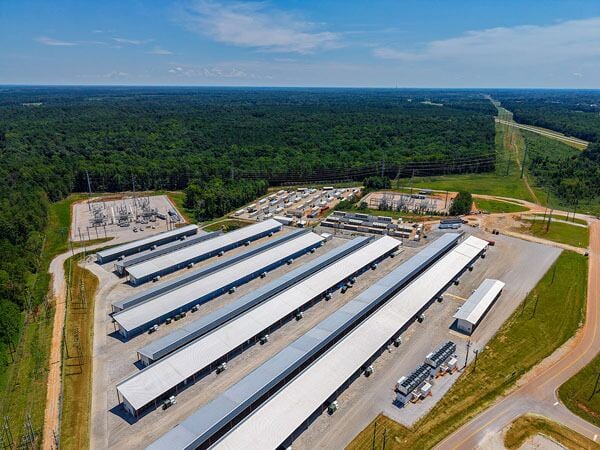
In cryptocurrencies, prices continued to swing sharply after Chinese banks said they would step up enforcement on a government ban.
Bitcoin was trading at a little less than $33,000, according to Coindesk. Earlier in the day, it fell below $30,000, about where it started the year, after more than halving from its high of $64,829.14 in April.
Updated on June 22, 2021, at 5:06 p.m. ET.