By Damian J. Troise, Alex Veiga, and Stan Choe
Stocks on Wall Street closed broadly higher Wednesday after the Federal Reserve signaled it may begin easing its extraordinary support measures for the economy later this year.
The central bank said it may start raising its benchmark interest rate sometime next year, earlier than it envisioned three months ago. It also said it will likely begin slowing the pace of its monthly bond purchases “soon” if the economy keeps improving. The Fed's been buying the bonds throughout the pandemic to help keep long-term interest rates low.
The S&P 500 rose 1%, breaking a four-day losing streak. The benchmark index initially climbed 1.4% after the Fed’s issued its statement at 2 p.m. Eastern.
The other major indexes also received a bump, but shed some of their gains by late afternoon. The Dow Jones Industrial Average rose 338.48 points, or 1%, to 34,258.32. The blue-chip index briefly surged 520 points higher. The Nasdaq composite gained 150.45 points, or 1%, to 14,896.85.
Bond yields mostly rose. The yield on the 10-year Treasury note wobbled up and down after the Fed’s announcement, but wound up little changed at 1.31% from 1.32% late Tuesday. The yield influences interest rates on mortgages and other consumer loans.
Wall Street analysts said the Fed’s policy update was in line with what the market was expecting. The VIX, which measures how much volatility investors expect for the S&P 500, sank about 14% after the Fed statement.
“This was so well telegraphed that it didn’t take anybody by surprise,” said Brian Jacobsen, senior investment strategist at Wells Fargo Asset Management.
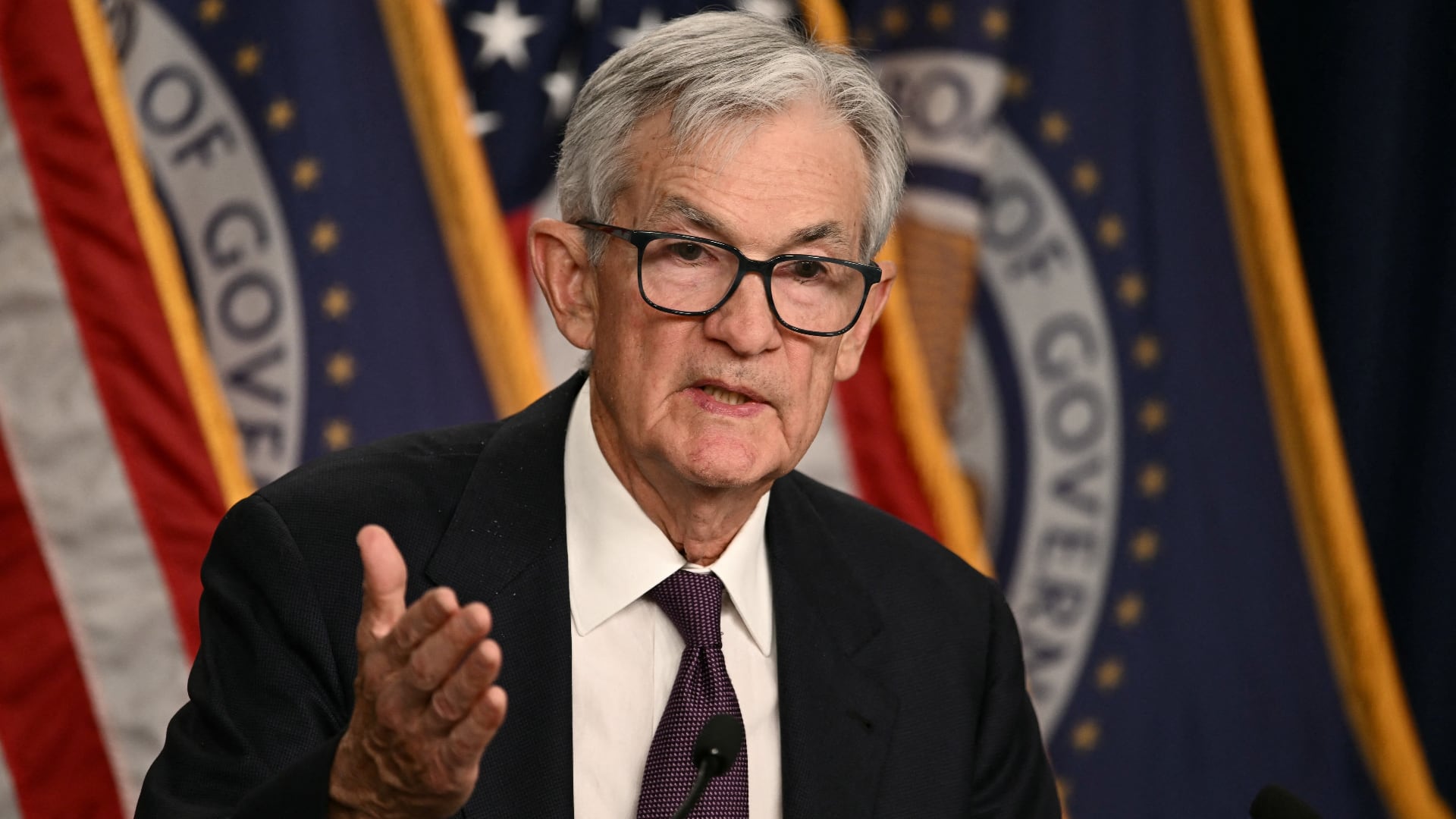
At a news conference, Federal Reserve Chair Jerome Powell said the Fed plans to announce as early as November that it will start to taper its monthly bond purchases, should the job market maintain its steady improvement.
The Fed’s shift revealed that inflation is starting to be a concern, said Gene Goldman, chief investment officer at Cetera Financial Group.
“Our concern is that the Fed keeps sticking to its view that this is a transitory phase, but we aren’t seeing evidence that this is transitory,” he said.
Goldman added that the broader market could be in for a correction as economic growth slows and rising inflation persists. “Our concerns about the overall economy and market is that number one, we’re at peak everything,” he said.
Wall Street has been trying to gauge how the slowdown in the economic recovery will affect the Fed’s decision-making process. The broader market has been choppy as that question lingers amid rising cases of COVID-19 because of the highly contagious delta variant and the impact of rising inflation on companies and consumers.
History doesn’t offer a great guide for how markets will react to the Fed’s easing its support for the economy, mostly because it’s been such a rare occurrence. But the market’s movements around them can seem counterintuitive.
Consider the summer of 2013, when Treasury yields jumped sharply after the Fed’s chair at the time hinted it may begin slowing its bond-buying program. Investors were taken by surprise and assumed rate increases would also quickly follow. That drove the yield on the 10-year Treasury up to 3% from less than 2.20% within three months.
But after the Fed’s official announcement that it would taper its purchases finally arrived in December, the 10-year yield quickly made a U-turn and began falling again. That’s even though the Fed was reducing its support for a program meant to keep rates low. Analysts say that shows how much power the Fed has through signaling: a taper can mean less help is on the way for the economy, which can mean slower growth and inflation.
Through all the bond market’s turmoil of 2013, stock prices remained relatively steady.
What makes this situation different from 2013 is the bond market hasn’t had a taper tantrum. The 10-year yield has been relatively steady between 1.20% and 1.30% since July, after falling from 1.70% in March. Powell has repeatedly stressed how gradual the Fed will be in moving from tapering its bond purchases to raising interest rates.
More than 80% of stocks in the S&P 500 index rose Wednesday. Technology stocks, banks and companies that rely on direct consumer spending accounted for much of the gains. Energy stocks posted solid gains as the price of U.S. crude oil rose 2.4%. Communication and utilities stocks fell.
Smaller stocks did better than the broader market. The Russell 2000 index rose 32.38 points, or 1.5%, to 2,218.56.
Netflix climbed 3.1% after the streaming entertainment service acquired the works of Roald Dahl, the late British author of celebrated children’s books such as “Charlie and the Chocolate Factory.”
Facebook fell 4% and tempered gains for communications stocks after the social network told advertisers in a blog post that it has been underreporting web conversions by Apple mobile device users by roughly 15% following changes to Apple's operating system.
FedEx slumped 9.1%, the biggest decline among S&P 500 stocks, after it reported sharply higher costs even as demand for shipping increased. A wide range of industrial and other companies have been dealing with higher costs because of a mix of labor and supply chain problems.
Meanwhile, Wall Street may have reason to feel less worried about heavily indebted Chinese real estate developers and the damage they could do if they default and send ripple effects through markets. Evergrande, one of China’s biggest private sector conglomerates, said it will make a payment due Thursday, potentially easing some of those concerns.
European markets closed mostly higher and Asian markets were mixed. Markets in South Korea and Hong Kong were closed for holidays.
Updated on September 22, 2021, at 5:22 p.m. ET.