By Damian J. Troise and Alex Veiga

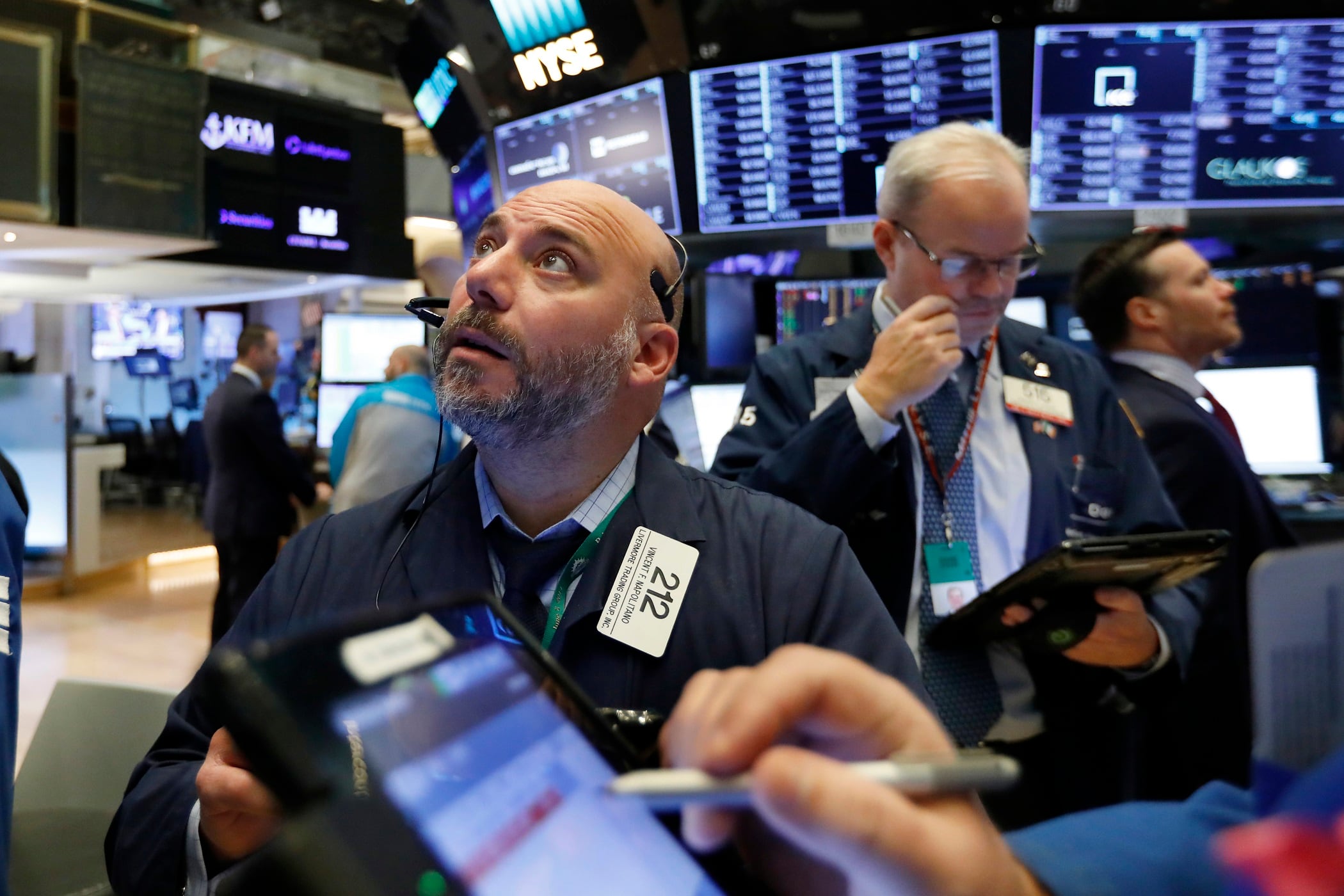
Technology and energy companies led stocks lower on Wall Street Monday, easing the market back from its recent all-time highs.

The S&P 500 slipped 0.1%, erasing an early gain. Technology companies accounted for a big share of the decline. Industrial and consumer-centric stocks also fell. Those losses outweighed gains in health care companies, banks and elsewhere in the market.

Energy companies slumped the most among S&P 500 stocks as the price of benchmark U.S. crude oil fell 2.6% to its lowest levels since May. The move lower follows a decline of 7.7% last week. Occidental Petroleum shed 3%.

Every major index was coming off weekly gains last week, which ended with record highs for the S&P 500 and the Dow Jones Industrial Average.

The modest pullback is another example of the volatility the market has seen amid uncertainty over the impact COVID-19 variants will have on the economy and the Federal Reserve’s next monetary policy moves, said Sylvia Jablonski, chief investment officer at Defiance ETFs.

“People who got in and saw some of the stocks that they hold at all-time highs on Friday, perhaps they’re selling a little bit off today and might be opportunistically trading some of this volatility,” she said.

The S&P 500 fell 4.17 points to 4,432.35. The Dow dropped 106.66 points, or 0.3%, to 35,101.85. The Nasdaq added 24.42 points, or 0.2%, to 14,860.18.

Smaller companies fell more than the rest of the market. The Russell 2000 index lost 12.95 points, or 0.6%, to 2,234.81.

Bond yields moved higher. The yield on the 10-year Treasury rose to 1.32% from 1.28% late Friday. Bond yields tend to move with expectations for the economy and for inflation.

The latest round of corporate earnings is winding down, and nearly 90% of companies in the S&P 500 have reported their latest results. The reports have been mostly solid. Tyson Foods jumped 8.7% for one of the biggest gains in the S&P 500 Monday after handily beating Wall Street's profit forecasts.

Investors are also closely watching the world's reaction to the latest surge of the coronavirus. Some governments have reimposed limits on business and travel. China canceled flights as it tries to stop a rash of outbreaks. Australia’s two most populous states have told people to stay home except to go to work or for a handful of other reasons.

Analysts expect the U.S. and global economies to continue growing, but have cautioned that the resurgent virus could slow down the pace.

“That's one part of the story and that could be holding back" the stock market, said David Kelly, chief global strategist at JPMorgan Funds. “We don't really have a handle on how bad the delta variant might get.”

Investors have been taking in a steady stream of encouraging economic reports. The latest from the Labor Department shows that U.S. employers posted a record 10.1 million job openings in June. That follows Friday's report that the economy generated 943,000 jobs last month and the unemployment rate fell to 5.4% from 5.9% in June.

The solid jobs figures also raise some concerns about wage inflation and the pace of economic growth.

“We’re burning our way back to full employment fast," Kelly said. “Once we get there the economy is going to slow down.”

The latest figures also raise concerns about inflation fueled by the improving job market, as employers are potentially forced to raise wages to fill jobs.

Investors will get another piece of data on inflation when the Labor Department releases its consumer price index for July on Wednesday. Wall Street is still trying to gauge how much inflation might rise as the economy recovers and whether that will push the Federal Reserve to trim back its support for the economy sooner than expected.

Major indexes Europe edged lower while indexes in Asia ended mixed.

Updated on August 9, 2021, at 5:01 p.m. ET.

Share:
More In Business
Stocks Close Mostly Lower as Snap Experiences Worst Day Ever
Andrew Arons, Founder and Partner at Synergy Advisory Management Group, joins Cheddar News' Closing Bell, where he breaks down Tuesday's market action and provides his insight on Snap's historic slide after the comments made by CEO Evan Spiegel.
Stocks Start Week off Strong, Close Sharply Higher
Peter Andersen, CIO at Andersen Capital Management, joins Cheddar News' Closing Bell, where he breaks down Monday's trading action and discusses whether this could be the start of a new rally or a blip in an otherwise disappointing stretch.
Terra Collapse Leaves Questions About Impact on Broader Crypto Market
The crypto industry is still reeling from Terra's recent crash. The company's blockchain was temporarily halted earlier this month after the collapse of its cryptocurrency Luna (LUNA) and its stablecoin TerraUSD (UST), which led to almost $45 billion being wiped from the tokens' market caps within a week. Now, many are left wondering what Terra's struggles mean for the broader crypto market. Reeve Collins, CEO of the NFT platform BLOCKv, joins Cheddar News' Closing Bell from Davos 2022 to discuss.
Didi Shareholders Vote to Delist From NYSE Amid China's Tech Crackdown
China's largest ride-hailing company will no longer be listed on the world's largest stock exchange. Didi shareholders voted on Monday to delist from the New York Stock Exchange, less than a year after launching a $4.4 billion IPO with the most significant U.S. share offering by a Chinese company since Alibaba debuted in 2014. Since going public in June of last year, around $70 billion has been wiped from Didi's market value and shares of the company have dropped nearly 90%. Now, Didi is expected to begin preparations to list in Hong Kong. Kevin T. Carter, founder and Chief Investment Officer of EMQQ Global, joins Cheddar News' Closing Bell to discuss.
Doctors Join Forces to Urge Investors to Hold Meta Responsible for Misinformation
Ahead of the Meta shareholder meeting, more than five hundred doctors have jointly sent a letter to investors to hold the Facebook parent accountable for the risks its platforms have posed to the public and mental health. Dr. Rob Davidson, a West Michigan ER physician and executive director of the Committee to Protect Health Care, joined Cheddar News to discuss how medical professionals are coming together to highlight the social media giant's spread of misinformation, especially during the pandemic. "We've seen the direct impacts of misinformation and disinformation that spreads like wildfire on the social media platforms," he said. "Our goal with this letter is to try to get the shareholders of Meta to convince leadership that they need to do a better job."
Expert Offers Tips to Deal With Debt
Regine Muradian, clinical psychologist and National Debt Relief Financial Wellness board member, joins Cheddar News to discuss how debt impacts our mental health.
Snap Warning Sends Other Stocks Spiraling
Snap downgraded its earnings and revenue expectations for the second quarter, saying the "macroeconomic environment" has deteriorated faster than the company anticipated. The warning sent shockwaves through the digital ad industry, dragging down a handful of other tech stocks, including Pinterest, Meta, and Twitter. Daniel Cobb, CEO and Chief Strategy Officer of Daniel Brian Advertising, joined Cheddar to discuss the reason behind this warning, and why it's bringing so many social media stocks down.
Why it Pays for Businesses to Prioritize Sustainability
Pamela Rucker, CIO Advisor and Instructor for Harvard Professional Development, joins Cheddar to discuss how perceptions of Environmental, Social, and Governance–or ESG–changed over the past couple of years, and how using machine learning and artificial intelligence could pave the way to a more sustainable future.
Load More