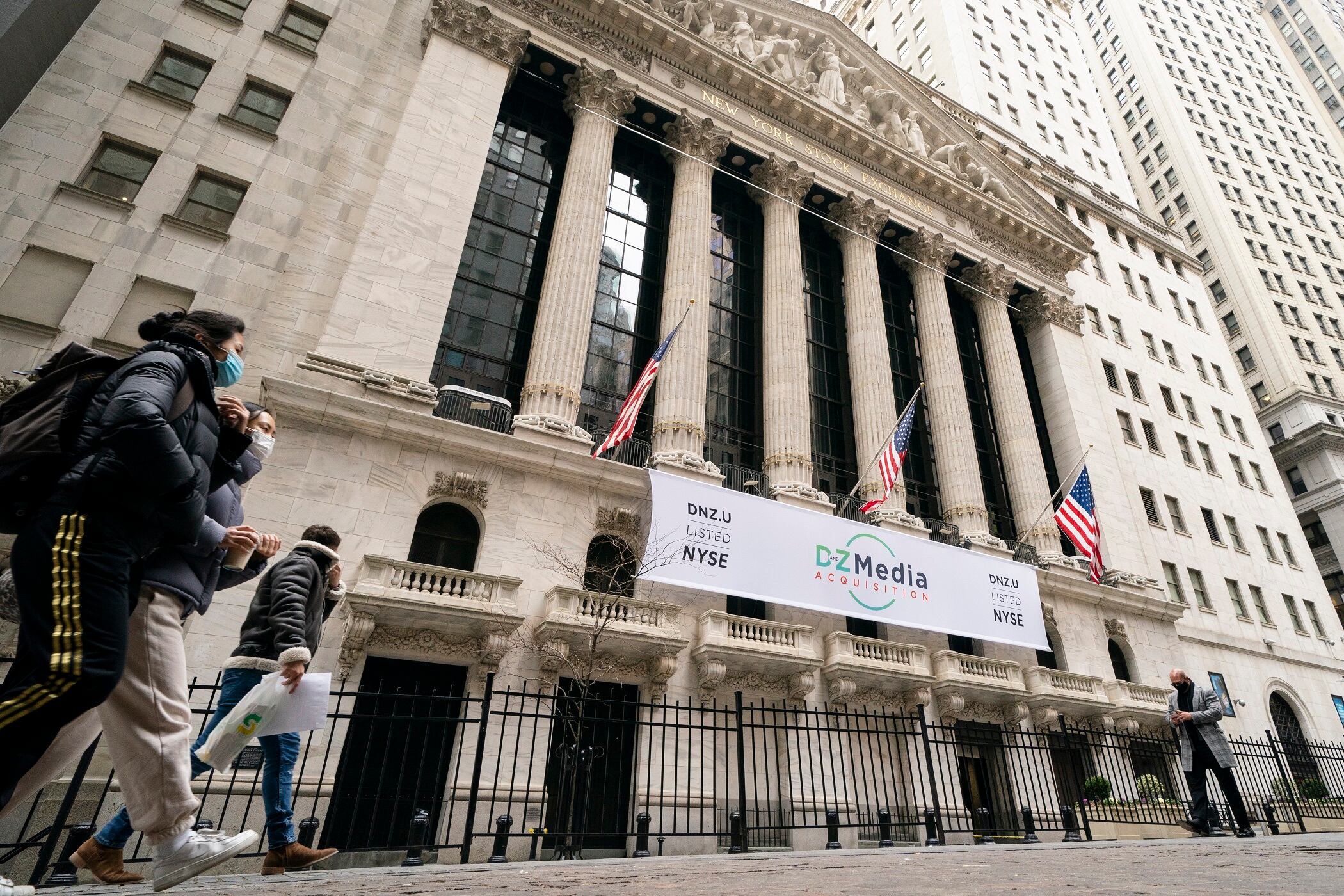
Pedestrians pass the New York Stock Exchange, Wednesday, Jan. 27, 2021, in New York. Stocks are inching higher in early trading on Wall Street Friday, Aug. 20, but not enough to erase their losses from the week. (AP Photo/John Minchillo, File)
By Alex Veiga
Technology companies led stocks broadly higher on Wall Street Friday, though the gains were not enough to erase the market's losses from earlier in the week.
The S&P 500 index rose 0.8%, but still posted a weekly loss of 0.6% after two weeks of gains. Even so, the benchmark index is less than 1% from the all-time high it set Monday.
More than 80% of S&P 500 companies notched gains, including tech sector stocks. Microsoft rose 2.6% and chipmaker Nvidia gained 5.1% for the biggest gain in the index. A mix of companies that rely on consumer spending and communications stocks also made up a big share of the rally. Energy stocks also rose, despite another decline in the price of U.S. crude oil. Treasury yields mostly rose.
Investors turned cautious this week following some disappointing economic reports on retail sales, housing and consumer sentiment. Escalating coronavirus infections across the U.S. and around the globe due to the highly contagious delta variant have also given traders reason to pause with the market near all-time highs.
“Today was the first day that the market didn’t have to deal with disappointing economic data,” said Willie Delwiche, investment strategist at All Star Charts. “We also need to remember it's a Friday in August, not typically an environment where we look for big signals out of the market.”
The S&P 500 rose 35.87 points to 4,441.67. The Dow Jones Industrial Average added 225.96 points, or 0.7%, to 35,120.08. The Nasdaq composite picked up 172.87 points, or 1.2%, to 14,714.66. The Dow and Nasdaq also posted weekly losses.
Small company stocks recovered some of their losses from earlier in the week. The Russell 2000 index added 35.18 points, or 1.7%, to 2,167.60. The index still finished with a 2.5% weekly drop.
Bond trading was quiet. The yield on the 10-year Treasury note rose to 1.26% from 1.24% late Thursday.
With earnings season winding down, investors got to see quarterly report cards from mostly retailers this week. On Friday, Ross Stores fell 2.7%, the biggest decline among S&P 500 companies, after issuing a full-year forecast that fell short of Wall Street’s expectations. Foot Locker jumped 7.3% after blowing past analysts’ forecasts for its latest quarter.
Fund managers aren’t expecting much volatility this month as investors will have little data to work with. August also tends to be a popular time for investors to take vacations, so trading volume typically declines. September tends to be a much more volatile month once Wall Street is back to work.
Still, next week could provide Wall Street with more insight on what the Federal Reserve may do about inflation. Earlier this week, minutes from the most recent Fed meeting showed that officials had discussed reducing the central bank's bond-buying program later this year to start winding down some of the emergency measures that were implemented during the pandemic. But they stopped short of setting a firm timeline.
The Fed's annual conference in Jackson Hole, Wyoming next week could offer hints on when such tapering may begin.
“From a historical perspective, the Fed doesn't make news in its minutes, but it does tend to set out policy shifts at its symposium,” Delwiche said.
Decentralized talent network Braintrust recently closed an atypical equity deal that involved investors buying $100 million in Braintrust tokens, the company's cryptocurrency. Braintrust's talent network is built on blockchain technology, which the company says allows it to be owned and built by users, instead of a centrally-controlled corporation. Braintrust users can also earn tokens for their contributions to the network and its growth. Braintrust co-founder Adam Jackson joins Cheddar News' Closing Bell to discuss.
Blue Origin launched its third manned mission over the weekend with 'Good Morning America' host Michael Strahan and Laura Shepard Churchley, daughter of astronaut Alan Shepard on board, alongside several Blue Origin investors.
This comes after the spaceflight firm launched two successful missions to the edge of space earlier this year. How will these missions set up Blue Origin for success as it competes with SpaceX and other companies for space tourism domination and more? Joey Roulette, space reporter at The New York Times, joins Cheddar News' Closing Bell to discuss.
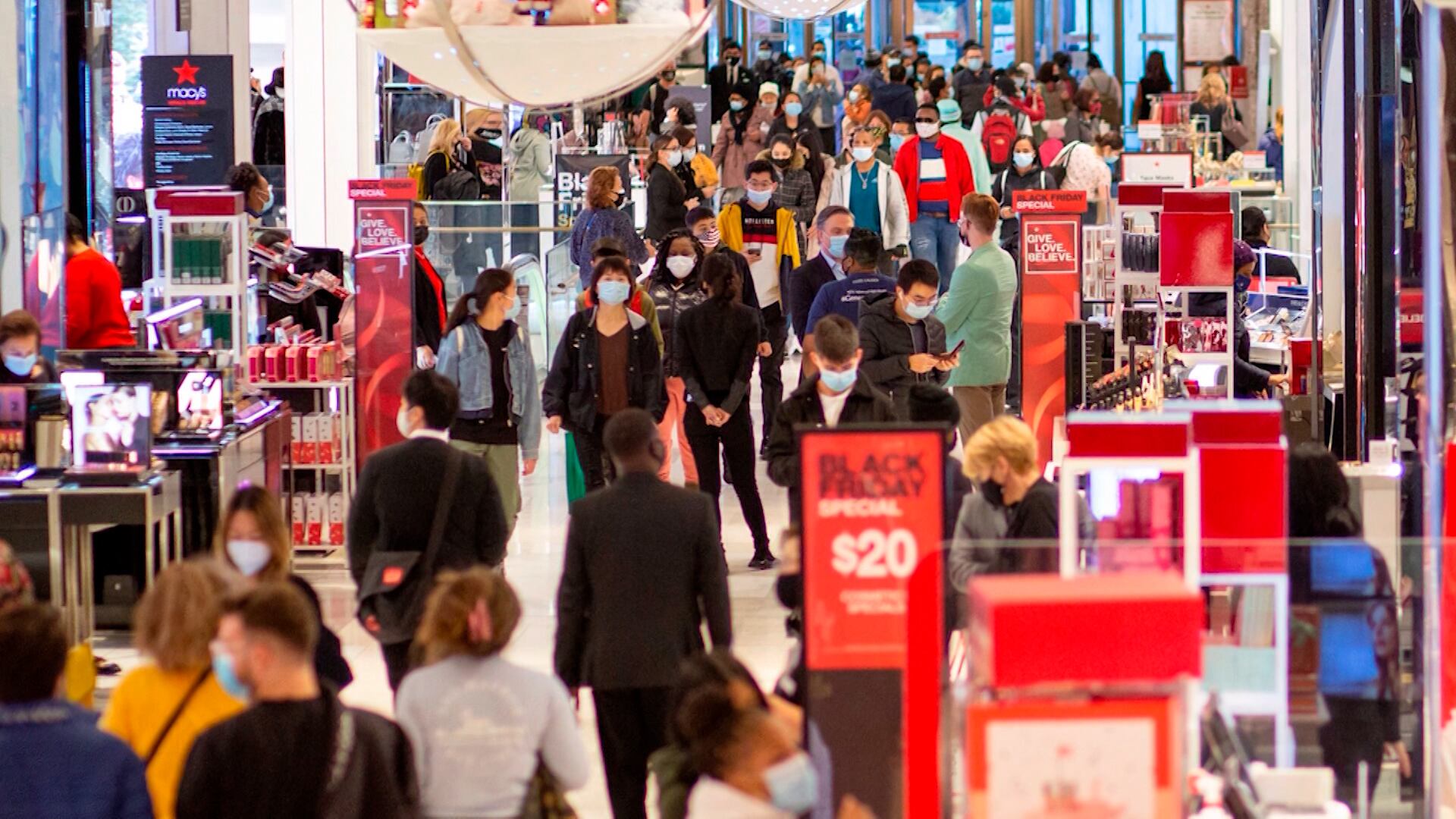
If there's any question about whether inflation is here to stay, today's November consumer price index data gives us an answer. This is the second month in a row we've seen a hot inflation reading — CPI last month rose to 6.8%, after jumping to 6.2% in October. Amid the holiday shopping season, what does this mean for consumers? And how will the Federal Reserve move forward after previously announcing it would speed up its asset taper timeline? Art Hogan, Chief Market Strategist at National Securities, joins Cheddar News' Closing Bell to discuss November's CPI jump, where consumers are hurting the most, what the Fed could do to help ease inflation, and more.
Editorial and stock photo provider Getty Images is gearing up to make its public debut via a SPAC merger with CC Neuberger Principal Holdings II bringing it to a $4.8 billion valuation. CEO Craig Peters joined Cheddar to break down the decision to go public and noted that the merger will help to pay down debt. "That's going to really enable a lot of additional free cash flow and financial flexibility into the business," he noted. "That's just going to allow us to just invest more aggressively into the business to accelerate what is already accelerating growth." Peters also discussed the legacy image platform's place going forward in the expanding world of digital assets like NFTs and the metaverse.
Ben Schiller, the managing editor for features and opinion at CoinDesk, breaks down how the year's top 10 crypto influencers were selected and what to expect from the blockchain ecosystem, especially the growth of NFTs, in 2022. "This whole crypto story has become not just a story about money or the future of money," he said. "It's also become a cultural story where it's getting into gaming, it's getting into artwork, into collectibles, and all kinds of cultural categories it wasn't in before." Schiller noted that he expects the U.S. and other world governments to establish crypto regulations in the coming year.
Ford said it will ramp up production for its Mustang Mach-E as demand for the electric vehicle surges. The automaker expects to sell upwards of 200,000 annually by 2023.
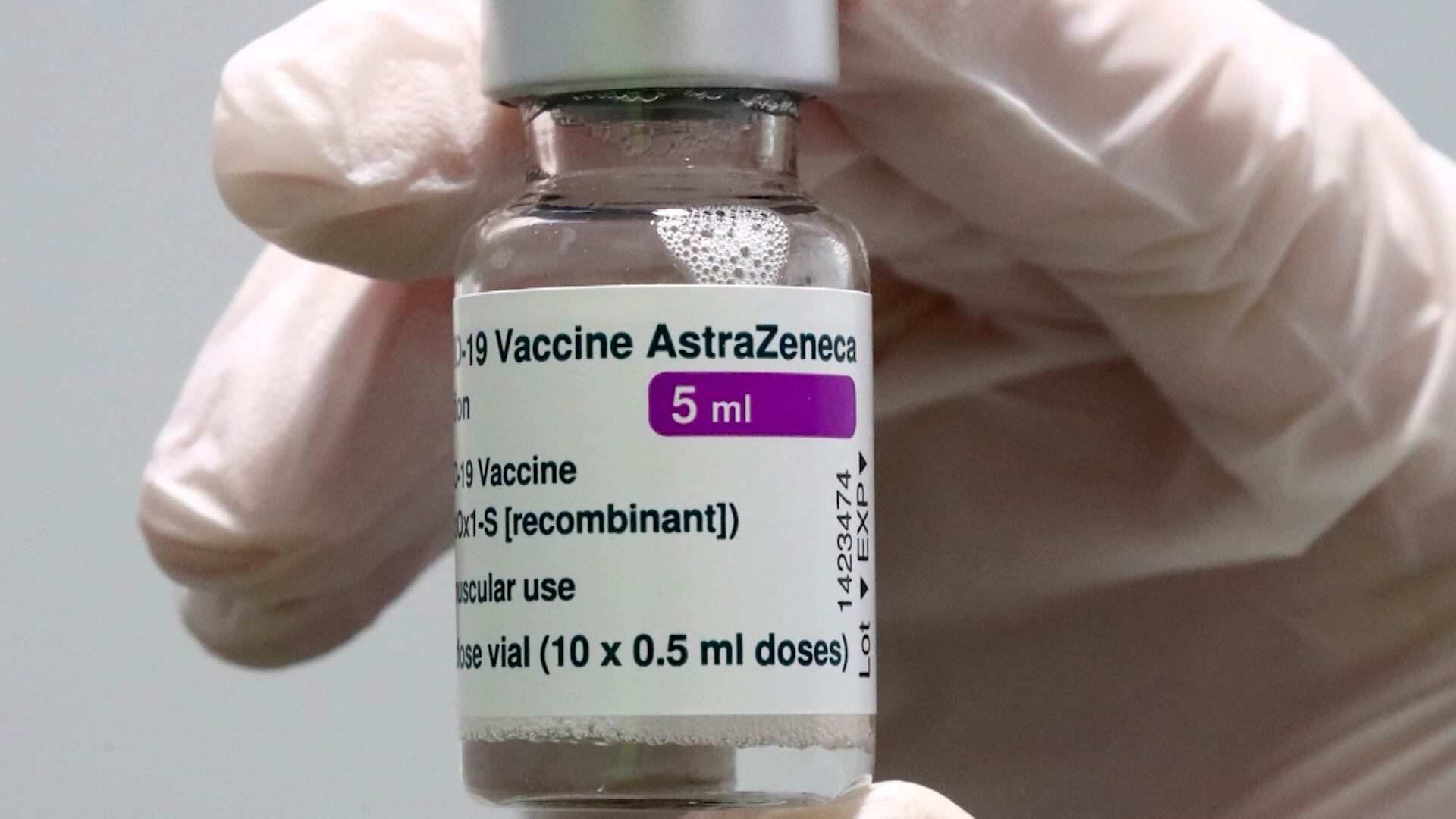
Mina Makar, senior vice president of respiratory and immunology, Astrazeneca, joined Cheddar to discuss the FDA's decision to give emergency use authorization to the pharma giant's COVID-19 antibody treatment called Evusheld for immunocompromised patients For about 2 percent of the U.S. Makar noted that the injection is supposed to provide antibody protection for those who can't generate their own adequate immune response via the vaccines for a minimum of six months, though long-term trials are underway.
The pandemic has forced corporate America to reshape itself to adapt, including onboarding doctors as chief medical officers to help maintain the health and safety of staff. Dr. Geeta Nayyar, chief medical officer at Salesforce, joined Cheddar to break down her role and how it has become relevant and necessary in the evolving workplace. "Every business today is now in the business of healthcare," she said. "It is a priority to empower employees to then serve your customers."
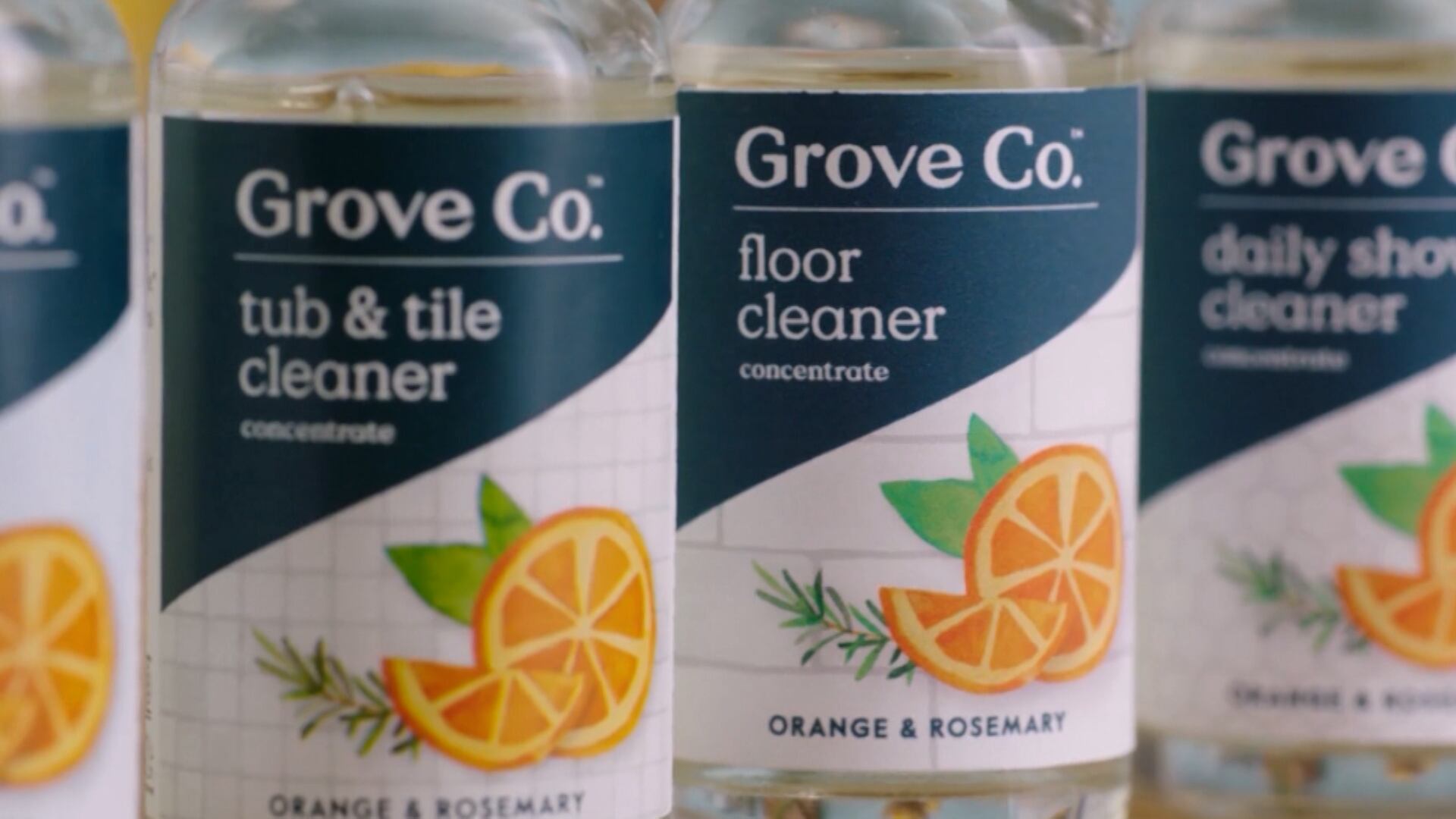
Sustainable consumer products maker Grove Collaborative is gearing up to launch an IPO via a SPAC merger with Richard Branson's Virgin Group Acquisition Corp II. Stuart Landesberg, CEO and co-founder of Grove Collaborative, talked to Cheddar's Kristen Scholer about going public through the merger and aligning with a partner he felt also prioritizes climate. "What this partnership will mean is that we're able to expand the assortment and innovations that we bring to market in products that work just as well as the conventionals and market leaders but have a significantly different environmental profile," Landesberg said.