By Damian J. Troise and Alex Veiga
Stocks closed lower on Wall Street Tuesday, ending a five-day winning streak by the S&P 500, as investors turned cautious amid more signs that the coronavirus pandemic is still holding back the U.S. economy.
The benchmark index fell 0.7%, its biggest decline in four weeks. Technology stocks and a mix of companies that rely on consumer spending were the biggest weights on the market as traders become more concerned about the pace and breadth of economic growth amid a resurgent COVID-19. Those sectors tend to perform weakly in uncertain economic conditions.
The health care sector was alone in notching broad gains within the S&P 500. A mix of companies that sell food and personal goods, along with utilities and real estate companies held up better than most of the market as investors shifted money to less risky investments. Treasury yields edged higher.
The selling kicked off after a government report showed U.S. retail sales fell sharply last month. The report followed an unexpectedly bad consumer sentiment survey on Friday that was almost entirely due to the spread of the delta variant of the coronavirus, which has caused hospitals to fill up with unvaccinated patients across the U.S.
Those downbeat reports and the rise of the delta variant gave investors an opening to take some profits after a five-day run of all-time highs by the S&P 500 and the Dow Jones Industrial Average, said Ross Mayfield, investment strategist at Baird.
“We were at all-time highs, haven’t had a 5% pullback in close to a year,” Mayfield said. “And then the general delta resurgence has folks pretty much a little down on the recovery, so there was bound to be some weakness at some point.”
The S&P 500 fell 31.63 points to 4,448.08. The Dow lost 282.12 points, or 0.8%, to 35,343.28. The blue-chip index was briefly down 505 points. The tech-heavy Nasdaq composite dropped 137.58 points, or 0.9%, to 14,656.18.
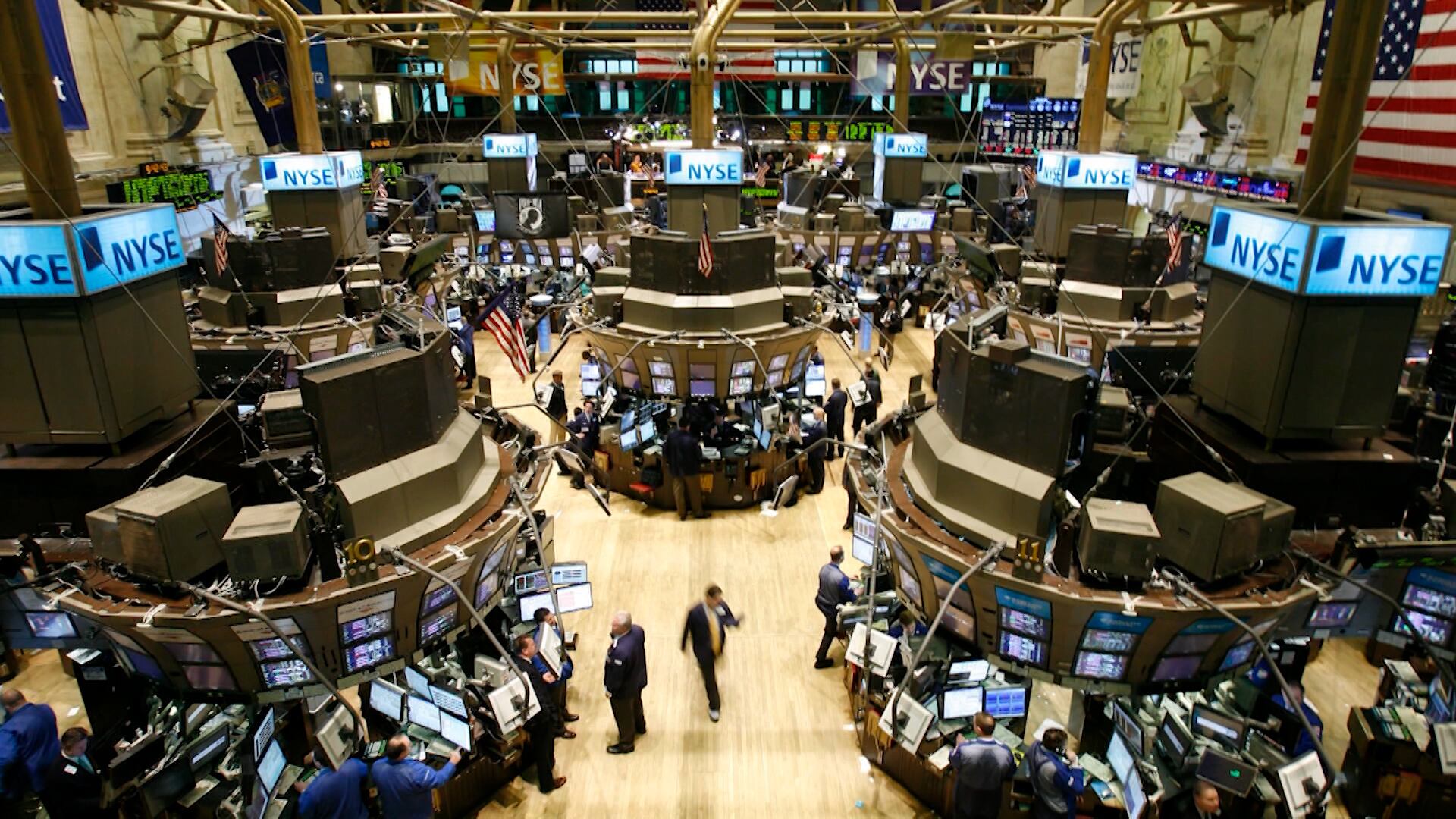
Nearly three times as many stocks fell on the NYSE than rose. Small company stocks bore some of the heaviest selling. The Russell 2000 index slid 26.24 points, or 1.2%, to 2,177.17.
Bonds were little changed. The yield on the 10-year Treasury note held steady at 1.26%.
Americans cut back on their spending last month as a surge in COVID-19 cases kept people away from stores. Retail sales fell a seasonal adjusted 1.1% in July from the month before, the U.S. Commerce Department said Tuesday. It was a much larger drop than the 0.3% decline Wall Street analysts had expected.
According to Tuesday’s report, spending fell at stores selling clothing, furniture and sporting goods. At restaurants and bars, spending rose nearly 2%, but the rate of growth has slowed from recent months as the delta variant spread and people worried about dining with others.
The weak sales report dragged down companies that rely on discretionary spending from consumers. Ralph Lauren fell 2.7% and Whirlpool dropped 3.9%.
Travel-related companies, including airlines, cruise line and hotel operators, fell broadly. American Airlines lost 2.1%, Royal Caribbean Group slid 3.1% and Marriott International closed 2.1% lower.
“It doesn’t surprise me that we’re seeing a bit of an across the board sell-off, we’re a bit overdue,” said Mike Stritch, chief investment officer of BMO Wealth Management.
Major indexes had been trading at record highs on a mix of confidence from investors and friendly monetary policy from the Federal Reserve. Analysts still expect economic growth to continue through the year, but sentiment on Wall Street is becoming a bit more cautious on the pace.
Markets also digested news that Chinese factory output, consumer spending and investment grew more slowly in July than expected. The government blamed flooding in central China and controls on travel and business to fight outbreaks of the coronavirus's delta variant.
Shares of Home Depot fell 4.3% after the company told investors that sales were slowing compared to last year, when millions of locked-down Americans undertook home improvement projects.
Homebuilders fell broadly following a disappointing report from the National Association of Home Builders. The organization said that builder confidence hit a 13-month low in July as companies worry about supply shortages and high costs. KB Home fell 4%.
Updated on August 17, 2021, at 5:12 p.m. ET.