By Damian J. Troise and Alex Veiga
Stocks closed lower Thursday on Wall Street as bond yields fell again and investors turned cautious following the market's recent run of record highs.
The S&P 500 fell 0.9%, weighed down by a broad slide driven mainly by technology, financial, industrial and communication companies. The benchmark index's pullback comes a day after it hit its eighth all-time high in nine trading days.
The yield on the 10-year Treasury note fell to 1.30%, the lowest level since February, after slipping to 1.32% a day earlier. The benchmark yield, which is used to set rates on mortgages and many other kinds of loans, has been falling steadily in recent weeks as traders shift money into bonds. The 10-year yield traded as high as 1.74% at the end of March.
The bond market has been signaling concerns over the strength of the recovery for months, specifically that it may have peaked and is now leveling off to a steadier pace. The stock market has largely ignored those signals, analysts said, but could be coming around to that message amid struggling job growth and lackluster economic reports.
“You can’t ignore what the bond market has been telling us,” said J.J. Kinahan, chief strategist with TD Ameritrade.
The S&P 500 fell 37.31 points to 4,320.82. The Dow Jones Industrial Average lost 259.86 points, or 0.7%, to 34,421.93. The Nasdaq composite snapped a three-day run of closing highs, dropping 105.28 points, or 0.7%, to 14,559.78.
Smaller company stocks also fell. The Russell 2000 index slid 21.17 points, or 0.9%, to 2,231.68.
Longer-term yields tend to move along with investors’ expectations for inflation and economic growth, and both are still very strong and much higher than they’ve been in recent years. But Wall Street increasingly suspects they’ve already topped out as the economy moves past the initial catapult phase of its recovery from the pandemic.
For example, two recent reports showed that the manufacturing and services sectors are still growing, but more slowly than previous months and below economists' expectations.
On Thursday, the Labor Department said the number of Americans filing for unemployment benefits rose slightly last week even while the economy and the job market appear to be rebounding from the coronavirus recession.
All told, jobless claims increased by 2,000 from the previous week to 373,000. Weekly applications, which generally track the pace of layoffs, have fallen steadily this year from more than 900,000 at the start of the year.
Investors are also gauging the potential impact from COVID-19 variants stymying a resurgence in commerce and travel. Fans are banned from the Tokyo Olympics following a state of emergency aimed at containing rising coronavirus infections in the capital.
Part of the sharp drop in long-term bond yields could also be attributed to investors quickly reversing bets that they would continue rising as the economy continued its sharp recovery.
Investors have swung between enthusiasm about an economic recovery and unease that the Fed and other central banks might roll back stimulus to cool pressure for prices to rise.
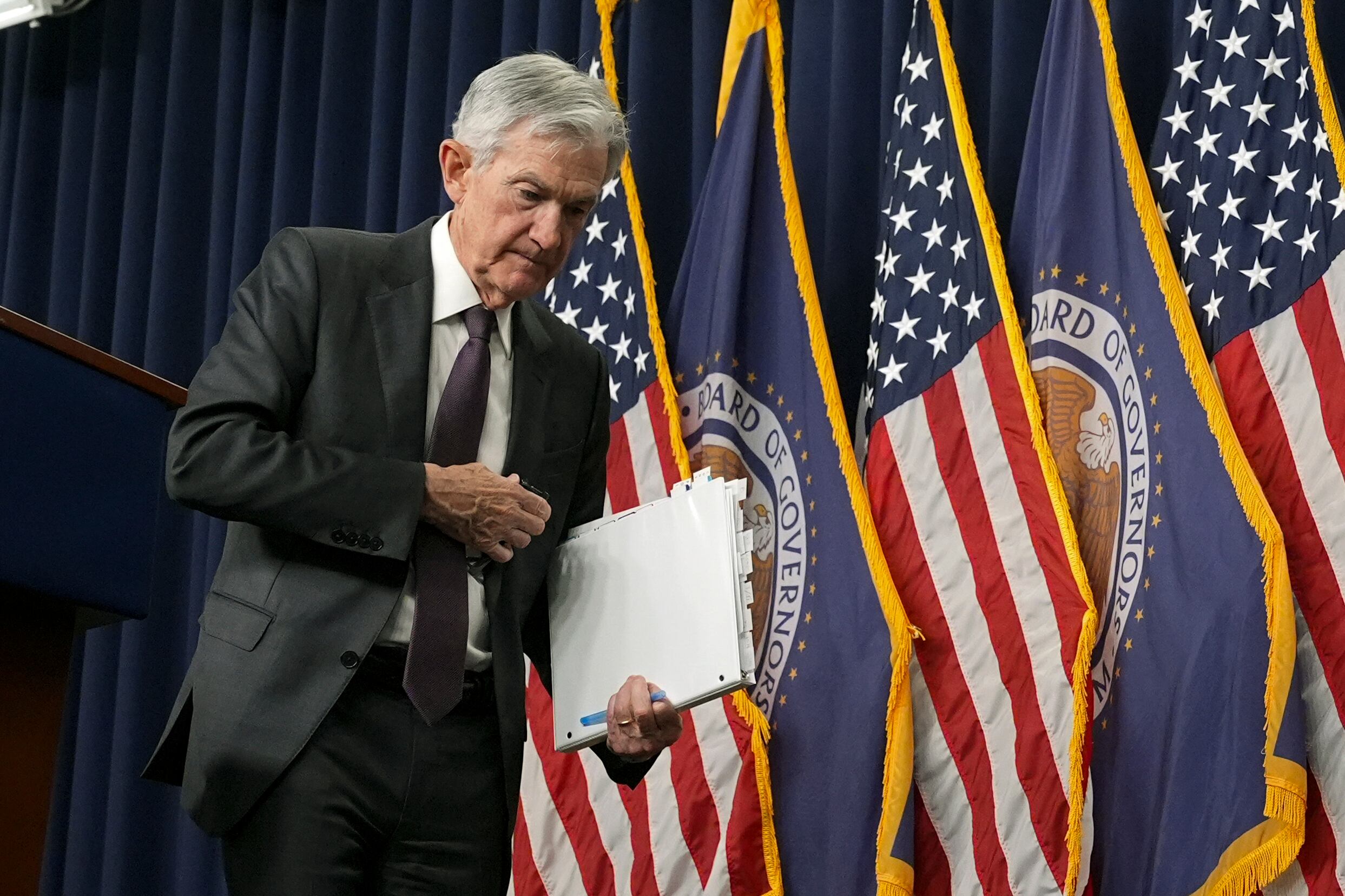
Minutes from the Fed's June meeting showed officials are moving closer to reducing bond purchases, though most analysts don’t expect a reduction until late this year. At that meeting, policymakers said they planned to raise interest rates as soon as 2023, earlier than previously expected.
“It’s a little bit of a quiet period so any piece of news from the Fed is going to be met with strong reaction,” Kinahan said. “This is really a guessing game of what the Fed does next and how to get ahead of it.”
Railroad stocks were the biggest losers in the S&P 500 Thursday following a published report saying the Biden administration plans to sign an executive order next week directing regulators to take action against consolidation and anticompetitive pricing in the railroad and ocean shipping industries. The report, published by The Wall Street Journal, cited an unnamed source familiar with the situation. Kansas City Southern sank 7.9% for the biggest loss in the S&P 500. Norfolk Southern slid 7.2%, CSX fell 6.2% and Union Pacific closed 4.4% lower.
Investors will be turning their attentions to corporate earnings starting next week, when major banks like JPMorgan Chase, Goldman Sachs and Bank of America report their results. Banks tend to be a proxy for the overall economy, so investors will be analyzing the reports closely and listening to what banks say about the status of lending and spending as the recovery continues.
Updated on July 8, 2021, at 5:16 p.m. ET.