By Damian J. Troise, Alex Veiga, and Stan Choe
Wall Street capped a day of choppy trading Wednesday with more record highs for stocks and another drop in bond yields that sends mixed signals about investors' confidence in the market.
The S&P 500 recovered from an early stumble and rose 0.3% to an all-time high. The benchmark index snapped a 7-day winning streak of high closes a day earlier. The Nasdaq composite also set a record high, its third straight.
Technology, industrial and health care companies accounted for a big share of the gains. Apple rose 1.8%, Otis added 2% and Biogen gained 3%. Those gains were kept in check by a slide in other sectors, including energy, which fell as oil prices dropped 1.6%.
The bond market continued to draw buyers, a trend that has pulled yields sharply lower this week despite economic data showing the economy continues to recover from the pandemic. The yield on the 10-year Treasury fell to 1.32% from 1.37% a day earlier.
“There’s a pretty clear disconnect between stocks and bonds,” said Jon Adams, senior investment strategist at BMO Global Asset Management.
The S&P 500 rose 14.59 points to 4,358.13. The Dow Jones Industrial Average added 104.42 points, or 0.3%, to 34,681.79, while the Nasdaq inched up 1.42 points, or less than 0.1%, to 14,665.06. The Russell 2000 index of smaller stocks slid 21.66 points, or 1%, to 2,252.85.
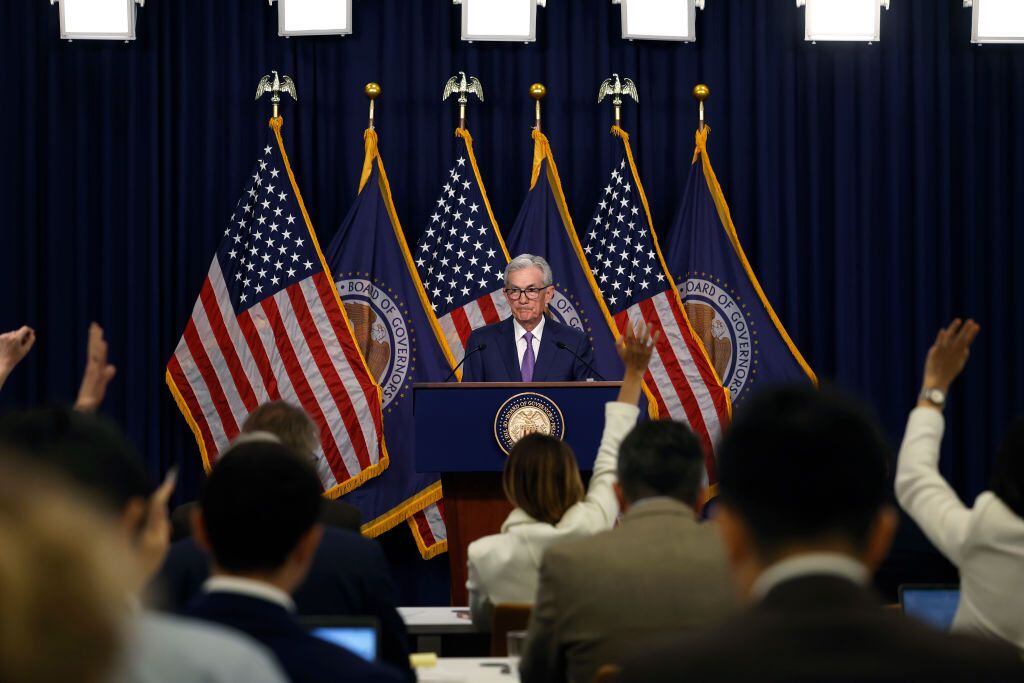
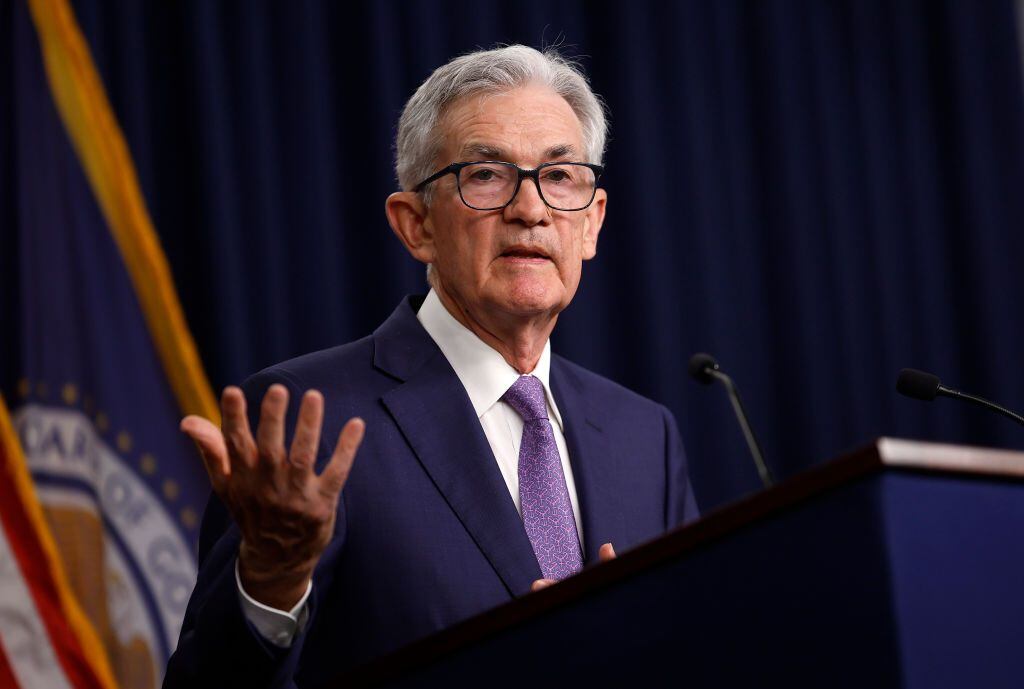
Stock indexes and Treasury yields had little reaction to the minutes from the June meeting of Federal Reserve policymakers, which showed Fed officials discussed the timing of reducing bond purchases that they have used to keep longer-term interest rates in check.
The discussions signal that the Fed is moving closer to a decision to taper those purchases, though most analysts don’t expect a reduction until late this year. After the last meeting, Fed policymakers said they planned to raise interest rates as soon as 2023, which was sooner than the market expected.
“The bond market is agreeing with what the Fed has talked about in terms of transitory inflation and maybe going a step further and saying we’re not real sure about how resilient this recovery is going to be once some of the stimulus starts to fade,” said Willie Delwiche, investment strategist at All Star Charts. “If there’s some uncertainty about equities, investors are taking this chance to move back into bonds a little bit."
Longer-term Treasury yields have tumbled since the spring as traders back away from big bets built on expectations for a powerful pickup in inflation and economic growth.
The yield on the 10-year Treasury sank as low as 1.28% Wednesday, down from its perch above 1.75% in March. A month ago, it was trading at around 1.62%. The last time bond yields moved lower so quickly was in March 2020 when the pandemic effectively shut down the U.S. economy.
Longer-term yields tend to move along with investors' expectations for inflation and economic growth, and both are still very strong and much higher than they’ve been in recent years. But investors along Wall Street increasingly suspect they’ve already topped out as the economy moves past the initial catapult phase of its recovery from the pandemic.
A report on Tuesday showed growth in the U.S. services industry slowed last month, for example, and by more than economists expected.
A wide range of other reasons are behind the sharp drop in yields in recent months, said Adams. Chief among them is growing doubt in the market that the Fed would allow inflation to stay above 2% for a while before raising rates or making other moves to stamp it out, regardless of its new policy to do just that.
Adams also pointed to worries that new variants of COVID-19 could drag down the global economy and increased buying of Treasurys by buyers from countries whose bonds were offering even less in yields.
Lower bond yields can be good for many parts of the economy, however. Mortgage rates are tied closely to bond yields, and government borrowing costs fall when the cost of issuing bonds decreases.
What’s been perhaps as striking as the swift drop for Treasury yields is the relative calmness in the stock market.
“There's a fundamental reset going on right now where investors are looking beyond 2021 and 2022,” said Katie Nixon, chief investment officer at Northern Trust Wealth Management. “Once we get beyond the recovery, the next normal is probably going to look like the last normal.”
Updated on July 7, 2021, at 5:41 p.m. ET.