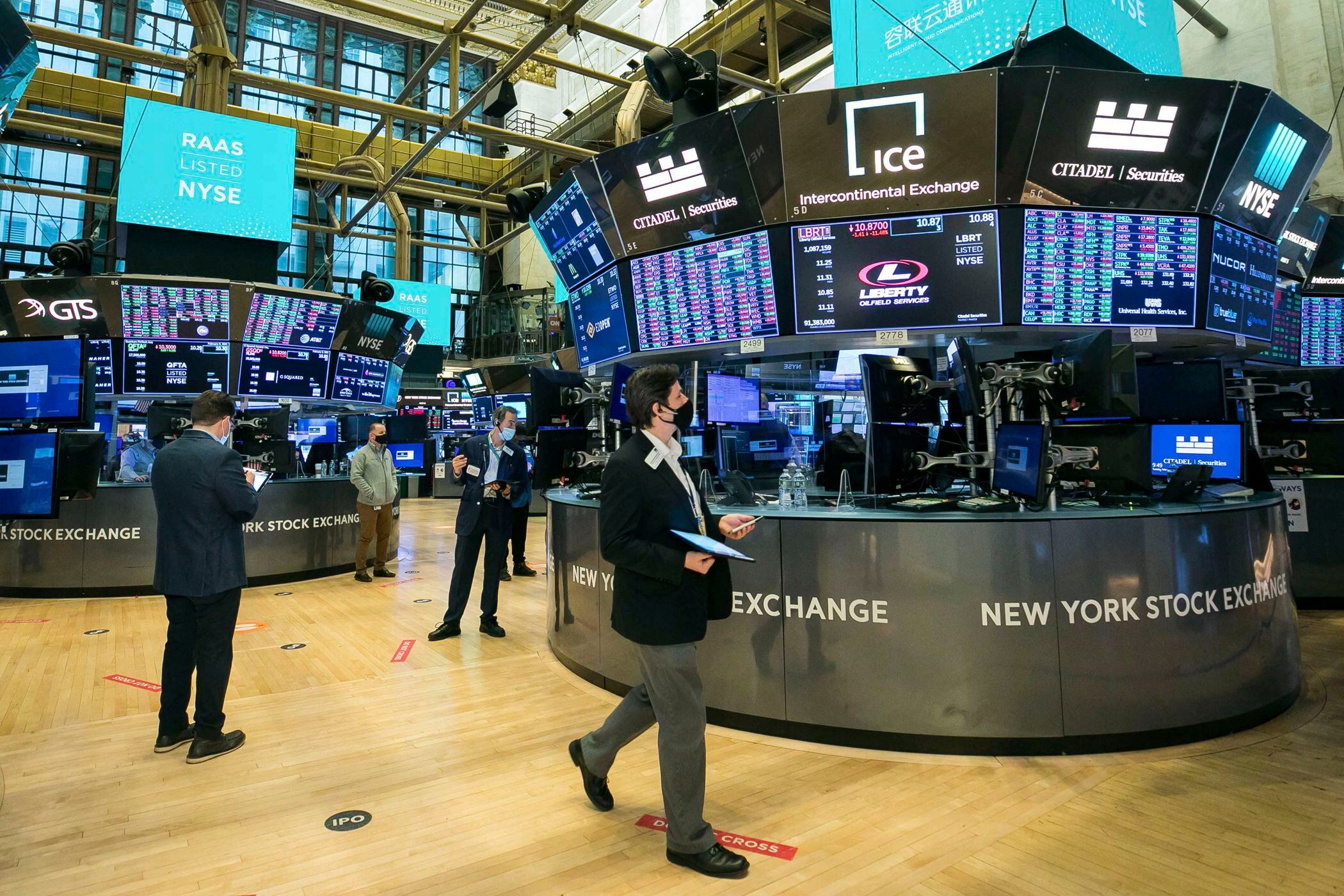
In this photo provided by the New York Stock Exchange, traders work on the floor, Tuesday, Feb. 9, 2021. Stocks were slightly lower in early trading on Tuesday, after the major stock market indexes hit record highs the day before. Investors continue to keep their eyes on Washington, where it appears Democrats plan to move ahead without Republican help on a major stimulus bill for the economy. (Courtney Crow/New York Stock Exchange via AP)
By Damian J. Troise and Alex Veiga
The major U.S. stocks capped a listless day of trading Tuesday with an uneven finish that snapped a six-day winning streak for the S&P 500 even as the Nasdaq set another all-time high.
A late fade pulled the S&P 500 down 0.1%, just below its record high set a day earlier. The benchmark index closed with a nearly even split between gainers and losers. A mix of companies that deal with consumer services and products were the biggest drag on the broader market, outweighing gains in communications, industrial and health care stocks.
A slight pullback after six straight days of gains is not uncommon, as investors pause during a rally to reassess and wait for more economic data to see where the market goes next.
Investors continued to monitor the action in Washington, where it appears Democrats plan to move ahead without Republican help on a major stimulus bill for the economy.
“It seems like fiscal stimulus will pass through reconciliation and the result will be one that is larger than was thought probably two or three weeks ago," said Keith Buchanan, senior portfolio manager at Globalt Investments.
The S&P 500 index slipped 4.36 points to 3,911.23. The Dow Jones Industrial Average dropped 9.93 points, or less than 0.1%, to 31,375.83. The Nasdaq rose 20.06 points, or 0.1%, to 14,007.70, its fourth straight gain. The Russell 2000 index of small company stocks rose 9.24 points, or 0.4%, to 2,299. The four indexes set all-time highs on Monday.
Stocks have been moving steadily higher for several days as Wall Street becomes more optimistic that the worst parts of the economic impact of the coronavirus pandemic might be in the rearview mirror. Vaccine rollouts continue both in the U.S. and globally, with the U.S. administrating hundreds of thousands of doses per day.
“The vaccinations have outpaced the virus and that becomes part of what’s playing into the optimism in the market,” Buchanan said. “It makes for an environment where it’s getting back to some sense of normality.”
Washington is preparing to go big for its next round of economic stimulus to support struggling Americans and businesses. Democrats have rallied around President Joe Biden's $1.9 trillion stimulus plan, which will include one-time payments to Americans plus a likely increase in the federal minimum wage to $15 an hour.
Expectations for another financial boost for the economy have helped keep investors in a buying mood.
The market's strong start to February and the strength in shares of companies that rely on consumer spending "is an indicator of the optimism creeping higher and the assumption that consumers in the U.S. will get a larger check perhaps than we thought three or four weeks ago,” Buchanan said.
Several companies made big moves after reporting their latest quarterly results Tuesday. Hanesbrands soared 24.9% for the biggest gain in the S&P 500 after reporting earnings that came in well ahead of what analysts were expecting.
Mobile games developer Glu Mobile vaulted 34.9% after it agreed to be acquired by Electronic Arts in a deal valued at $2.1 billion. Shares in Electronic Arts, maker of “Medal of Honor” and other video games, rose 2.6%.
Shares of GameStop and AMC Entertainment continue to be volatile, as online investors remain in a tug-of-war with Wall Street institutional investors over the struggling companies' values. GameStop shares fell 16.1% and AMC lost 11%.
Traders in cryptocurrencies continued to push up the price of bitcoin. It rose 7.3% to $47,184, according to the tracking site CoinDesk. Bitcoin futures on the Chicago Mercantile Exchange climbed 6.6% to $47,700. The futures allow investors to make bets on the future price of the digital currency.
Treasury yields were mostly higher. The yield on the 10-year Treasury note rose to 1.16% from 1.14% late Monday.
On Monday Microsoft reported that the same Russia-backed hackers behind the 2020 SolarWinds attack have been assailing the global technology supply chain and cloud services. The former White House CIO under President George W. Bush and CEO of the security consulting company Fortalice Solutions, Theresa Payton, joined Cheddar to discuss why cyberattackers are relentlessly focused on infiltrating tech companies and what the future holds in terms of combating them. "This will be an ever-present danger and a journey," she said. "Locking down your systems is not going to be something you do once, and then you set it and forget it. It's going to be an ongoing journey that we're all going to be on together."
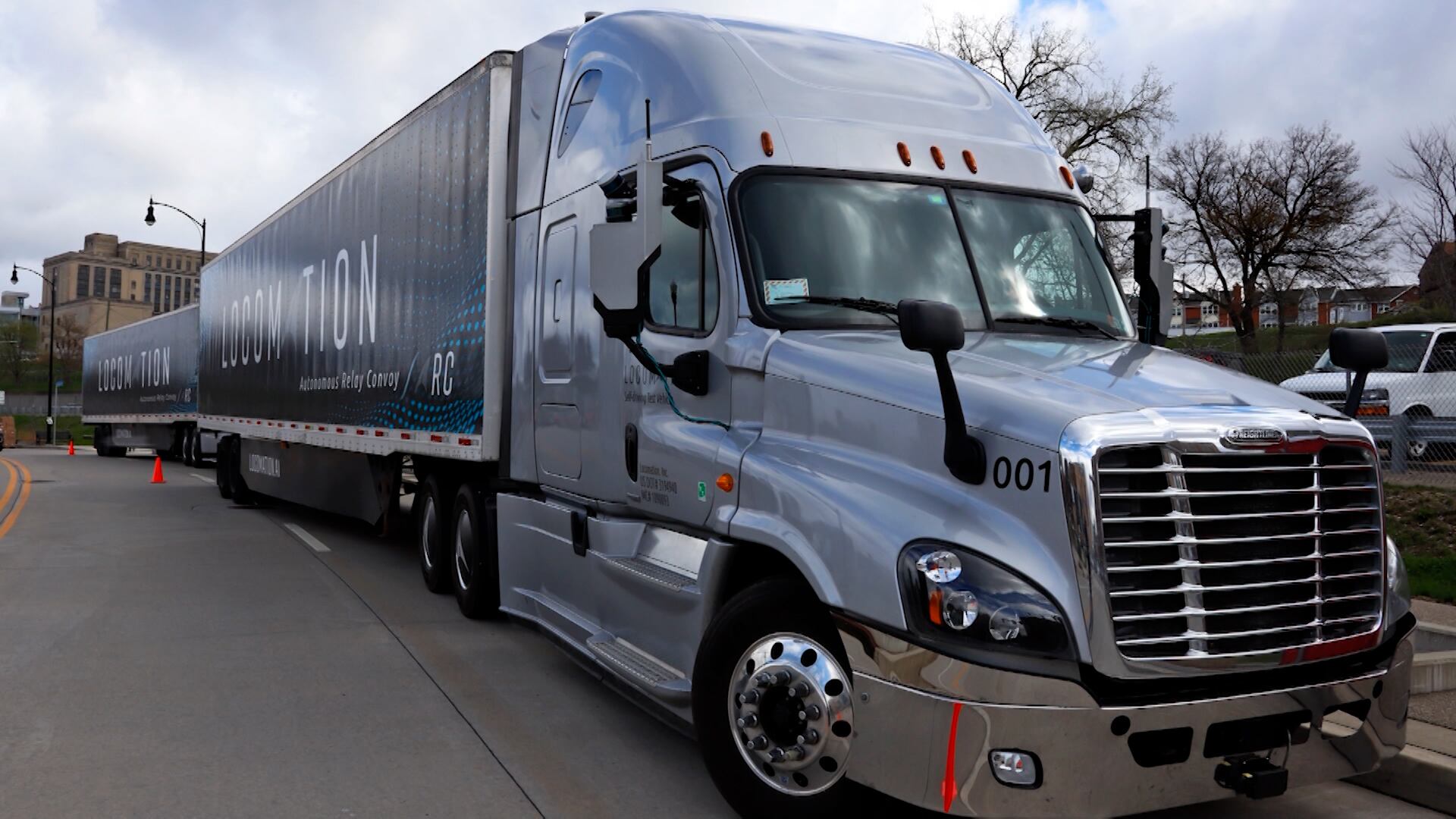
Ariel Wolf, general counsel for the Self-Driving Coalition, an industry group promoting autonomous vehicles, joined Cheddar to discuss the ongoing supply chain woes partially attributed to a lack of truck drivers. "Autonomous vehicle technology has the ability to partner with that ecosystem and help alleviate this immediate problem we have and solve the problem going forward," Wolf said. As for safety, Wolf sees a future where self-driving trucks could potentially be safer than human drivers.
Rishi Bharwani, the director of partnerships and policy for nonprofit Accountable Tech, joined Cheddar to discuss the hot button topic of regulatory oversight of social media giant Facebook. Bharwani discussed the bipartisan pieces of legislation already making their way through Congress and said the body should pass stronger data privacy laws, ban surveillance advertising, and require meaningful accountability and transparency from the company. "Now I think we've reached a boiling point where congressional action is needed and inaction is no longer acceptable," he said. Bharwani also called for a concurrent investigation into Mark Zuckerberg's company.
The United Nations COP26 climate talks are scheduled for October 31 to November 12 in Glasgow, Scotland. Heads of state will be joined by private sector leaders to once again discuss the shrinking window of time left to take action against global temperature rise. Barbara Humpton, CEO of focused technology company Siemens U.S., is also attending and spoke to Cheddar about what she hopes to see during the conference for both the public and private spheres. "What we are really urging is that there are large commitments made in Glasgow and that we really commit to this next decade of action," she said.
Hertz, the car rental giant, has placed an order for 100,000 Tesla Model 3s and sent Tesla's value soaring, pushing it into the $1 trillion club during the trading day Monday. Dan Ives, managing director of equity research for Wedbush, told Cheddar's 'Closing Bell', "It shows [electric vehicles] going to the mainstream." The move gives Hertz a leg up by differentiating itself from competitors and shows Tesla's dominance in the marketplace, He noted. And as for that trillion-dollar valuation? Ives said he could see it rising even higher down the road.
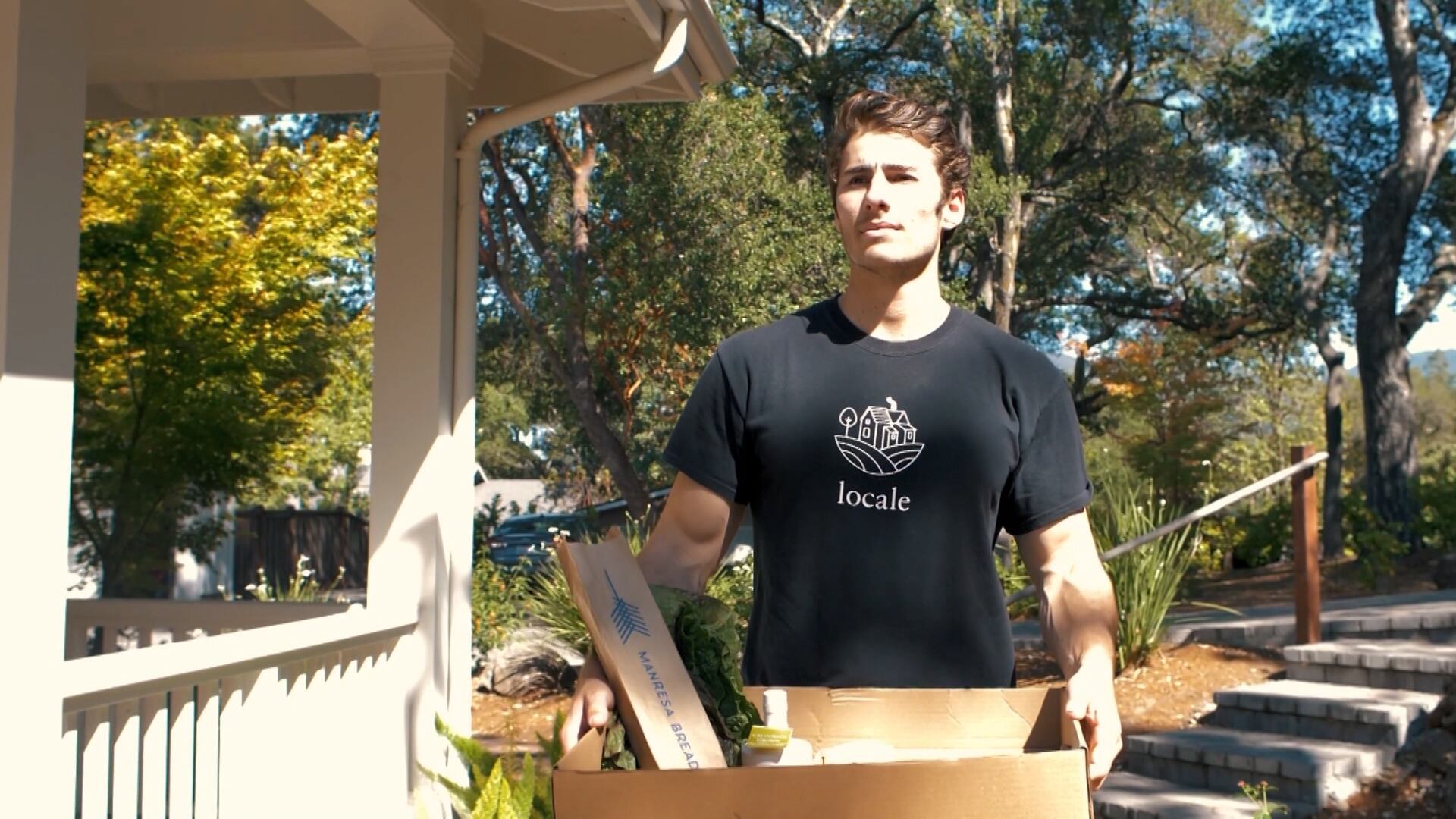
Jonathan Friedland, co-founder of Locale, joins Cheddar News to talk about how the company enables customers to order from dozens of business even if they live hours away.
As we gear into the holiday season, several industries have expressed how the ongoing supply chain shortage continues to impact their business. According to one winery out in California, many wineries are having a difficult time moving their products all because of shipping and labor shortage issues. Senior Retail Reporter at the Insider Aine Cain, joined Cheddar to discuss more and how this issue may not be going away anytime soon.
The gaming industry is about to take center stage as the next dominant technology platform, according to a new report from the consulting firm Activate. The pandemic has accelerated gaming's popularity, with overall time spent gaming increasing by 29 percent. Michael J. Wolf, co-founder and CEO of Activate, joined Cheddar to discuss some of the key findings of the report and why he thinks video game platforms are the only ones that stand a chance of building the so-called metaverse.
Voyager, Nanoracks, and Lockheed Martin are all teaming up to develop the first-ever free-flying commercial space station with room for a crew of four astronauts. The private companies are joining forces as part of NASA’s greater mission to retire the International Space Station by the year 2030. The low-earth orbit space station will be called "Starlab," and is planned to achieve operational capability by 2027. Lisa Callahan, Vice President and General Manager of Commercial Civil Space at Lockheed Martin, and Matthew J. Kuta, President and Chief Operating Officer of Voyager Space, joined Cheddar’s Opening Bell.