By Damian J. Troise and Alex Veiga
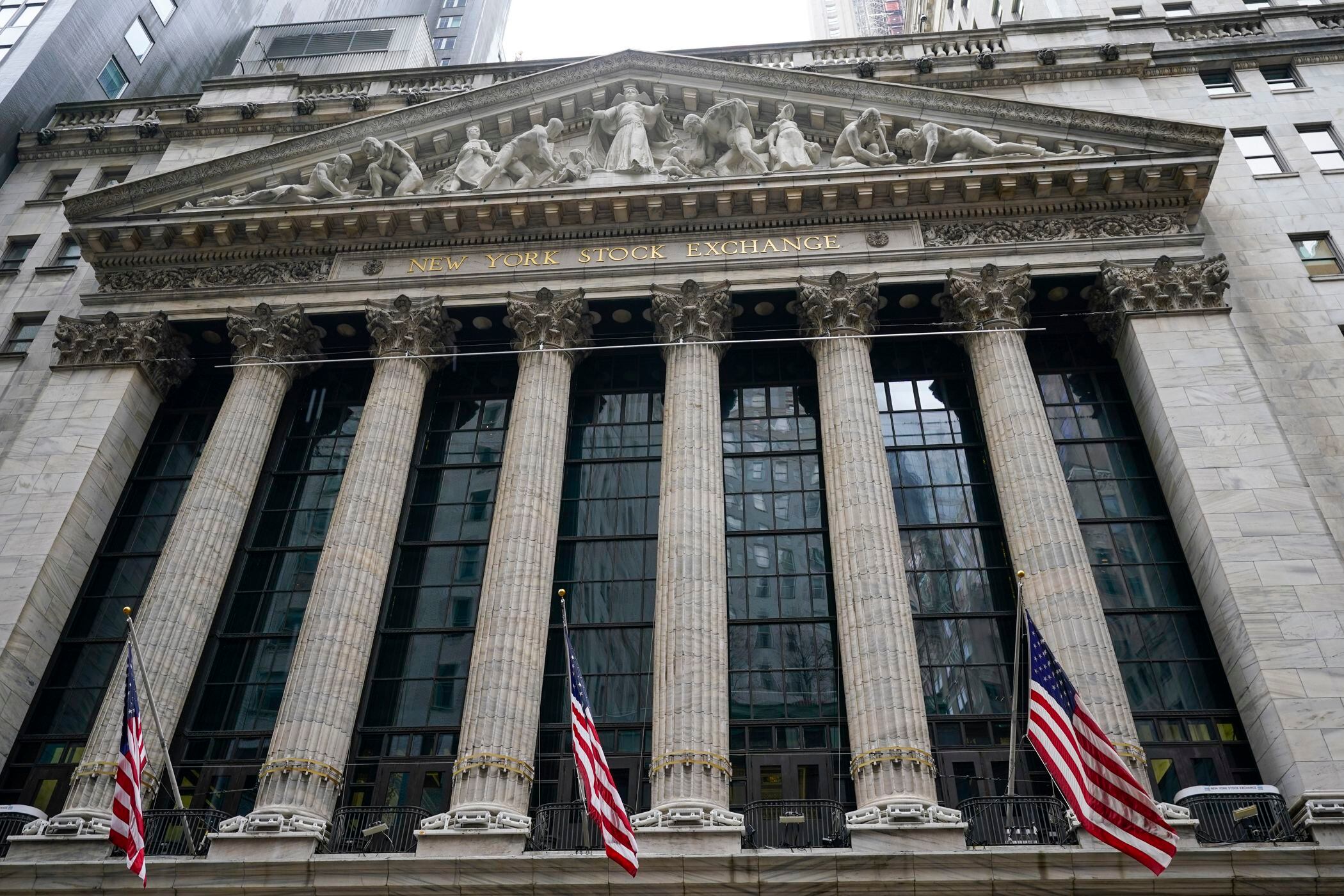
A late-afternoon burst of buying on Wall Street helped reverse most of a stock market sell-off Tuesday, nudging the S&P 500 to its first gain after a five-day losing streak.
The benchmark index eked out a 0.1% gain after having been down more than 1.8% earlier. The Nasdaq lost 0.5% as technology stocks fell for a sixth straight day. The tech-heavy index had been down nearly 4%. The Dow Jones Industrial Average, which is less exposed to tech stocks than the two other indexes, managed to rise 0.1%.
Facebook, Disney, Netflix and other communications stocks helped drive the market’s comeback. Financial and energy companies also helped lift the market, outweighing losses in technology and other sectors. Bond yields held near their highest level in a year.
Still, the main reason the market didn't rack up bigger losses is the wave of selling in Big Tech stocks nearly reversed entirely as traders seized the opportunity to pickup shares in Apple, Microsoft, Amazon and other big gainers over the past year at a more attractive price. Tesla, which joined the S&P 500 at the end of last year, ended down 2.2% after being down as much as 13.4%.
The S&P 500 index rose 4.87 points to 3,881.37. The Dow gained 15.66 points to 31,537.35. The Nasdaq lost 67.85 points to 13,465.20. The indexes were at all-time highs less than two weeks ago.
Smaller company stocks fell more than the broader market. The Russell 2000 small-cap index slid 19.76 points, or 0.9%, to 2,231.21. The index, the biggest gainer so far this year, clawed back from a 3.6% slide.
Since the pandemic began, investors consistently pushed the prices of Big Tech stocks to stratospheric heights, betting that quarantined consumers would do most of their shopping online and spend more on devices and services for entertainment.
The bet mostly paid off, as big tech companies reported big profits last year. But the pandemic may be reaching its end stages, with millions of vaccines being administered each week in the U.S. and across the globe now. It may cause consumers to return to their pre-pandemic habits.
By late afternoon, the tech sell-off nearly reversed itself. Apple slipped 0.1%, Microsoft fell 0.5%, and Amazon gained 0.4%. As traders turned to buying Tesla, rather than selling the stock, that also helped limit the S&P 500's losses. The electric car maker is the second-most heavily weighted stock in the index's consumer discretionary sector after Amazon.
Investors remain increasingly focused on a big tick up in bond yields and how it affects stock valuations. The yield on the 10-year Treasury note rose to 1.36%, continuing its quick climb up over the last few weeks.
When bond yields rise, stock prices tend to be negatively impacted because investors turn an increasingly larger portion of their money toward the higher, steadier stream of income that bonds provide.
“If you have a 10-year (Treasury yield) which returns something, then all of a sudden you get this situation where investors may want more of a risk-free asset and rotate out of equities,” said Sylvia Jablonski, chief investment officer at Defiance ETFs.
While eventually bond yields impact big dividend-paying stocks like consumer staples, utilities and real estate, it does tend to impact stocks that have big valuations like technology stocks much earlier. Tech stocks tend to have higher-than-average price-to-earnings ratios, which values a stock on how much the company earns in profits each year versus its stock price. The S&P 500 index is currently trading at a price-to-earnings ratio of 32, historically high by any measurement, while the price-to-earnings ratio of a company like Amazon is north of 75.
Jablonski expects the sell-off in technology stocks, which have fallen five days straight, will be short-lived, though she adds that a further increase in the 10-year Treasury yield could be “a different story.”
“The 10-year was sort of the news of the week that took some of the fire out of equities, but I wouldn’t be surprised that investors looking for entry points are going to get back in at these levels,” she said. "Stocks still have a future that looks to me to be a lot brighter than the value investors are going to get if they convert to bonds.”
More broadly, investors remain focused on the future of global economies badly hit by COVID-19 and the potential for more stimulus to fix them. The U.S. House of Representatives is likely to vote on President Joe Biden’s proposed stimulus package by the end of the week. It would include $1,400 checks to most Americans, additional payments for children, and billions of dollars in aid to state and local governments as well as additional aid to businesses impacted by the pandemic.
The large amount of stimulus being pumped into the economy has given some investors pause, reviving worries about inflation that have been nearly nonexistent for more than a decade. That has been a factor in pushing bond yields higher.
“Overall, the view is this rise in yields is just a reflection of confidence in economy and the vaccine rollout,” said Leslie Falconio, senior strategist at UBS Global Wealth Management.
“Right now, this rise in yields, given the fact that financial conditions are still loose, is not a red flag,” she said. “As long as growth supports the rise in interest rates, then that’s not a concern.”
Federal Reserve Chair Jay Powell told Congress Tuesday the Fed didn't see a need to alter its policy of keeping interest rates ultra-low, noting that the economic recovery “remains uneven and far from complete.”
Updated on February 23, 2021, at 5:09 p.m. ET.