By Damian J. Troise and Alex Veiga
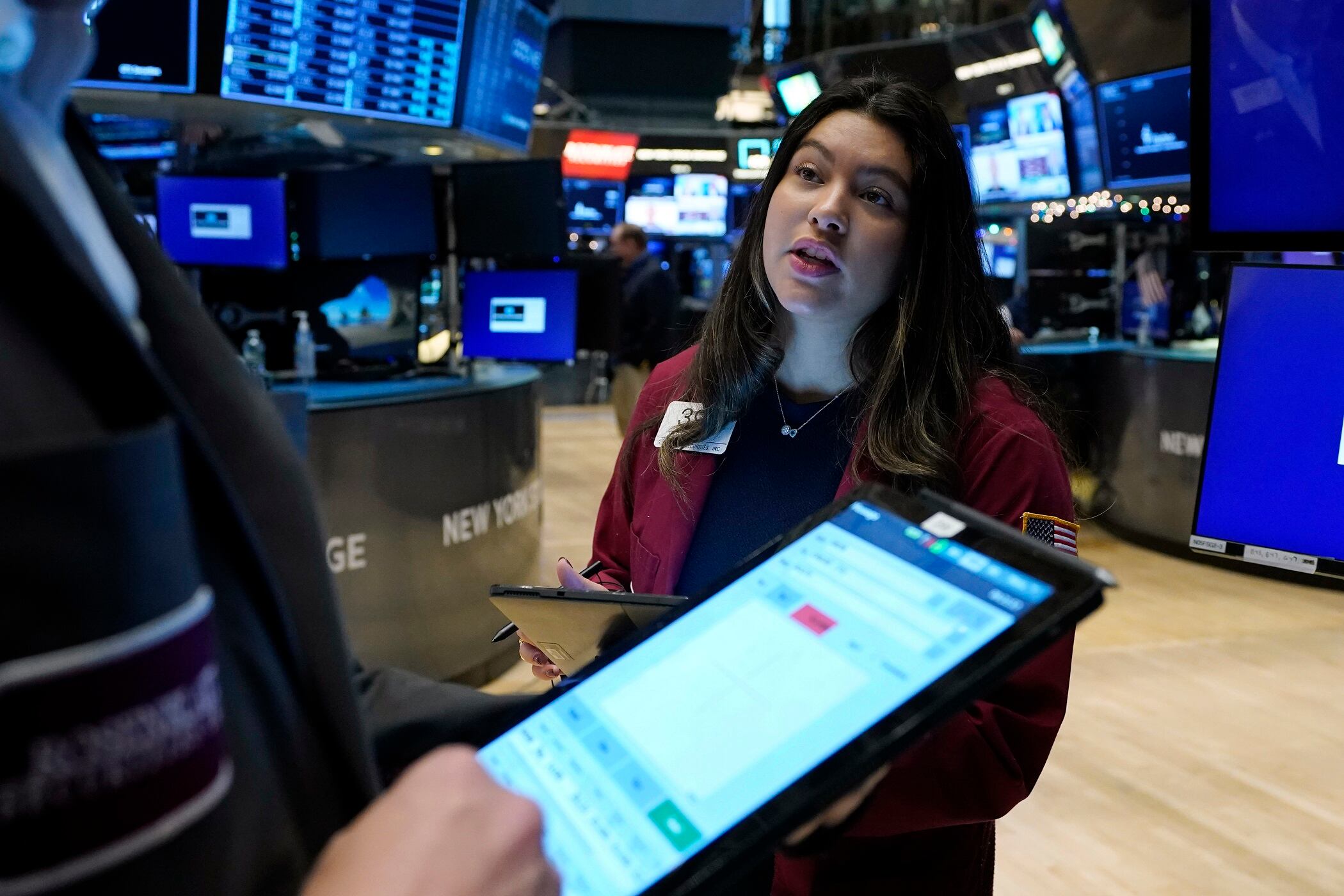
A broad rally on Wall Street pushed stocks higher Thursday, giving the S&P 500 its best day in seven weeks as the market recouped some of its losses after several days of volatile trading.
The benchmark index rose 1.4%, its biggest gain since mid-October. The Dow Jones Industrial Average rose 1.8%, its best showing since early March. The tech-heavy Nasdaq rose 0.8%, held back in part by a modest drop in Apple.
Smaller company stocks, which have lost the most ground this week, outpaced the broader market, sending the Russell 2000 index 2.7% higher.
The market rebound comes as investors try to gauge the amount of damage the omicron variant of COVID-19 might inflict on the economy, as well as measures that the U.S. and other governments are taking to restrain it. Trading has been choppy all week and, despite the latest gains, every major index is on track for a weekly loss.
The heavy selling in recent days may have presented too tempting an opportunity for traders, said Jay Hatfield, CEO of Infrastructure Capital Advisors.
“It’s bargain-hunting after an overreaction,” Hatfield said. “Clearly the Fed and the variant are overhanging on the market, but the fundamentals are very strong and the Fed is still injecting liquidity into the market.”
The S&P 500 rose 64.06 points to 4,577.10. The index has been on a roller coaster ride throughout the week. It was up as much as 1.9% Wednesday before skidding and closing 1.2% lower.
The Dow gained 617.75 points to 34,639.79. The Nasdaq added 127.27 points to 15,381.32. The Russell 2000 picked up 58.91 points to 2,206.33.
The latest coronavirus variant has led countries to impose barriers to travel and stricter restrictions on business and people. Concerns about global restrictions potentially crimping economic growth butted up against concerns about rising inflation this week. The persistence of rising inflation has prompted the Federal Reserve to consider withdrawing stimulus measures sooner than expected.
Wall Street will likely remain jumpy until investors have more information on how contagious the new variant is and how well current vaccines will hold up against it.
More than 90% of companies in the S&P 500 index rose Thursday. Banks and other financial companies accounted for a big slice of the gains. Bank of America rose 2.9% and American Express rose 4.5%.
Technology companies also rose, but the gains were crimped by a 0.6% drop from Apple after the iPhone maker reportedly warned suppliers that it is seeing weak demand ahead of the holiday season.
Bond yields rose. The yield on the 10-year Treasury rose to 1.44% from 1.43% late Wednesday.
U.S. crude oil prices rose 1.4%. OPEC and allied oil-producing countries decided Thursday to stick to their plans to boost output via steady, modest monthly increases in oil releases, even as the omicron variant adds more uncertainty over the global economic recovery from the pandemic. Energy companies gained ground. Chevron rose 2.7%.
Travel-related companies, which got hammered earlier this week as worries about the new coronavirus variant swept markets, rebounded Thursday. American Airlines climbed 7%, while Delta Air Lines rose 9.3%. Cruise line operators Carnival and Norwegian Cruise Line jumped 9.2% and 7.7%, respectively.
Several companies made outsized gains on a mix of corporate news. Supermarket chain Kroger jumped 11% for the biggest gain in the S&P 500 after raising its profit forecast for the year. Software maker Synopsys gained 4.5% after also giving investors an encouraging profit forecast.
Boeing rose 7.5% after China’s aviation regulator cleared the airplane maker’s 737 Max to return to flying with technical upgrades.
Southeast Asia’s largest ride-hailing company Grab fell 20.5% in its market debut Thursday, following a $40 billion merger in a special purpose acquisition company deal.
Updated on December 2, 2021, at 5:44 p.m. ET.