By Stan Choe, Damian J. Troise, and Alex Veiga
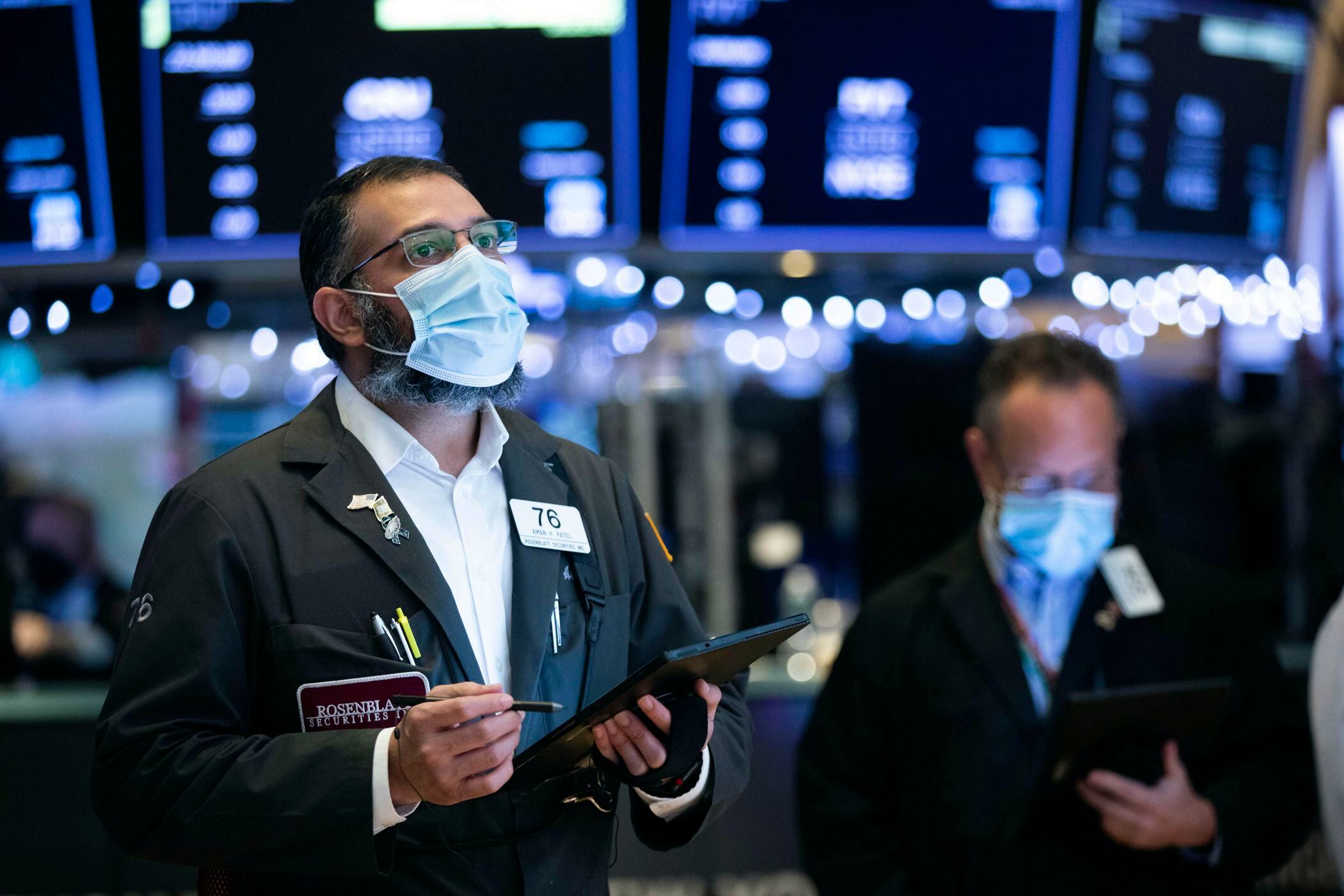
Stocks closed broadly higher on Wall Street Tuesday, regaining their footing a day after suffering their worst loss in months amid the worsening pandemic and potentially market-moving Senate elections.
The S&P 500 rose 0.7%, recovering about half of the index's losses from a day earlier. The majority of big stocks in the S&P 500 notched gains, with oil producers leading the way as crude prices strengthened. Stocks of smaller companies did even better than the broader market, driving the Russell 2000 index of small-caps to a market-leading 1.7% gain. Treasury yields rose.
The market’s moves were tenuous early on, though. At one point, the S&P 500 gave up all of an early-morning rise and was down 0.2% even after a report showed U.S. manufacturing grew last month at its strongest rate since 2018.
“While we probably will end up having a pullback sometime in the near future, the bull is not ready to wind down just yet,” said Sam Stovall, chief investment strategist at CFRA.
The S&P 500 rose 26.21 points to 3,726.86. The Dow Jones Industrial Average gained 167.71 points, or 0.6%, to 30,391.60. The Nasdaq composite picked up 120.51 points, or 1%, to 12,818.96. The Russell 2000 climbed 33.19 points to 1,979.11.
Wall Street's uneven start to the year comes as investors remain optimistic that the economy will recover this year as more Americans receive coronavirus vaccinations. Optimism is being kept in check as new infections climb at frightening rates around the world, threatening to bring more lockdown orders that would punish the economy.
Traders have also focused on the outcome of the runoff elections in Georgia Tuesday, which will determine which party controls the Senate. Some analysts say the results could mark clear winners and losers in the stock market.
The general thinking is that a Democratic sweep would open the door to higher tax rates, tougher regulation on businesses and other potentially profit-crimping changes from Washington. That would put broad pressure on the stock market, with Big Tech stocks in particular perhaps attracting more regulatory scrutiny.
But Democratic control of the Senate, White House and House of Representatives could also make another dose of big financial support for the economy more likely. Democrats have lobbied for $2,000 cash payments to go to most Americans, for example, and they could push for more spending on infrastructure projects.
Such stimulus could eventually lead to higher inflation across the economy, something that has been nearly nonexistent for years. Increasing inflation expectations have helped buoy Treasury yields recently, and the yield on the 10-year Treasury rose to 0.95% from 0.90% late Monday.
“There's some risk on the election, but mostly just due to uncertainty,” said James Ragan, director of wealth management research at D.A. Davidson.
Investors likely shouldn't worry much about either a Democratic or Republican victory, strategists at Barclays said in a report. Even a Democratic sweep of the runoffs would leave the party with only the slimmest of majorities in the Senate, which would make big, bold changes less likely.
Beyond Georgia and Washington, though, worries about the worsening global pandemic continue to weigh on markets. A new, seemingly more contagious variant of the coronavirus is pushing countries to announce or consider more restrictions on businesses. That’s threatening Wall Street’s widespread belief that financial support offered by central banks and governments can keep the economy afloat until a big recovery sweeps the world later this year due to the rollout of COVID-19 vaccines.
Worries are also rising that markets have simply stormed too high since hitting bottom early last year and are setting investors up for big disappointment.
“The long, long bull market since 2009 has finally matured into a fully-fledged epic bubble,” the famed value investor Jeremy Grantham wrote in a recent report titled “Waiting for the last dance.”
“Featuring extreme overvaluation, explosive price increases, frenzied issuance, and hysterically speculative investor behavior, I believe this event will be recorded as one of the great bubbles of financial history, right along with the South Sea bubble, 1929, and 2000.”
Grantham has correctly predicted big market turns in the past, including the plunge caused by the 2008 financial crisis and the sharp rebound higher in early 2009. But he acknowledges that his calls have sometimes been early: He got out of Japanese stocks in 1987, for example, only for the bubble to keep inflating through the end of 1989.
Energy stocks led the way higher Tuesday as the price of U.S. crude oil climbed 4.9%. Occidental Petroleum jumped 10.1% for the biggest gain in the S&P 500.
The surge in energy stocks is an indication that investors believe the economy will improve this year, driving up demand for oil and pushing up prices, Stovall said.
In overseas stock markets, Asian indexes closed mostly higher. South Korea's Kospi rose 1.6%, Hong Kong's Hang Seng added 0.6% and stocks in Shanghai gained 0.7%. Japan's Nikkei 225 fell 0.4%.
In Europe, France's CAC 40 fell 0.4%, and Germany's DAX lost 0.6%. The FTSE 100 in London rose 0.6%.
___
AP Business Writer Yuri Kageyama contributed.
Updated on January 5, 2021, at 5:01 p.m. ET.