By Damian J. Troise and Alex Veiga
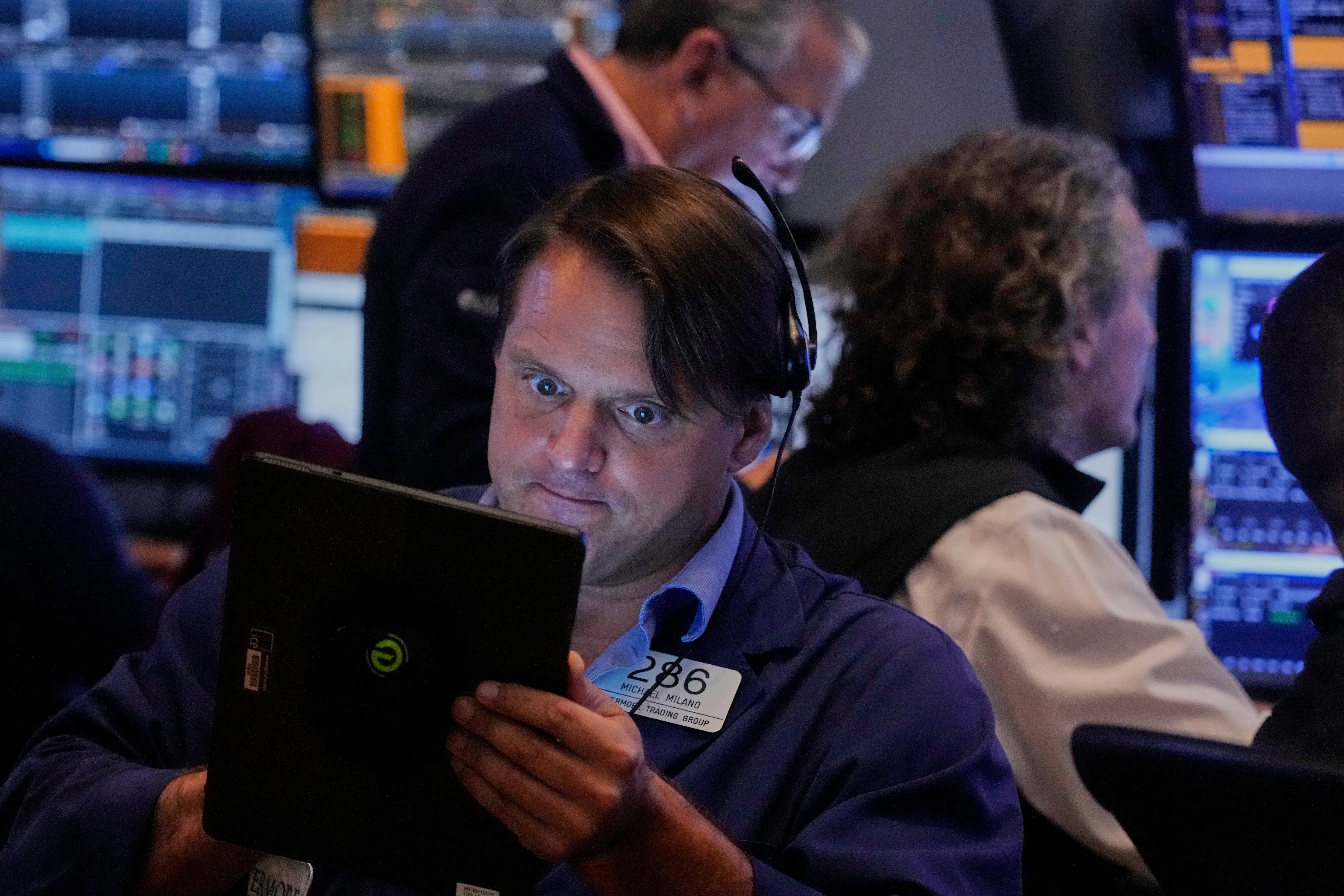
A late-afternoon rebound led by technology companies helped drive stocks higher on Wall Street Thursday, lifting the market from an early slide.
The S&P 500 rose 0.4%, its first gain after a two-day slump. The benchmark index is still on pace for its first weekly loss in four weeks.
The Dow Jones Industrial Average rose 0.3% and the tech-heavy Nasdaq managed a 0.1% gain. Crude oil prices edged lower and bond yields rose.
The choppy day of trading came as investors weighed the latest updates from the Federal Reserve amid concerns about rising inflation. The central bank has signaled it is prepared to keep raising interest rates and reducing its stockpile of bonds and mortgage-backed securities in order to rein in the highest inflation in 40 years.
“The market is certainly having to digest a Fed that appears to be willing to be very aggressive in battling inflation,” said Rob Haworth, senior investment strategist at U.S. Bank Wealth Management.
The S&P 500 rose 19.06 points to 4,500.21. The Dow gained 87.06 points to 34,583.57. the blue-chip index had earlier been down 305 points. The Nasdaq added 8.48 points to 13,897.30.
Higher interest rates can make pricey growth stocks, like those of Big Tech companies, look less attractive relative to their earnings. Tech stocks have been among the biggest drags on the market the past couple of days and were weighing down the indexes Thursday morning. But the sector began to recover by midafternoon, helping lift the broader market. Microsoft rose 0.6% and Adobe rose 1.9%.
Health care stocks, retailers and other companies that rely on direct consumer spending also rose after having been down earlier in the day. Pfizer rose 4.3%, Target gained 5.7% and McDonald’s rose 1.2%.
Communication services stocks were among the biggest weights on the market. Twitter fell 5.4%.
Computer and printer maker HP surged 14.8% for the biggest gain in the S&P 500 after Warren Buffett’s Berkshire Hathaway disclosed an 11% stake in the company.
Bond yields rose. The yield on the 10-year Treasury rose to 2.65% from 2.61% late Wednesday.
Every major index is in the red for the week following two big losses that were partly prompted by concerns over the Fed's shifting policy as it tries to combat inflation.
Minutes from the Fed’s meeting last month showed policymakers agreed to begin cutting the central bank's stockpile of Treasurys and mortgage-backed securities by about $95 billion a month, starting in May. That’s more than some investors expected and nearly double the pace the last time the Fed shrank its balance sheet.
The central bank is reversing course from low interest rates and the extraordinary support it began providing for the economy two years ago when the pandemic knocked the economy into a recession. It already announced a quarter-percentage point increase and is expected to keep raising rates throughout the year.
Traders are now pricing in a nearly 80% probability the Fed will raise its key overnight rate by half a percentage point at its next meeting in May. That’s double the usual amount and something the Fed hasn’t done since 2000.
Persistently rising inflation has been threatening economic growth. Business have been raising prices on everything from food to clothing and that has put more pressure on consumers. Some companies have been unable to offset the impact from inflation, even with price hikes.
Duncan Hines and Birds Eye brands maker ConAgra cut its financial forecast for the year and said another round of price increases will be needed.
Wall Street is concerned about consumers eventually pulling back on spending as higher prices become too difficult to digest. Price increases were responsible for a rise in consumer spending in March, otherwise, the results revealed a pullback.
A rapid increase in interest rates could also affect corporate earnings growth, though gauging that depends on how aggressive the Fed will be.
“Do we have to take earnings expectations down?” Haworth said. “That’s what the market’s really (been) trying to decide over the last couple of days. Is the aggressiveness of the Fed going to change that equation?”
Russia's invasion of Ukraine has also added to concerns about inflation. Energy prices have been particularly volatile and pushed gasoline prices higher. U.S. benchmark crude oil prices fell 0.2%, but are still up roughly 31% for the year.
Investors received an encouraging update on the job market Thursday. The Labor Department reported that fewer Americans applied for unemployment benefits last week as layoffs remain at historically low levels.
Updated on April 7, 2022, at 5:01 p.m. ET.